 Bug FAQ
Eastern Giant Swallowtail
Heraclides cresphontes · Order: Lepidoptera · Family: Papilionidae
Also called: Giant Swallowtail, Orange dog
Source: Wikipedia
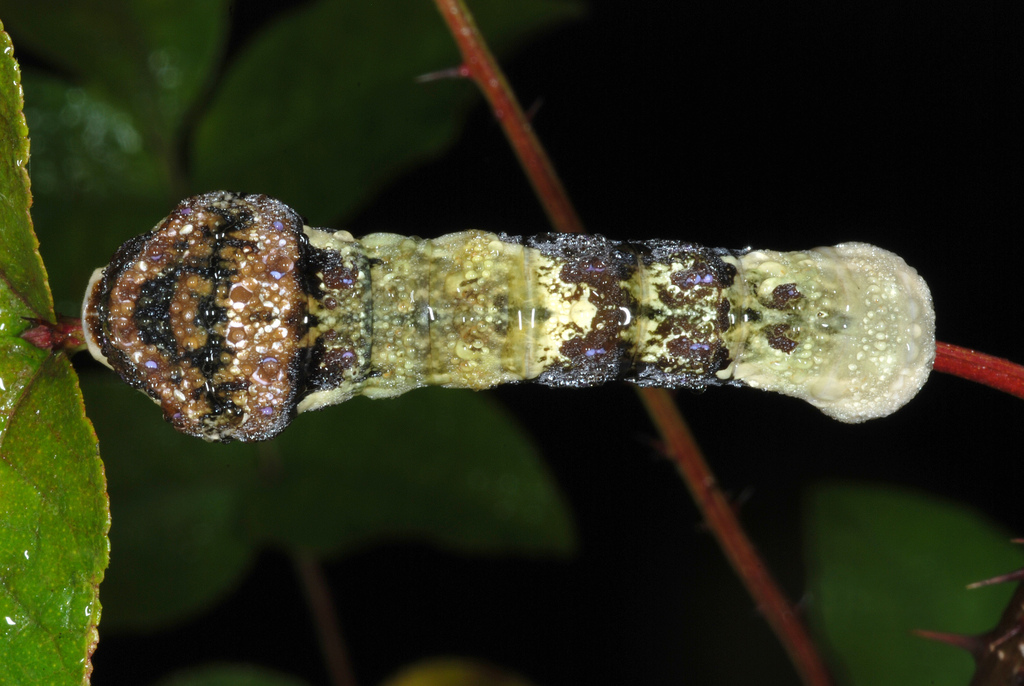
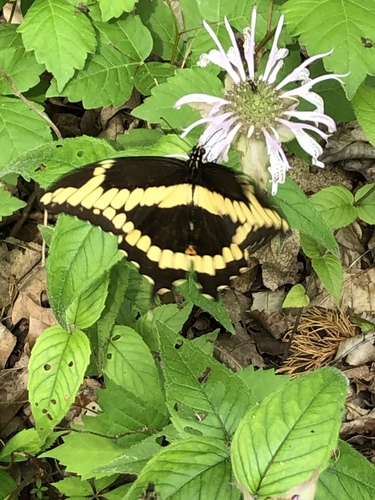
The eastern giant swallowtail is a large butterfly with black wings marked by yellow lines and a small red patch on the underside. Its caterpillars feed on citrus leaves, often harming new growth on seedlings but usually not affecting mature trees.
Source: Wikipedia
How to recognize it
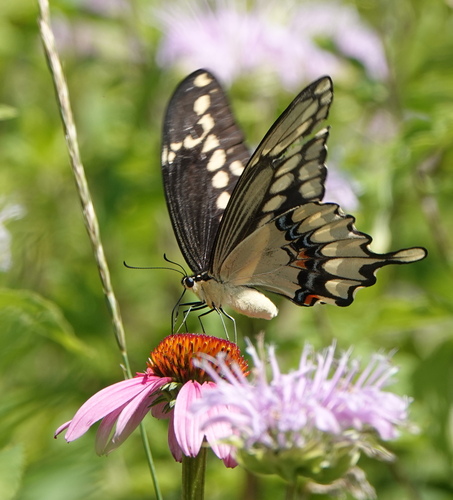
Adults have black wings with a horizontal yellow stripe on the forewings and a diagonal yellow stripe on the hindwings; the underside is yellow with black accents and a tiny red spot within a blue band.
Source: Wikipedia
Size
Females average a 5.5-inch (14 cm) wingspan, up to 6.9 in (18 cm); males average 5.8 in (15 cm), up to 7.4 in (19 cm).
Source: Wikipedia
Is it a pest in the house?
Caterpillars, called “orange dogs” or “bird-poop caterpillars,” feed on all citrus varieties, often damaging new foliage and young trees. Mature citrus trees are usually not seriously harmed.
Source: Wikipedia
How to get rid of it
Biological insecticides like Bacillus thuringiensis and chemical insecticides are used against the larvae. Methionine has been found effective as a low-toxicity pesticide for the caterpillars.
Source: Wikipedia
Where it lives
In the U.S. they are found mainly in deciduous forests and citrus orchards. Overwintering occurs only in Florida and the deep South.
Source: Wikipedia
Life cycle
Females lay single eggs on the tops of host-plant leaves rather than in clusters.
Source: Wikipedia
Where it comes from
They occur across the United States, reaching southern New England and southern Canada. South of the U.S. they are present in parts of Mexico, Jamaica, and Cuba.
Source: Wikipedia
Lookalikes
A small red patch on the ventral wing within a blue band distinguishes it from the similar Schaus' swallowtail.
Source: Wikipedia
Where it is found in the US
Recorded in 43 of 51 states and DC. Most records: Florida, Texas, Vermont, Illinois, New York, Michigan, Louisiana, Wisconsin.
Darker = more records. Counts are museum and citizen-science records, not population size.
Source: GBIF
Status: native in North America; native in Canada; native in United States. Source: iNaturalist
Months it is reported in the US
Source: GBIF
More photos
Questions people ask
How can I identify this butterfly?
Look for black wings with a horizontal yellow line on the forewings, a diagonal yellow line on the hindwings, and a tiny red spot on the underside within a blue band.
Source: Wikipedia
What damage do the caterpillars cause?
They feed on citrus leaves, often harming new growth on seedlings but usually leaving mature trees unharmed.
Source: Wikipedia
What control methods work against the larvae?
Bacillus thuringiensis, chemical insecticides, and methionine have all been used to reduce caterpillar populations.
Source: Wikipedia
Same family (Papilionidae)
Sources
- Wikipedia: https://en.wikipedia.org/wiki/Papilio_cresphontes
Look it up elsewhere: GBIF · iNaturalist · BugGuide · ITIS · Wikipedia
Text written 2026-10-22 from the sources above and checked sentence by sentence against them. Data fetched 2026-10-22.