 Bug FAQ
Eastern Tiger Swallowtail
Papilio glaucus · Order: Lepidoptera · Family: Papilionidae
Also called: Tiger Swallowtail
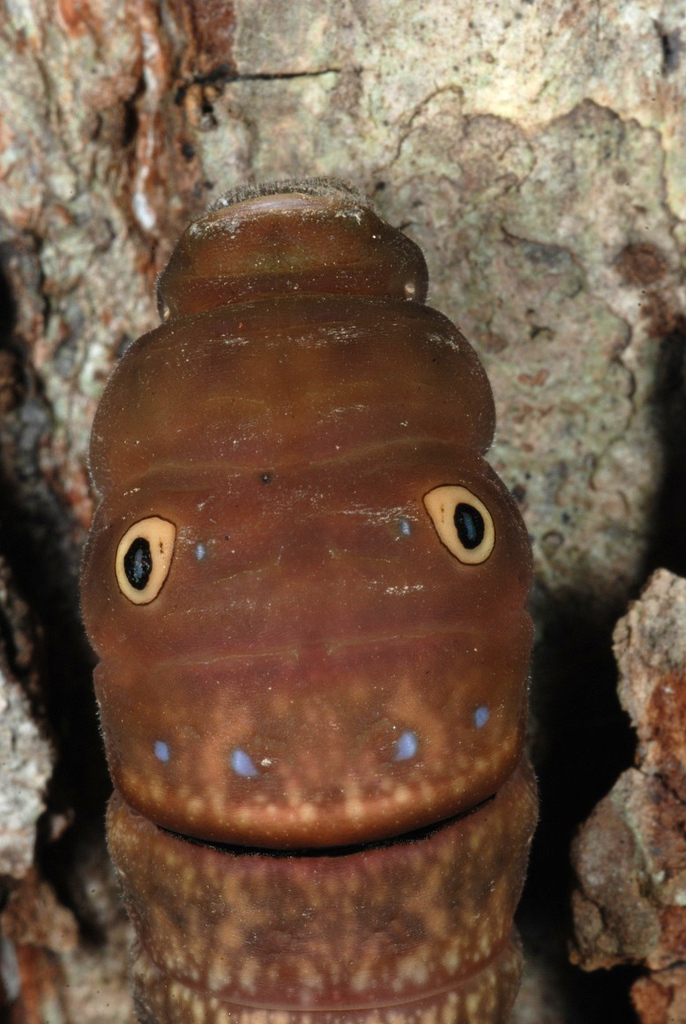
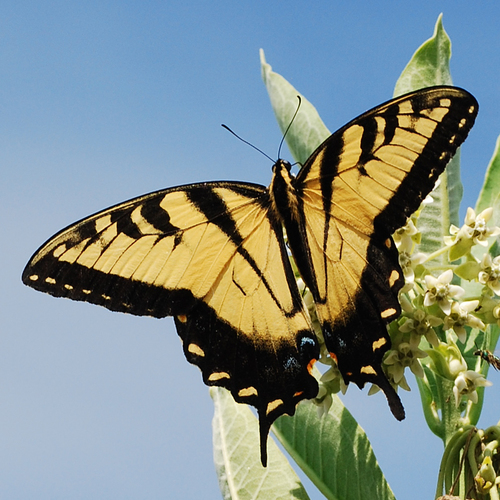
The Eastern Tiger Swallowtail is a medium-large butterfly with a wingspan of about 8 to 14 cm, the female being the larger sex. Males are yellow with four black tiger-like stripes on each forewing, while females can be either yellow or black. It lives throughout eastern North America in deciduous forests, woodlands, fields, near water, roadsides and gardens.
Source: Wikipedia
How to recognize it
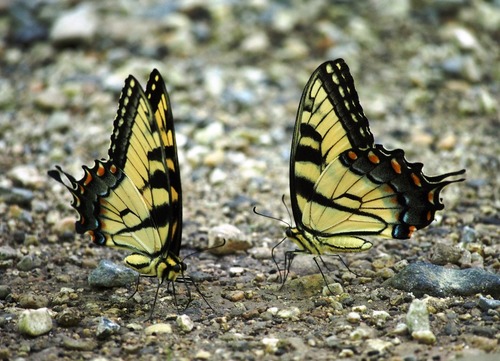
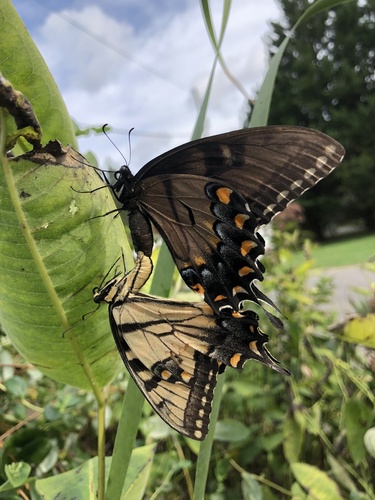
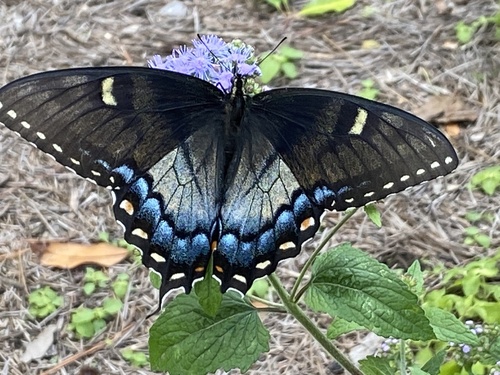
Males show yellow wings with four black stripes on each forewing; females may be yellow or black, a dimorphic trait.
Source: Wikipedia
Size
Wingspan ranges from 7.9 cm to 14 cm, with females generally larger.
Source: Wikipedia
Where it lives
Found wherever deciduous forests occur, including woodlands, fields, riverbanks, creeks, roadsides and gardens.
Source: Wikipedia
What it eats
Adults sip nectar from many flowers, especially those in the Apocynaceae, Asteraceae and Fabaceae families. Caterpillars feed on the leaves of their host plants.
Source: Wikipedia
Life cycle
Eggs hatch in three to five days. In the north there may be one or two generations per year; in the south up to three.
Source: Wikipedia
When you see it
Adults are on the wing from spring through fall, with timing varying by location. In southern areas they appear from February to November; in northern areas from May to September.
Source: Wikipedia
Lookalikes
A broken bar marking on both sexes helps separate this species from close relatives.
Source: Wikipedia
Where it is found in the US
Recorded in 49 of 51 states and DC. Most records: Virginia, North Carolina, Maryland, Illinois, Ohio, Pennsylvania, Texas, Georgia.
Darker = more records. Counts are museum and citizen-science records, not population size.
Source: GBIF
Status: native in North America; native in United States; native in Canada. Source: iNaturalist
Months it is reported in the US
Source: GBIF
More photos
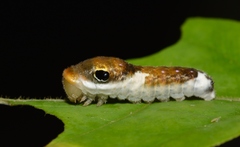
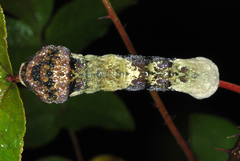
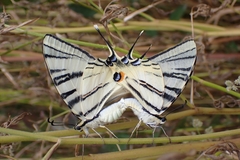
Same family (Papilionidae)
Sources
- Wikipedia: https://en.wikipedia.org/wiki/Papilio_glaucus
Look it up elsewhere: GBIF · iNaturalist · BugGuide · ITIS · Wikipedia
Text written 2026-10-22 from the sources above and checked sentence by sentence against them. Data fetched 2026-10-22.