 Bug FAQ
Pipevine Swallowtail
Battus philenor · Order: Lepidoptera · Family: Papilionidae
Also called: Blue Swallowtail, Pipe Vine Swallowtail
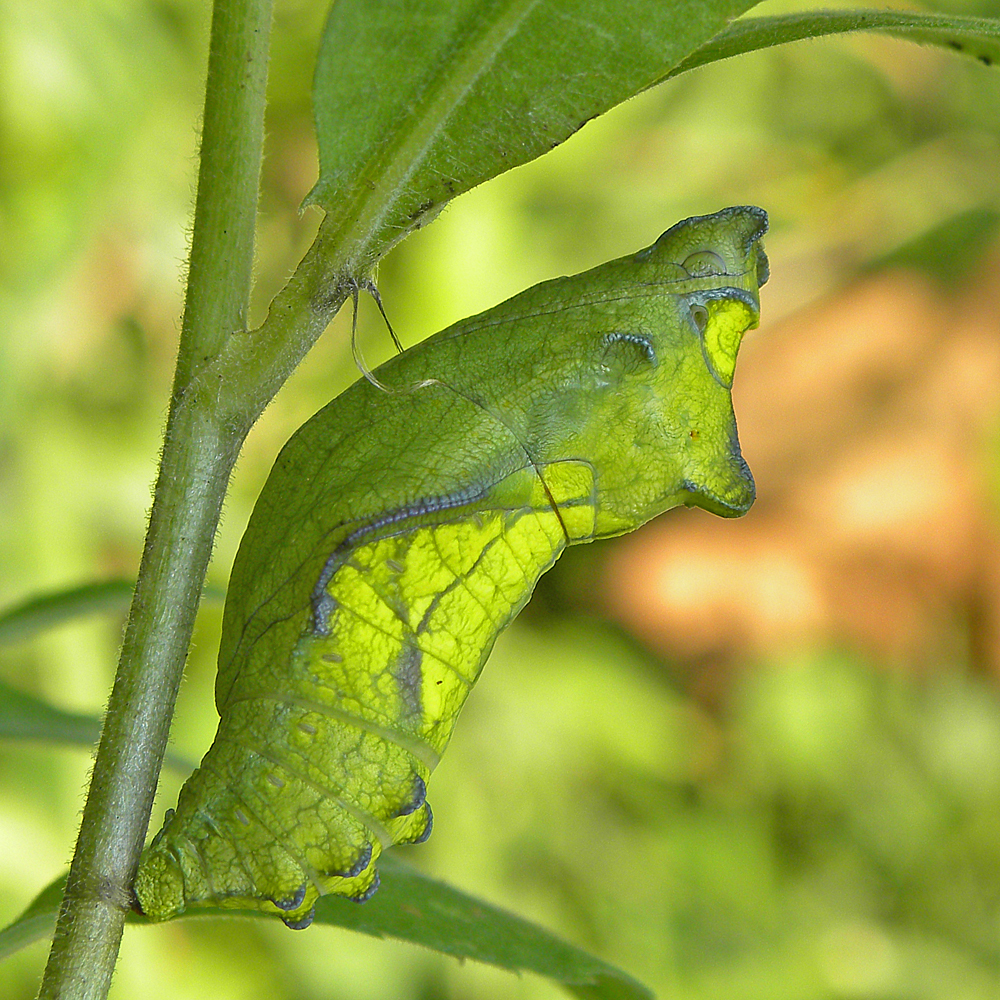
Pipevine swallowtails have a wingspan between 7 and 13 cm and are black with bright blue iridescent hindwings. They live in warm, temperate areas such as forests, grasslands, woodlands, meadows, and gardens across North and Central America.
Source: Wikipedia
How to recognize it
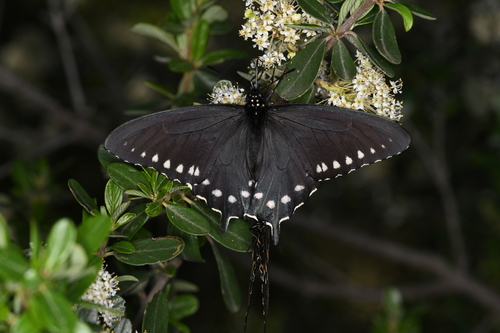
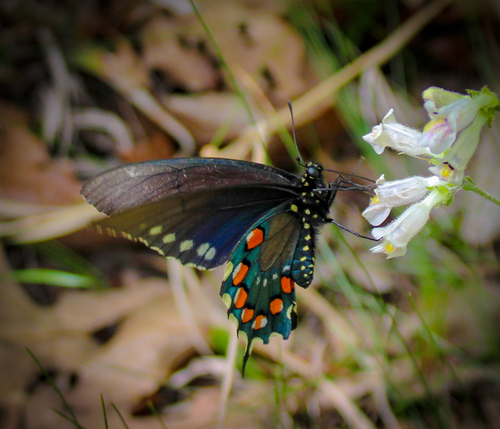
Adults are black with iridescent-blue hindwings; males show the blue especially on the dorsal hindwings.
Source: Wikipedia
Size
Wingspan ranges from 7 cm to 13 cm.
Source: Wikipedia
What it eats
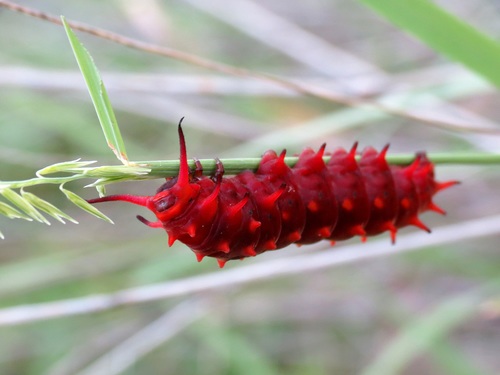
Caterpillars eat Aristolochia species; adults sip nectar from various flowers.
Source: Wikipedia
Life cycle
Eggs are red to orange; pupae attach several feet above ground on tree trunks or similar sites.
Source: Wikipedia
Where it comes from
Native to North America and Central America.
Source: Wikipedia
Where it is found in the US
Recorded in 46 of 51 states and DC. Most records: Texas, California, Arizona, North Carolina, Tennessee, Illinois, Virginia, Missouri.
Darker = more records. Counts are museum and citizen-science records, not population size.
Source: GBIF
Status: native in North America; native in United States. Source: iNaturalist
Months it is reported in the US
Source: GBIF
More photos

Questions people ask
Where might I see these butterflies?
In warm, temperate forests, grasslands, woodlands, meadows, and garden areas across North and Central America.
Source: Wikipedia
Same family (Papilionidae)

Sources
- Wikipedia: https://en.wikipedia.org/wiki/Battus_philenor
Look it up elsewhere: GBIF · iNaturalist · BugGuide · ITIS · Wikipedia
Text written 2026-10-22 from the sources above and checked sentence by sentence against them. Data fetched 2026-10-22.