 Bug FAQ
Southern White Admiral
Limenitis reducta · Order: Lepidoptera · Family: Nymphalidae
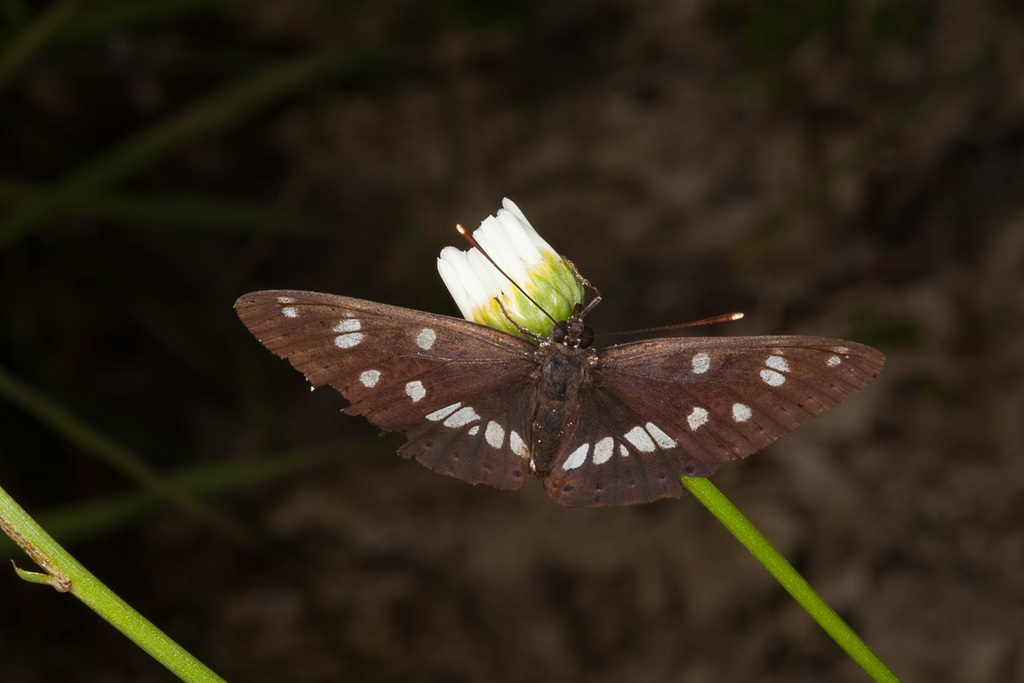
The Southern White Admiral has a wingspan of about 46 to 54 mm and its caterpillars grow up to 27 mm long. They live in light woodland, glades and forest edges from sea level up to about 1,650 m, are found across central and southern Europe into western Asia, and fly from May to August, sometimes producing more than one generation.
Source: Wikipedia
Size
Wingspan ranges from 46 to 54 mm. Caterpillars can grow up to 27 mm long.
Source: Wikipedia
Where it lives
Found in light woodland, woodland glades and forest edges up to 1,650 m elevation.
Source: Wikipedia
What it eats
Caterpillars feed on various honeysuckle species. Adults sip nectar from many flowers and also visit fallen fruit, dung, aphid secretions and moist ground for minerals.
Source: Wikipedia
When you see it
Adults are on the wing from May to August, varying by region.
Source: Wikipedia
Where it is found in the US
Recorded in 2 of 51 states and DC. Most records: Florida, Ohio.
Darker = more records. Counts are museum and citizen-science records, not population size.
Source: GBIF
More photos

Same family (Nymphalidae)






Sources
- Wikipedia: https://en.wikipedia.org/wiki/Limenitis_reducta
Look it up elsewhere: GBIF · iNaturalist · BugGuide · Wikipedia
Text written 2026-10-22 from the sources above and checked sentence by sentence against them. Data fetched 2026-10-22.