 Bug FAQ
Southern Skimmer
Orthetrum brunneum · Order: Odonata · Family: Libellulidae
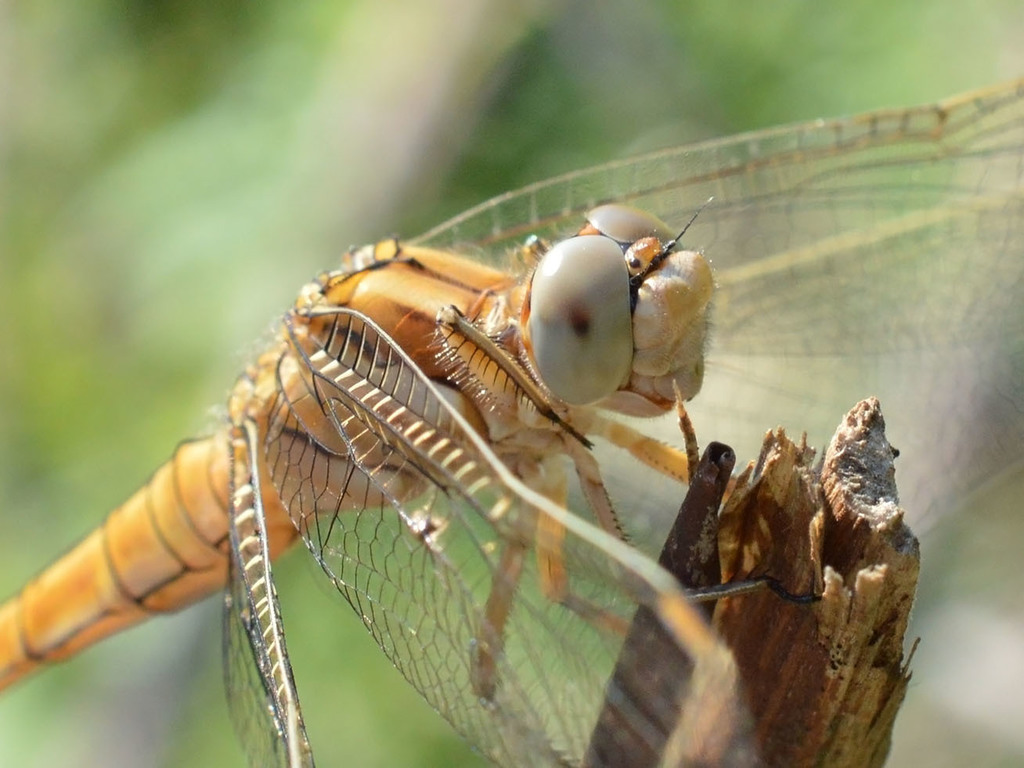
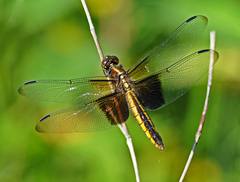
Adult Southern Skimmers are 40 to 45 mm long with a wingspan of 66 to 70 mm. Males show a pale-blue thorax and abdomen, while females are yellow-brown or grey-brown, and the abdomen has a thin black line on top. They live near small, fast-warming streams, canals, ditches, or quiet rivers from mid-June to late August, and their larvae are aggressive predators.
Source: Wikipedia
How to recognize it
Males have a pale-blue thorax and abdomen; females are yellow-brown or grey-brown, and the abdomen is flattened with a thin black dorsal line and pointed segments.
Source: Wikipedia
Size
Adults grow to 40 to 45 mm in length and have a wingspan of 66 to 70 mm.
Source: Wikipedia
Where it lives
They prefer small streams, canals, ditches, and shallow, fast-warming water, often near quiet rivers or shallow stagnant water.
Source: Wikipedia
What it eats
Larvae are ferocious predators, while females lay eggs by touching the water surface with their abdomen during flight.
Source: Wikipedia
Life cycle
The species overwinters and develops over two to three years before emerging as adults. Adults are seen from mid-June through late August near quiet rivers or shallow water.
Source: Wikipedia
When you see it
Adults are active from mid-June to late August.
Source: Wikipedia
Where it comes from
The species occurs across most of Europe, extending east to Mongolia and south to North Africa.
Source: Wikipedia
Lookalikes
Southern Skimmers are generally larger than the similar species Orthetrum coerulescens.
Source: Wikipedia
More photos

Same family (Libellulidae)

Sources
- Wikipedia: https://en.wikipedia.org/wiki/Orthetrum_brunneum
Look it up elsewhere: GBIF · iNaturalist · BugGuide · Wikipedia
Text written 2026-10-22 from the sources above and checked sentence by sentence against them. Data fetched 2026-10-22.