 Bug FAQ
Southern Monarch
Danaus erippus · Order: Lepidoptera · Family: Nymphalidae
Also called: South American Monarch
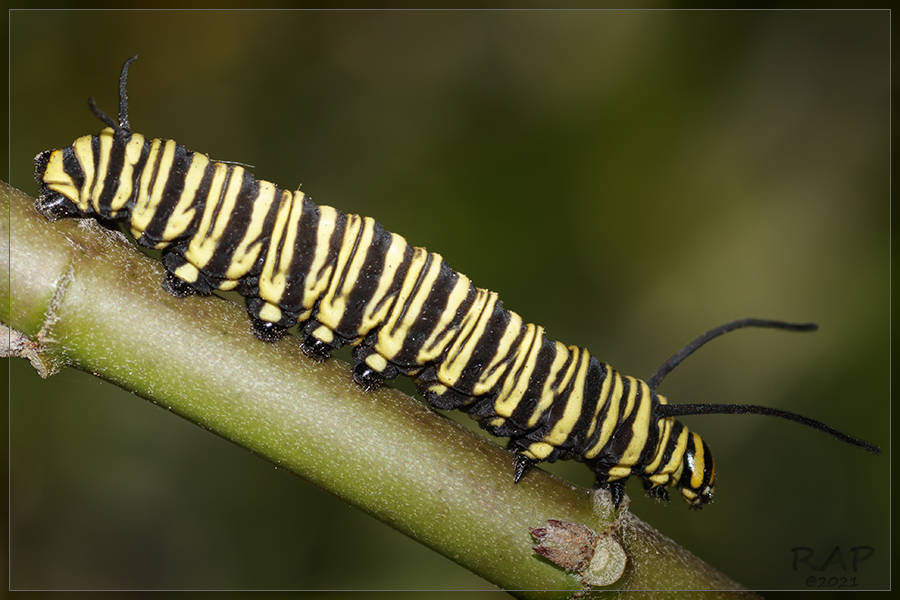
The Southern Monarch butterfly has a wingspan of about 110 mm (4.3 in) and shows bright colours with reduced forelegs. Its caterpillars feed on milkweed species such as Asclepias barjoniifolia and other related plants.
Source: Wikipedia
How to recognize it
It has a reduced pair of forelegs and bright wing colours, similar to other popular butterflies like emperors and admirals.
Source: Wikipedia
Size
The wingspan reaches about 110 mm (4.3 in).
Source: Wikipedia
What it eats
Caterpillars use milkweed plants in the genus Asclepias and some related species as hosts.
Source: Wikipedia
Life cycle
Its genome is almost identical to the monarch (D. plexippus) but the two are reproductively incompatible. The two lineages split about two million years ago.
Source: Wikipedia
When you see it
It migrates seasonally, flying south in autumn to cooler areas for winter.
Source: Wikipedia
Lookalikes
Until 2007 it was considered a subspecies of D. plexippus. It can be distinguished by an orange edge on the forewing, whereas D. plexippus has a black edge.
Source: Wikipedia
Where it is found in the US
Recorded in 1 of 51 states and DC. Most records: California.
Darker = more records. Counts are museum and citizen-science records, not population size.
Source: GBIF
More photos

Same family (Nymphalidae)






Sources
- Wikipedia: https://en.wikipedia.org/wiki/Danaus_erippus
Look it up elsewhere: GBIF · iNaturalist · BugGuide · Wikipedia
Text written 2026-10-22 from the sources above and checked sentence by sentence against them. Data fetched 2026-10-22.