 Bug FAQ
Southern Migrant Hawker
Aeshna affinis · Order: Odonata · Family: Aeshnidae
Also called: Blue-eyed Hawker, Mediterranean Hawker

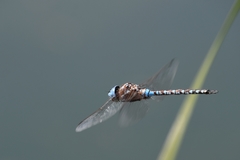
The Southern Migrant Hawker is a small Aeshna dragonfly with blue eyes and blue markings on the abdomen, and it lacks the yellow T-shaped mark seen on A. mixta. It lives around the Mediterranean, southern and central Europe, North Africa, the Middle East and extends east to China, and adults are on the wing from May through September. After emerging, the adults move away from water to feed, while the larval stage lasts about two years.
Source: Wikipedia
How to recognize it
Males have blue eyes and blue markings on the abdomen. They do not have the yellow T-shaped mark on the second abdominal segment that A. mixta shows.
Source: Wikipedia
Size
Aeshna affinis is a small member of the Aeshna genus.
Source: Wikipedia
Where it lives
It is found on many Mediterranean islands such as Menorca, Corsica and Sicily. It is one of the few European hawkers that lay eggs in tandem.
Source: Wikipedia
What it eats
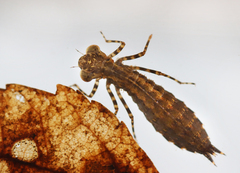
Newly emerged adults leave the water and spend time feeding elsewhere. The larval stage usually lasts two years.
Source: Wikipedia
Life cycle
The larval stage typically lasts two years. Adults emerge in May and remain on the wing until September.
Source: Wikipedia
When you see it
Adults are active from May through September.
Source: Wikipedia
Where it comes from
Its range includes southern and central Europe, the Mediterranean region, North Africa, the Middle East and extends across Asia to China.
Source: Wikipedia
More photos


Questions people ask
When are Southern Migrant Hawkers active?
Adults emerge in May and can be seen flying until September.
Source: Wikipedia
How can I tell a male Southern Migrant Hawker from other hawkers?
Males have blue eyes and blue abdominal markings and lack the yellow T-shaped mark on the second abdominal segment that other species have.
Source: Wikipedia
Same family (Aeshnidae)


Sources
- Wikipedia: https://en.wikipedia.org/wiki/Aeshna_affinis
Look it up elsewhere: GBIF · iNaturalist · BugGuide · Wikipedia
Text written 2026-10-23 from the sources above and checked sentence by sentence against them. Data fetched 2026-10-22.