 Bug FAQ
Blue-eyed Darner
Rhionaeschna multicolor · Order: Odonata · Family: Aeshnidae
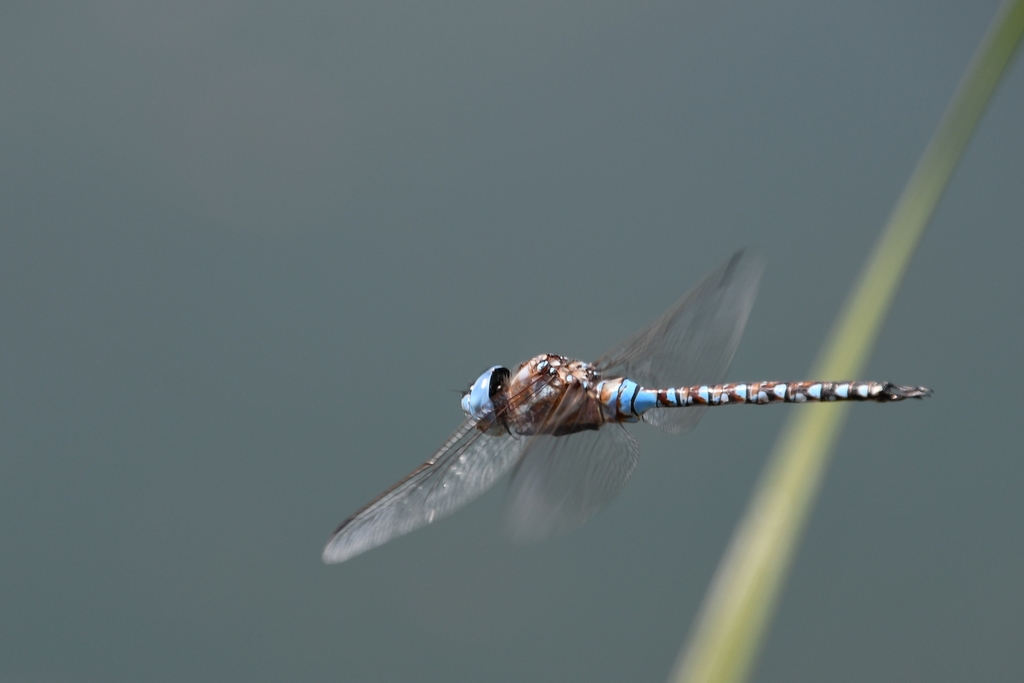
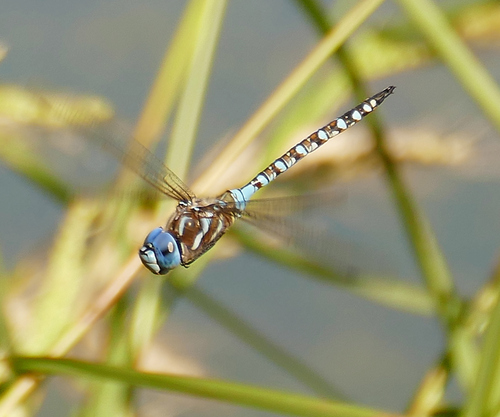
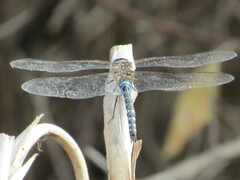
The blue-eyed darner is a large dragonfly about 65 to 70 mm long with bright blue eyes in both sexes. Males are dark brown to black and the thorax has distinctive blue stripes, while the abdomen shows blue spots of varying size.
Source: Wikipedia
How to recognize it
Both sexes have bright blue eyes. Males are dark brown to black. The thorax has two blue stripes on top and a pair of diagonal blue stripes on each side. The abdomen is patterned with large and small blue spots.
Source: Wikipedia
Size
Adults measure 65 to 70 mm (about 2.6 to 2.8 in) in length.
Source: Wikipedia
Where it lives
It lives near lakes, ponds, slow streams, canals and marshes, preferring open areas.
Source: Wikipedia
What it eats
It catches and eats small flying insects while in flight.
Source: Wikipedia
Life cycle
It is one of the earliest darner species to emerge in spring, after the California darner.
Source: Wikipedia
When you see it
Adults are on the wing from spring through late in the year and may migrate in California, appearing in large numbers in fall.
Source: Wikipedia
Where it comes from
Its range includes western North America down through Central America to Panama.
Source: Wikipedia
Lookalikes
It is the second earliest darner to appear in spring, after the California darner.
Source: Wikipedia
Where it is found in the US
Recorded in 26 of 51 states and DC. Most records: California, Oregon, Washington, Arizona, Colorado, New Mexico, Texas, Utah.
Darker = more records. Counts are museum and citizen-science records, not population size.
Source: GBIF
Status: native in North America; native in Canada; native in United States. Source: iNaturalist
Months it is reported in the US
Source: GBIF
More photos
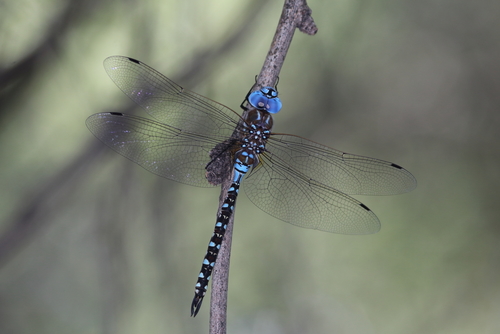
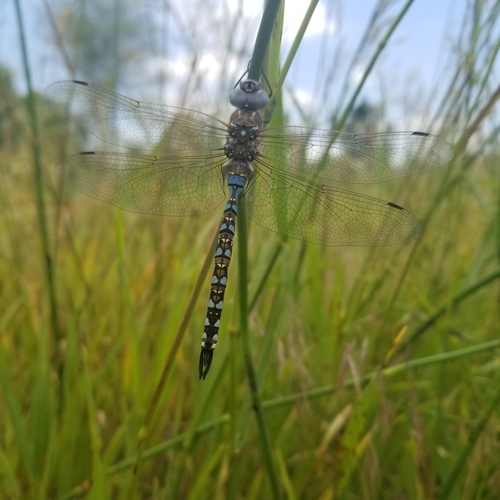
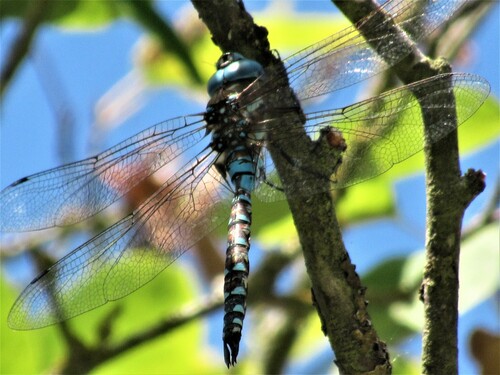
Same family (Aeshnidae)
Sources
- Wikipedia: https://en.wikipedia.org/wiki/Blue-eyed_darner
Look it up elsewhere: GBIF · iNaturalist · BugGuide · ITIS · Wikipedia
Text written 2026-10-22 from the sources above and checked sentence by sentence against them. Data fetched 2026-10-22.