 Bug FAQ
Common Green Darner
Anax junius · Order: Odonata · Family: Aeshnidae
Also called: Green Darner, Darning Needle, Snake Doctor, green darner dragonfly
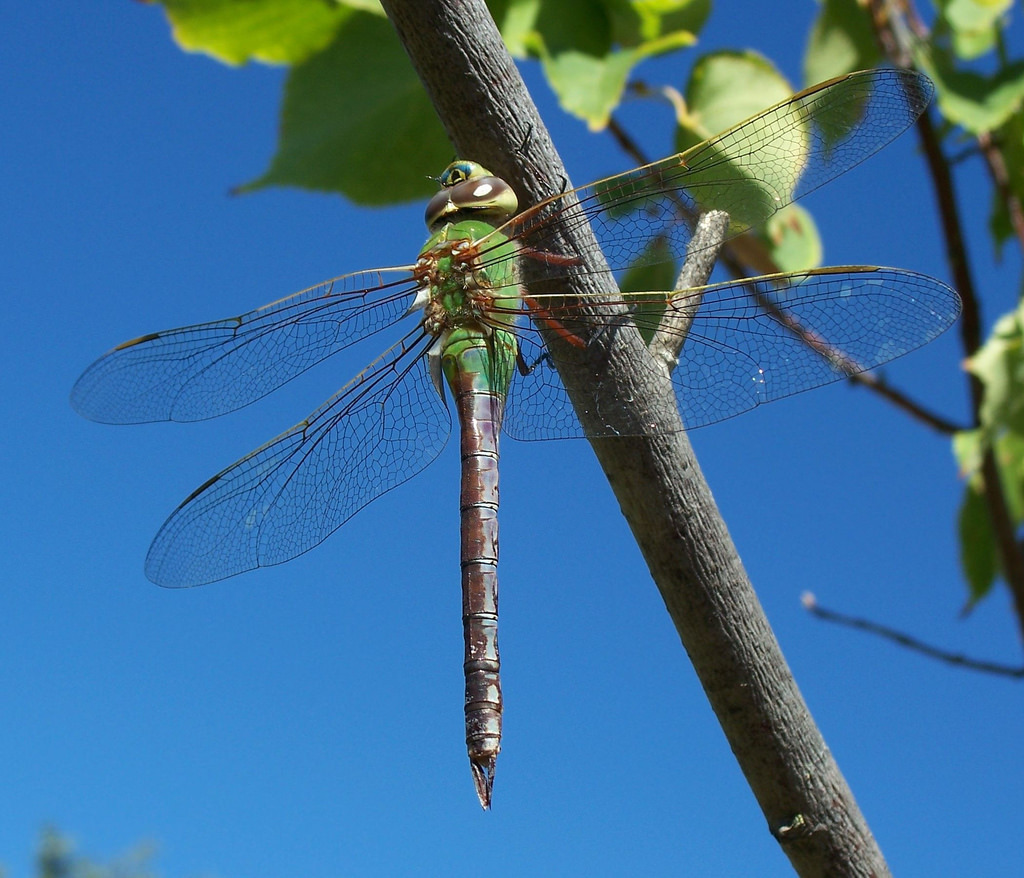
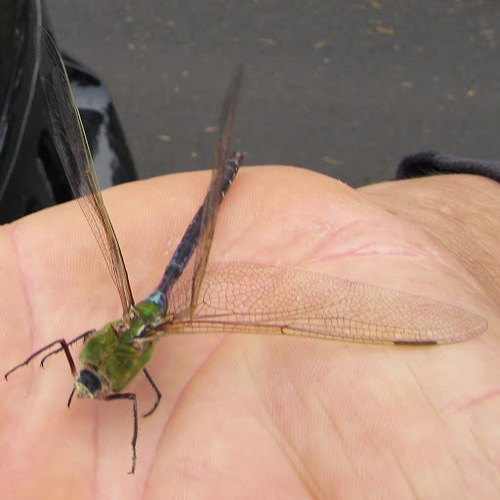
The common green darner is a large dragonfly with a green thorax and, in mature males, a bluish-purple abdomen marked by a black dorsal stripe. It lives near lakes, ponds, and slow streams as a nymph, while adults can be seen in many habitats including grasslands, forests, urban areas, and near water. Its range covers most of the United States and southern Canada, extending south to Panama, and it migrates north in spring and south in fall.
Source: Wikipedia
How to recognize it
Both sexes have an unmarked green thorax. Mature males show a bluish-purple abdomen with a black dorsal stripe that widens toward the end.
Source: Wikipedia
Size
Adults are 6.8 to 8 cm long with a wingspan up to 10 cm.
Source: Wikipedia
Where it lives
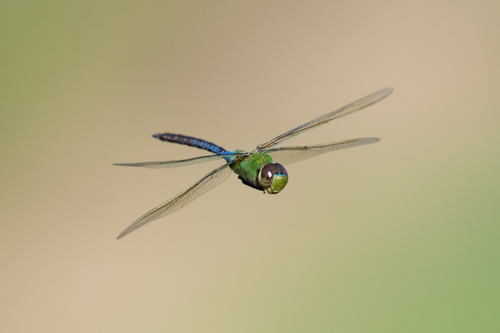
Adults are strong fliers and are found near water as well as in grasslands, forests, and urban areas.
Source: Wikipedia
What it eats
Aquatic nymphs eat insects, tadpoles, and small fish. Adults catch flying insects such as ants, moths, mosquitoes, and flies.
Source: Wikipedia
Life cycle
The species likely has at least three generations per year. One generation emerges in the south in early spring and moves north, while another emerges in the north in summer and moves south in fall.
Source: Wikipedia
When you see it
Fall southward migration is more noticeable than spring northward movement. Its wide range and migratory habits make its life history complex.
Source: Wikipedia
Lookalikes
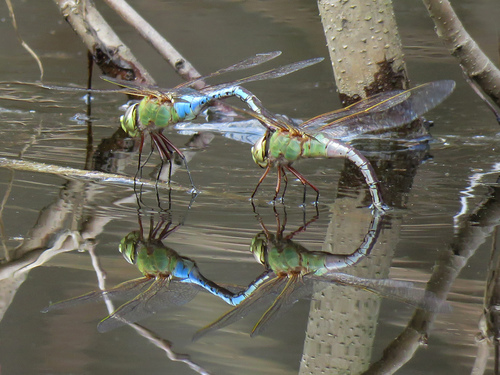
It lays eggs in tandem, a behavior not seen in other North American darners. A field mark distinguishes it from the similar comet darner.
Source: Wikipedia
Where it is found in the US
Recorded in 51 of 51 states and DC. Most records: Texas, Ohio, California, Minnesota, New Jersey, Illinois, Florida, Michigan.
Darker = more records. Counts are museum and citizen-science records, not population size.
Source: GBIF
Status: native in North America; native in Canada; native in United States. Source: iNaturalist
Months it is reported in the US
Source: GBIF
More photos
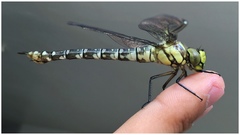
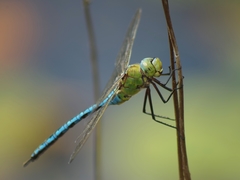
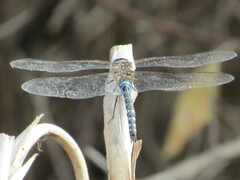
Same family (Aeshnidae)
Sources
- Wikipedia: https://en.wikipedia.org/wiki/Green_darner
Look it up elsewhere: GBIF · iNaturalist · BugGuide · ITIS · Wikipedia
Text written 2026-10-22 from the sources above and checked sentence by sentence against them. Data fetched 2026-10-22.