 Bug FAQ
Southern Hawker
Aeshna cyanea · Order: Odonata · Family: Aeshnidae
Also called: Blue Hawker, Blue Darner, Southern Aeshna, Southern Hawker Dragonfly
Source: Wikipedia
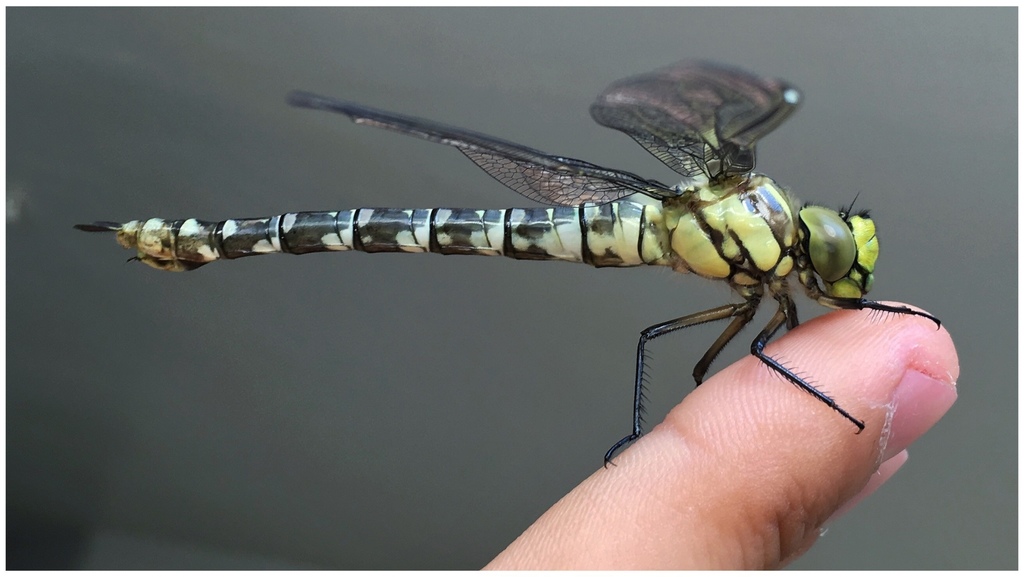
The southern hawker is a large dragonfly about 70 mm long with a wingspan up to 110 mm. It lives around well-vegetated ponds, gardens and open woodland and flies from June to October. Adults eat flying insects, while the aquatic nymphs eat other insects, small tadpoles and tiny fish.
Source: Wikipedia
How to recognize it
The thorax is brown with two wide green stripes and a T-shaped black spot on the forehead; wings are clear with a dark edge and a dark pterostigma.
Source: Wikipedia
Size
Body length reaches about 70 mm and wingspan can be up to 110 mm.
Source: Wikipedia
Does it bite or sting?
Despite their size, they cannot bite or sting and are harmless to humans.
Source: Wikipedia
Where it lives
They prefer small, well-vegetated ponds and garden ponds but are also seen in gardens and open woodland.
Source: Wikipedia
What it eats
Adult southern hawkers catch and eat various flying insects. Aquatic nymphs feed on other aquatic insects, small tadpoles, invertebrates and tiny fish.
Source: Wikipedia
Life cycle
Eggs laid the previous summer or autumn hatch in spring; nymphs develop for two to three years and emerge as adults in July-August.
Source: Wikipedia
When you see it
They are on the wing from June through October, with occasional sightings in May and November.
Source: Wikipedia
Where it comes from
They are common across most of Europe, from Scotland and southern Scandinavia down to Italy and the northern Balkans, and also occur in northwest Africa.
Source: Wikipedia
Where it is found in the US
Recorded in 1 of 51 states and DC. Most records: Connecticut.
Darker = more records. Counts are museum and citizen-science records, not population size.
Source: GBIF
Questions people ask
What do southern hawkers eat?
Adults eat flying insects, while the aquatic nymphs eat other insects, small tadpoles, invertebrates and tiny fish.
Source: Wikipedia
When are southern hawkers active?
Their flight period runs from June to October, with some individuals seen as early as May and as late as November.
Source: Wikipedia
Where can I find southern hawkers?
They are common around well-vegetated small ponds, garden ponds, gardens and open woodland throughout most of Europe and parts of northwest Africa.
Source: Wikipedia
Can southern hawkers bite or sting?
No, they have no ability to bite or sting and are completely harmless to people.
Source: Wikipedia
Same family (Aeshnidae)
Sources
- Wikipedia: https://en.wikipedia.org/wiki/Southern_hawker
Look it up elsewhere: GBIF · iNaturalist · BugGuide · Wikipedia
Text written 2026-10-23 from the sources above and checked sentence by sentence against them. Data fetched 2026-10-22.