 Bug FAQ
Soldier
Danaus eresimus · Order: Lepidoptera · Family: Nymphalidae
Also called: Soldier Butterfly, Tropical Queen
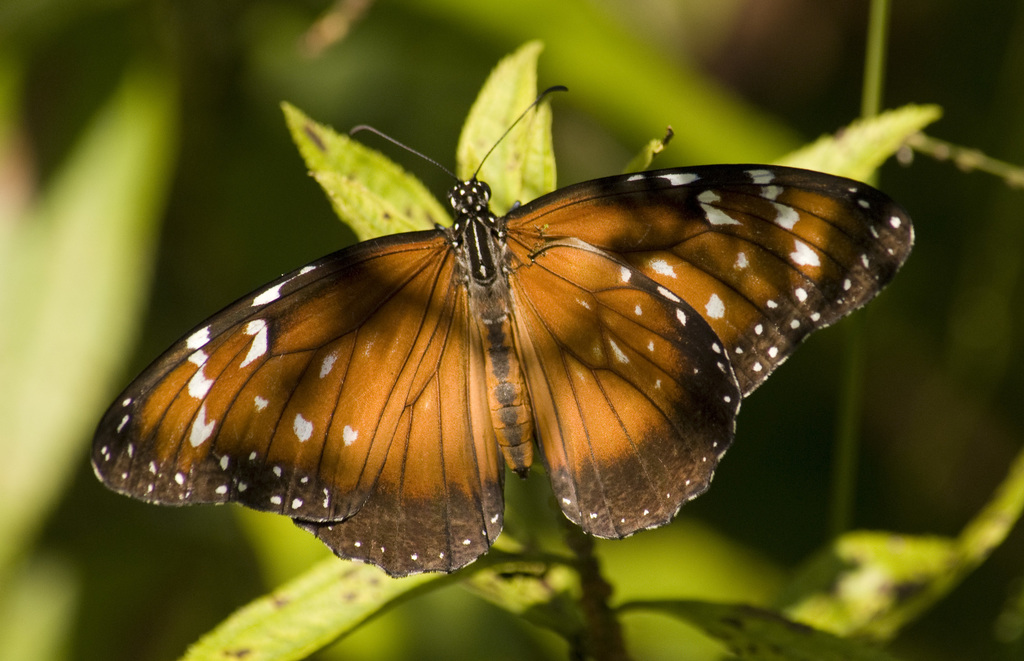
The soldier butterfly has a wingspan of about 2½ to 3½ inches (64 to 76 mm). Its upper wings are dark reddish-brown, sometimes with white spots near the edge, and males show a black scent patch on each hindwing. It lives in open subtropical areas such as citrus groves, weedy water edges, and dry fields, and can be seen most of the year in southern Florida and Texas.
Source: Wikipedia
Size
Wingspan ranges from 2½ to 3½ inches (64 to 76 mm).
Source: Wikipedia
Where it lives
Found in open subtropical habitats like citrus groves, weedy water edges, and dry fields.
Source: Wikipedia
What it eats
Larvae feed on Telminostelma foetidum and other milkweed-related plants; adults sip nectar from the same sources.
Source: Wikipedia
Life cycle
The caterpillar has six black, fleshy filaments: two near the head, two on the thorax, and two at the abdomen’s end. It produces three or more generations each year.
Source: Wikipedia
When you see it
In southern Florida it appears from February to December, peaking October-December; in southern Texas it is seen August to January.
Source: Wikipedia
Where it comes from
Native to North America, the Caribbean, and South America.
Source: Wikipedia
Lookalikes
Similar species include the monarch and the queen butterflies. The monarch is more orange, has darker black-lined veins, and a pale yellowish underside.
Source: Wikipedia
Where it is found in the US
Recorded in 6 of 51 states and DC. Most records: Texas, Florida, Arizona, New Mexico, Oklahoma, Colorado.
Darker = more records. Counts are museum and citizen-science records, not population size.
Source: GBIF
Months it is reported in the US
Source: GBIF
More photos
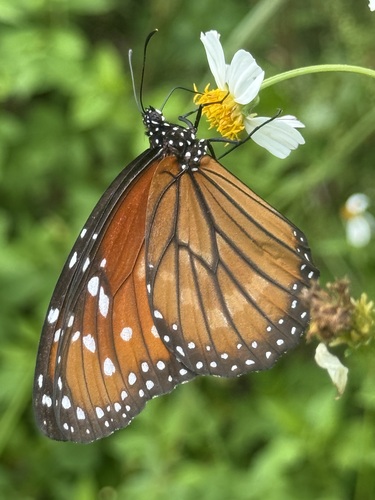
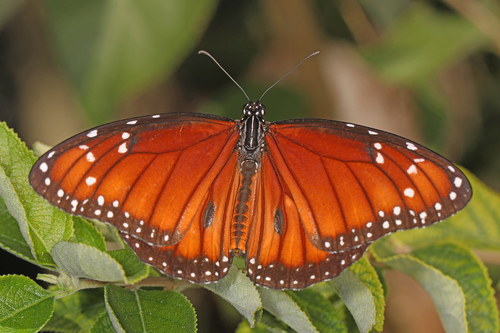
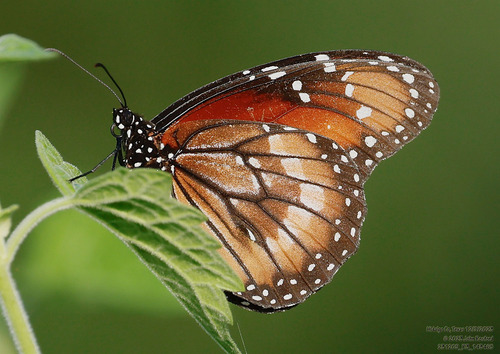
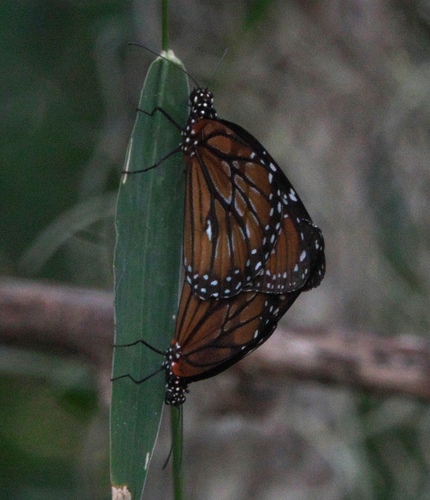
Same family (Nymphalidae)


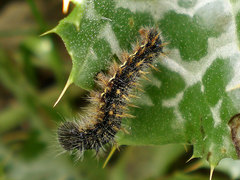



Sources
- Wikipedia: https://en.wikipedia.org/wiki/Danaus_eresimus
Look it up elsewhere: GBIF · iNaturalist · BugGuide · ITIS · Wikipedia
Text written 2026-10-23 from the sources above and checked sentence by sentence against them. Data fetched 2026-10-23.