 Bug FAQ
Sneaky Elf
Pyropyga decipiens · Order: Coleoptera · Family: Lampyridae
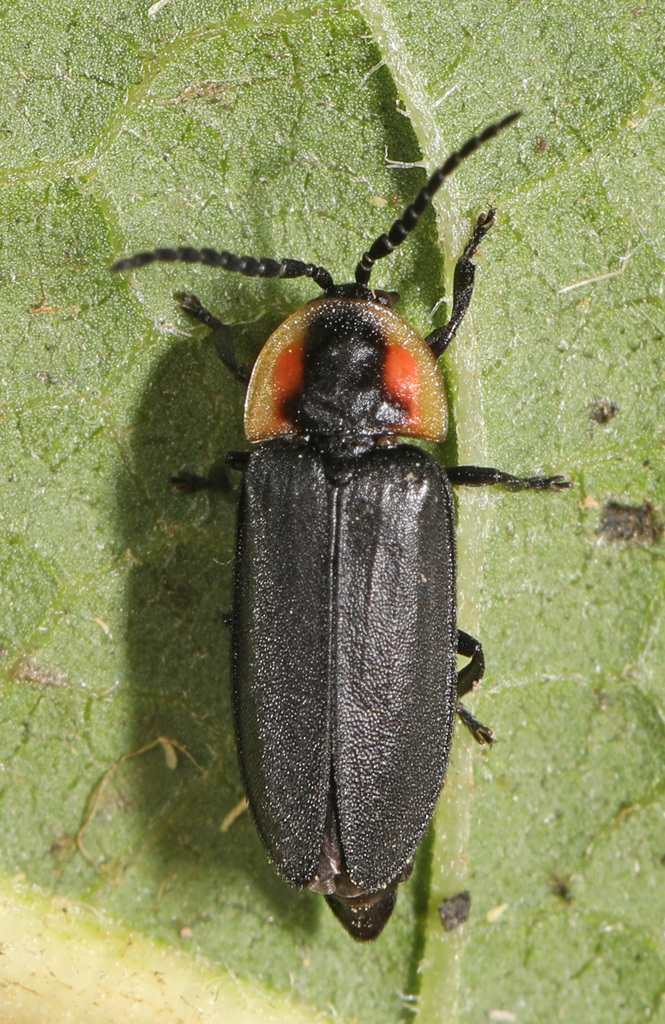
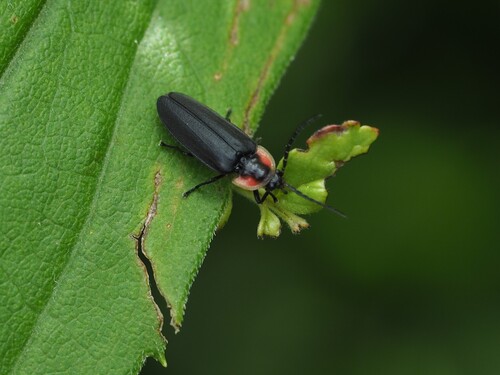
Adult sneaky elf fireflies are 5 to 8 mm long and have a flattened black body with a striped pronotum and solid black wing covers. They are found in eastern North America, ranging from Tennessee up to eastern Canada. Unlike most fireflies, they do not have a glowing lantern.
Source: Wikipedia
How to recognize it
It lacks the bioluminescent lantern that most Lampyridae have.
Source: Wikipedia
Size
Adults measure between five and eight millimeters in length.
Source: Wikipedia
Where it lives
It lives in eastern North America.
Source: Wikipedia
Where it comes from
Its range extends from Tennessee northward to eastern Canada.
Source: Wikipedia
Lookalikes
In the southern part of its range it can be confused with Pyropyga minuta, and in the western part with Pyropyga nigricans.
Source: Wikipedia
Where it is found in the US
Recorded in 25 of 51 states and DC. Most records: Ohio, Kentucky, Maine, Pennsylvania, New Jersey, Kansas, New York, Michigan.
Darker = more records. Counts are museum and citizen-science records, not population size.
Source: GBIF
Status: native in North America; native in Canada. Source: iNaturalist
Months it is reported in the US
Source: GBIF
More photos
Questions people ask
How can I tell a sneaky elf firefly apart from similar beetles?
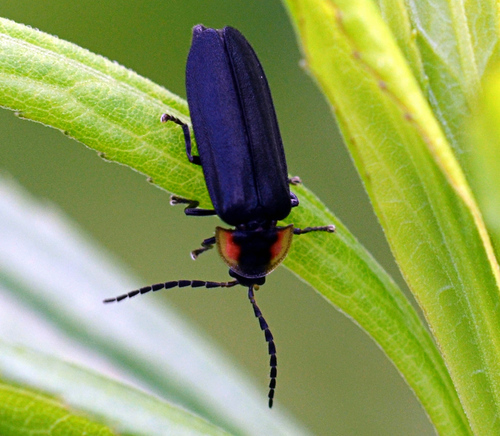
Look for a small, flattened beetle with a black striped pronotum and solid black wing covers, and note that it does not glow like other fireflies.
Source: Wikipedia
Where might I find a sneaky elf firefly?
They are found in eastern North America, from Tennessee up to eastern Canada.
Source: Wikipedia
What size are adult sneaky elf fireflies?
Adults are between five and eight millimeters long.
Source: Wikipedia
Same family (Lampyridae)


Sources
- Wikipedia: https://en.wikipedia.org/wiki/Pyropyga_decipiens
Look it up elsewhere: GBIF · iNaturalist · BugGuide · ITIS · Wikipedia
Text written 2026-10-26 from the sources above and checked sentence by sentence against them. Data fetched 2026-10-26.