 Bug FAQ
Smooth Spangle Gall Wasp
Neuroterus albipes · Order: Hymenoptera · Family: Cynipidae
Also called: Smooth Spangle Gall
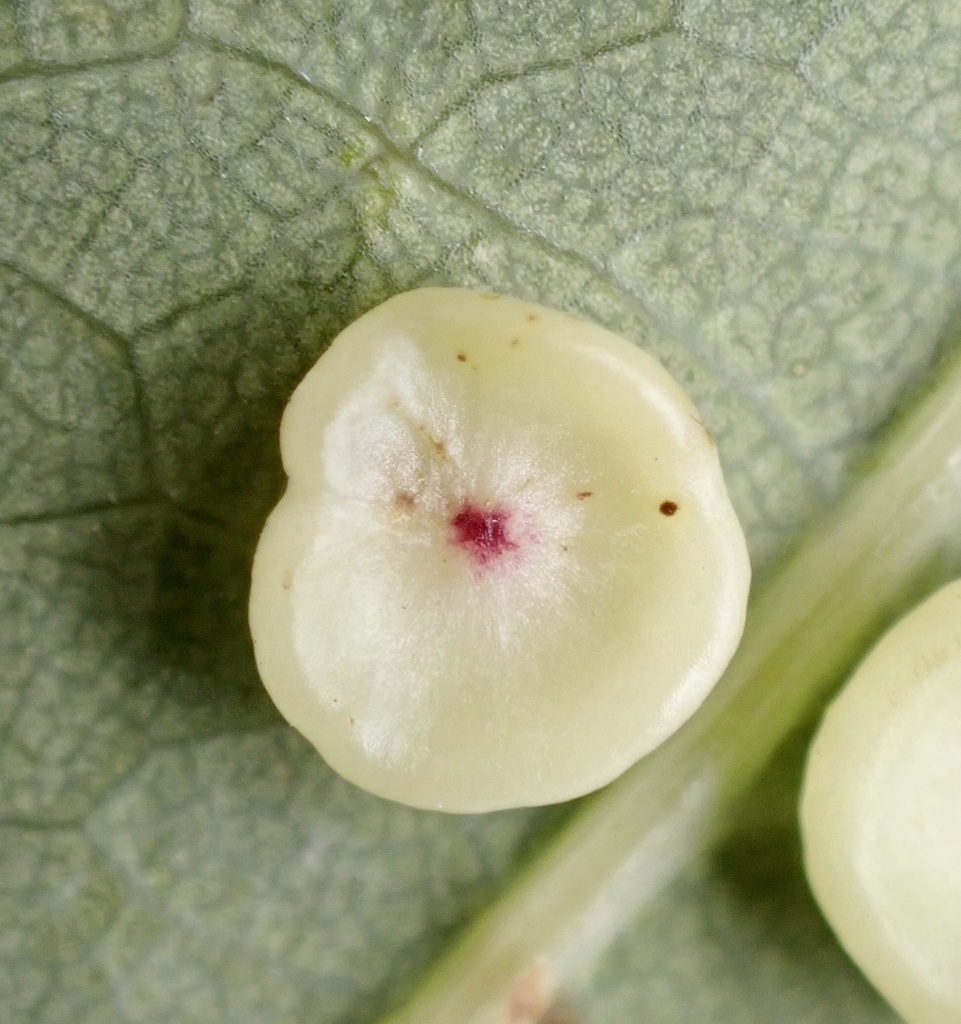
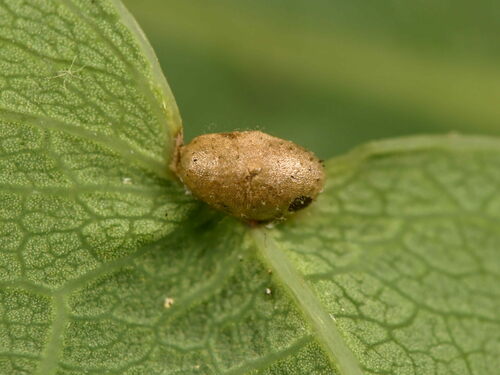
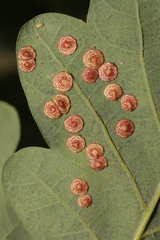
The smooth spangle gall is a disc-shaped growth about 0.4 cm across that appears on oak leaves in spring, while Schenck's gall is a tiny oval about 0.1 × 0.2 cm that forms later in the leaf margin. The smooth gall is cream-coloured with a small central cone, a pronounced rim and may show purple or red streaks; the leaf galls can swell after they fall in autumn.
Source: Wikipedia
How to recognize it
The smooth spangle gall has a cream-coloured saucer, a tiny cone in the centre and a distinct rim, sometimes folded in two.
Source: Wikipedia
Size
Smooth spangle galls are about 0.4 cm across and may have purple, red or other colour streaks. Schenck's galls are oval, about 0.1 × 0.2 cm, and light green, blending with the leaf.
Source: Wikipedia
Where it lives
Galls swell noticeably after they detach and fall to the ground in late autumn.
Source: Wikipedia
Life cycle
Neuroterus albipes has both sexual and asexual generations, producing smooth spangle galls and Schenck's galls on oak leaves. Females emerge from smooth spangle galls in early spring and lay unfertilised eggs on oak leaf margins, forming Schenck's galls.
Source: Wikipedia
When you see it
The agamic generation emerges in spring from smooth spangle galls that are about 0.4 cm across. Galls fall to the ground in autumn after developing the previous summer.
Source: Wikipedia
Lookalikes
Older literature may list Neuroterus laeviusculus or Spathegaster albipes as synonyms. Compared with Neuroterus quercusbaccarum, this species produces far fewer galls per leaf.
Source: Wikipedia
More photos
Questions people ask
When do smooth spangle galls appear?
They develop in early spring and are about 0.4 cm across.
Source: Wikipedia
What do Schenck's galls look like?
They are tiny oval galls, roughly 0.1 × 0.2 cm, light green and blend with the leaf surface.
Source: Wikipedia
Do the galls change after falling to the ground?
Yes, they swell noticeably after detaching and falling in late autumn.
Source: Wikipedia
Are there other names for this wasp?
It has been called Neuroterus laeviusculus and Spathegaster albipes in older literature.
Source: Wikipedia
Same family (Cynipidae)


Sources
- Wikipedia: https://en.wikipedia.org/wiki/Neuroterus_albipes
Look it up elsewhere: GBIF · iNaturalist · BugGuide · Wikipedia
Text written 2026-10-23 from the sources above and checked sentence by sentence against them. Data fetched 2026-10-22.