 Bug FAQ
Smooth-eyed Bushbrown
Orsotriaena medus · Order: Lepidoptera · Family: Nymphalidae
Also called: Dusky Bush-brown, Medus Brown
Source: Wikipedia
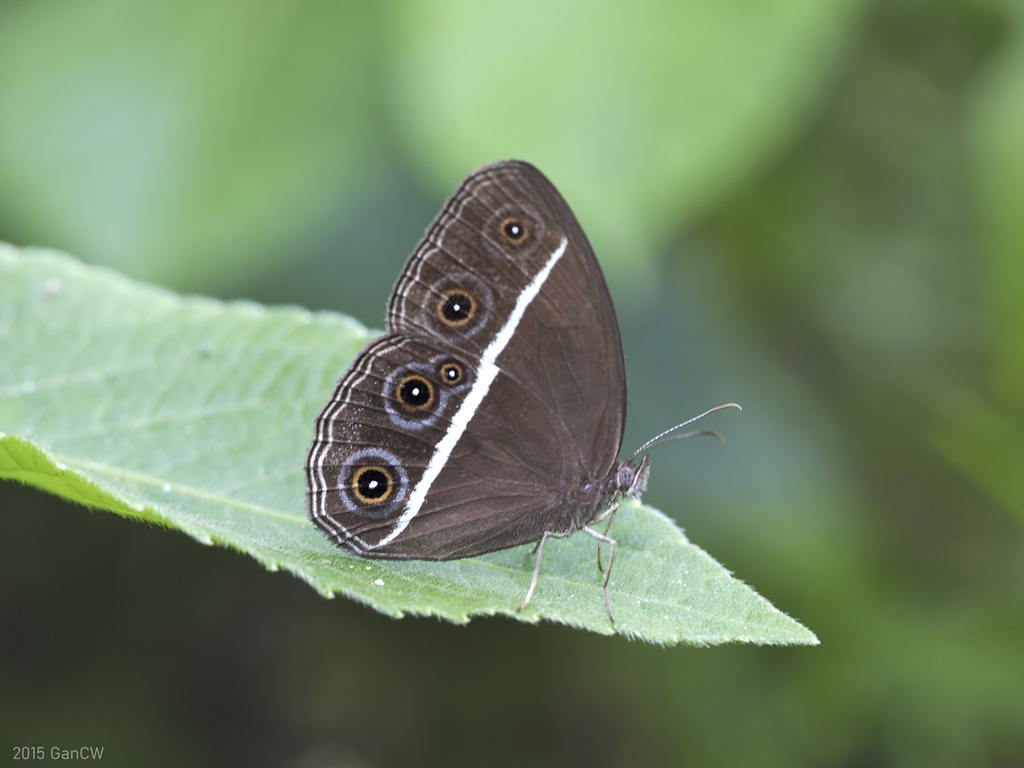
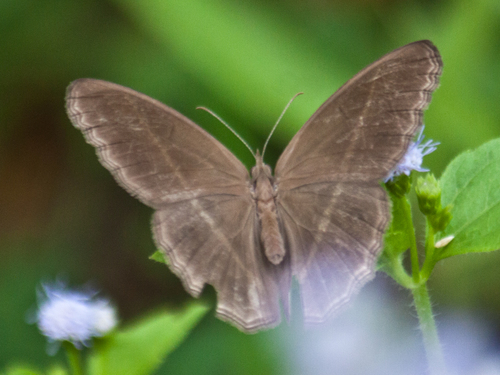
It is a medium-sized butterfly with a wingspan of about 45 to 55 mm. The upper side of the wings is dark brown with a thin pale edge, and the underside shows a white band across both wings. It lives in grassy areas up to 1,600 m altitude, staying low and shy among the undergrowth.
Source: Wikipedia
How to recognize it
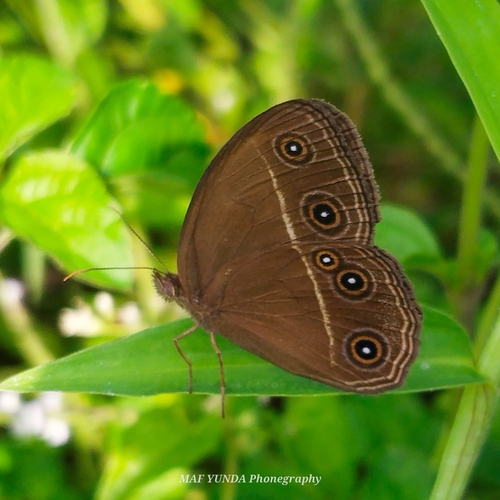
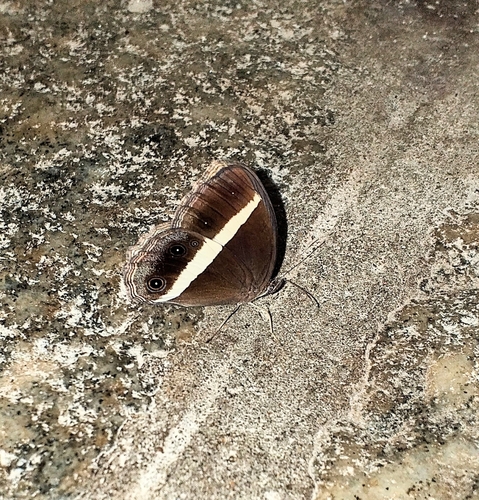
The butterfly is dark brown on top with a thin pale border along the wing margins. On the underside there is a white discal band that runs across both wings.
Source: Wikipedia
Where it lives
It is a shy, weak-flying insect that stays low among the undergrowth.
Source: Wikipedia
What it eats
The larvae feed on grasses, including rice, sugarcane and para grass.
Source: Wikipedia
Life cycle
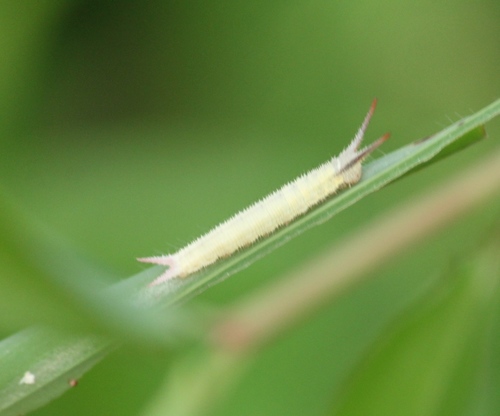
Eggs are spherical, yellowish and are laid on grass leaf blades and stems. The caterpillars are spindle-shaped, transversely wrinkled and covered with small tubercles.
Source: Wikipedia
Lookalikes
It looks similar to Mycalesis bushbrowns but can be told apart by the number of spots on the wings.
Source: Wikipedia
More photos
Questions people ask
What do the caterpillars eat?
They feed on grasses such as rice, sugarcane and para grass.
Source: Wikipedia
How can I tell it apart from similar butterflies?
Look for the dark brown upper side with a thin pale border and the white band on the underside; the number of spots also differs from Mycalesis species.
Source: Wikipedia
Same family (Nymphalidae)






Sources
- Wikipedia: https://en.wikipedia.org/wiki/Orsotriaena
Look it up elsewhere: GBIF · iNaturalist · BugGuide · Wikipedia
Text written 2026-10-22 from the sources above and checked sentence by sentence against them. Data fetched 2026-10-22.