 Bug FAQ
Smokies Synchronous Firefly
Photinus carolinus · Order: Coleoptera · Family: Lampyridae
Also called: Synchronous Firefly, Light Show
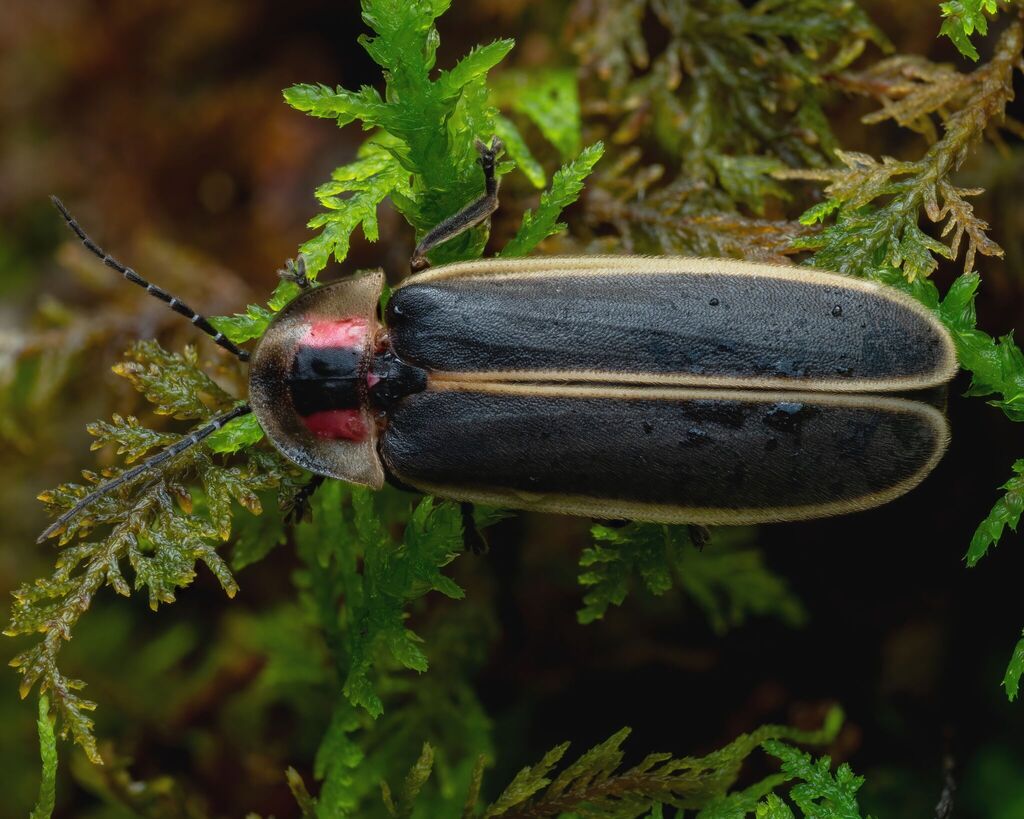
Photinus carolinus is a medium-sized beetle about 11 to 15 mm long and lives in isolated pockets of Appalachian hardwood forests. Adults show pale lanterns on their abdomen, appear in early summer (late May to June), and flash light to attract mates.
Source: Wikipedia
How to recognize it
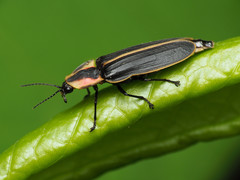
The beetle has dark wing covers with light side margins, a pale yellow pronotum marked by a dark rectangle and thin black edges. Males carry lanterns on abdominal segments 6 and 7, while females have a single lantern on segment 6.
Source: Wikipedia
Size
Adults measure between 11 and 15 mm (0.4 to 0.6 in) in length.
Source: Wikipedia
Where it lives
In the southern part of its range it prefers mature hardwood forests over 65 years old in mountain river valleys from 1,400 to 6,000 ft elevation. In Pennsylvania and New York it is found at lower elevations of 1,000 to 2,000 ft.
Source: Wikipedia
What it eats
Larvae live below the soil surface and eat snails, worms and other soft-bodied invertebrates. Adult fireflies use their abdominal lanterns to produce mating signals.
Source: Wikipedia
Life cycle
The species passes through egg, larva, pupa and adult stages. Adults emerge in early summer, typically from late May through June.
Source: Wikipedia
When you see it
Firefly displays are commonly observed in early June near Elkmont, Tennessee.
Source: Wikipedia
Lookalikes
Photinus fireflies are “lightning-bug” types that emit light while flying as adults. Males usually fly alone, flashing a species-specific pattern, which is why they are called rover fireflies.
Source: Wikipedia
Where it is found in the US
Recorded in 7 of 51 states and DC. Most records: North Carolina, Tennessee, Pennsylvania, Virginia, Ohio, Maryland, West Virginia.
Darker = more records. Counts are museum and citizen-science records, not population size.
Source: GBIF
Months it is reported in the US
Source: GBIF
More photos
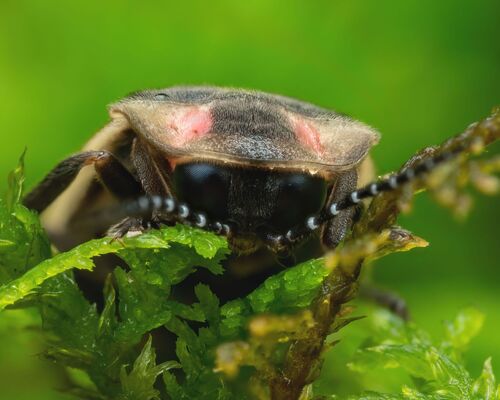
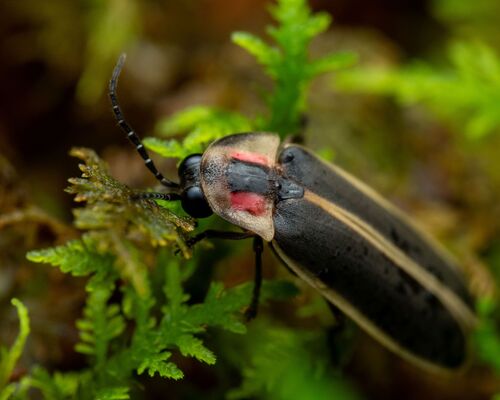

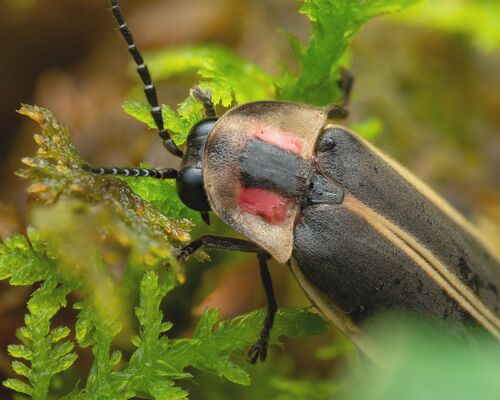
Same family (Lampyridae)


Sources
- Wikipedia: https://en.wikipedia.org/wiki/Photinus_carolinus
Look it up elsewhere: GBIF · iNaturalist · BugGuide · ITIS · Wikipedia
Text written 2026-10-29 from the sources above and checked sentence by sentence against them. Data fetched 2026-10-29.