 Bug FAQ
Small Tortoiseshell
Aglais urticae · Order: Lepidoptera · Family: Nymphalidae
Also called: Small Tortoiseshell Butterfly

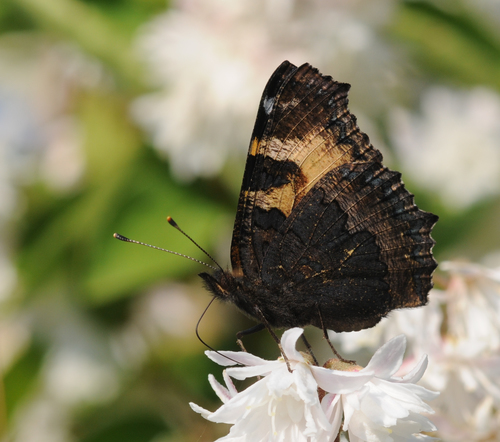
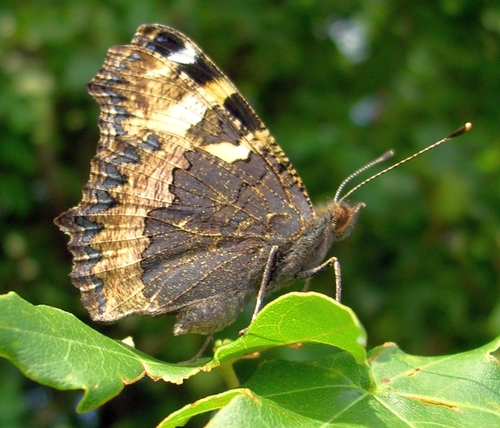
The small tortoiseshell is a medium-sized butterfly with a bright reddish-orange base, black and yellow markings on the forewings, and a band of blue spots along the wing edges. It lives across temperate Europe and much of Asia wherever common nettles grow, and its caterpillars feed on nettles while adults sip nectar. Adults emerge in early spring, can be seen through late autumn, and overwinter in hibernation before mating again.
Source: Wikipedia
How to recognize it
The wings show a foxy red ground colour, three black spots on the forewing costal edge with yellow gaps, a larger black spot near the hind margin, and a black submarginal band dotted with blue spots on both wings.
Source: Wikipedia
Size
Its wingspan ranges from about 4.5 to 6.2 cm.
Source: Wikipedia
Where it lives
It is a colourful Eurasian butterfly in the Nymphalidae family.
Source: Wikipedia
What it eats
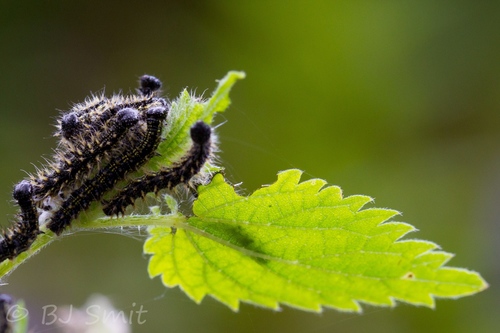
Caterpillars feed on stinging nettle, small nettle, and occasionally hops. Adult butterflies drink flower nectar.
Source: Wikipedia
Life cycle
The species has one of the longest activity periods of any Eurasian butterfly, from early spring to late autumn. Adults spend the winter in hibernation and emerge on warm sunny days to mate and lay eggs.
Source: Wikipedia
When you see it
Its flight season extends from early spring through late autumn. It begins hibernation around October and shows territorial behavior after emerging.
Source: Wikipedia
Where it is found in the US
Recorded in 4 of 51 states and DC. Most records: Kansas, North Carolina, Pennsylvania, Wisconsin.
Darker = more records. Counts are museum and citizen-science records, not population size.
Source: GBIF
More photos
Same family (Nymphalidae)


Sources
- Wikipedia: https://en.wikipedia.org/wiki/Small_tortoiseshell
Look it up elsewhere: GBIF · iNaturalist · BugGuide · ITIS · Wikipedia
Text written 2026-10-22 from the sources above and checked sentence by sentence against them. Data fetched 2026-10-22.