 Bug FAQ
Small Oak Apple Gall Wasp
Amphibolips quercusostensackenii · Order: Hymenoptera · Family: Cynipidae
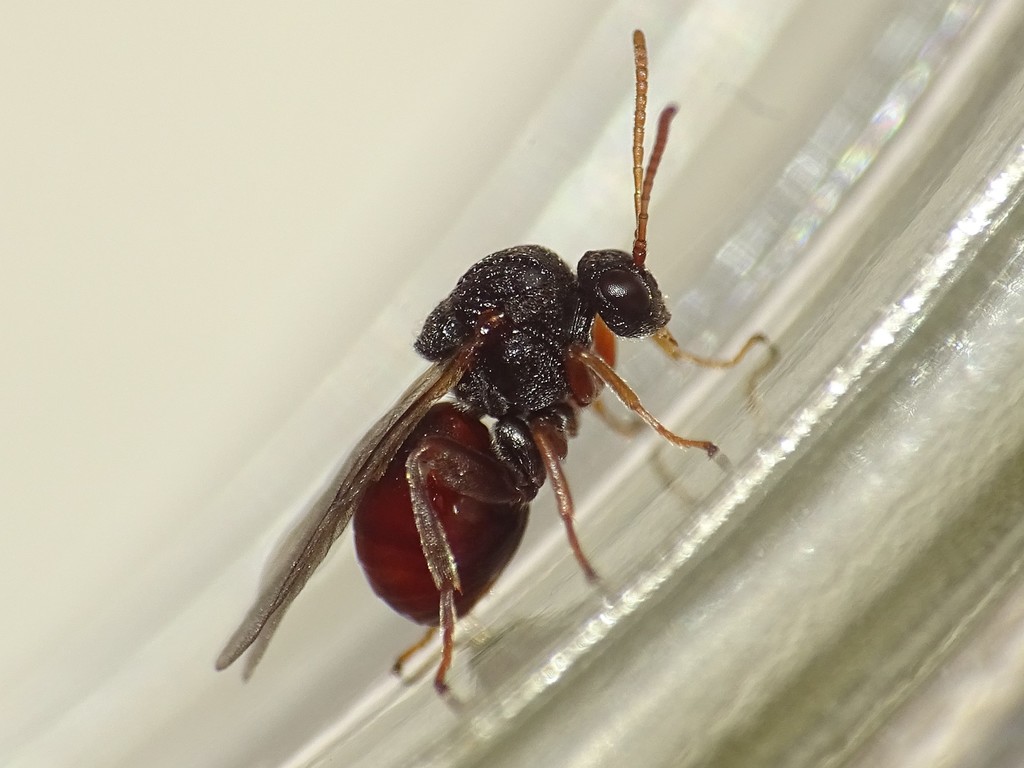
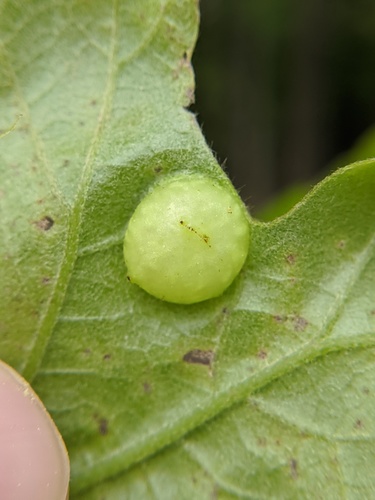
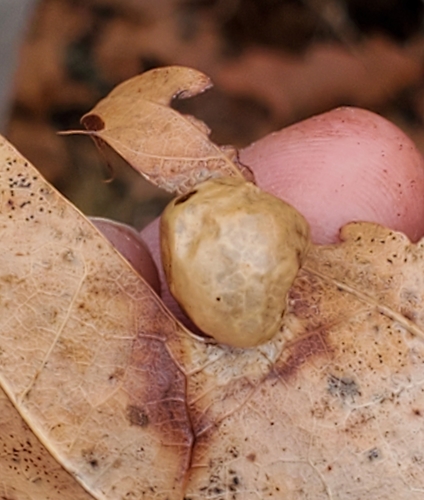
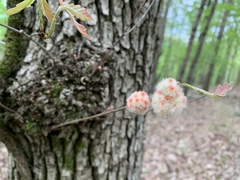
The Small Oak Apple Gall Wasp makes round galls about 7-9 mm across on oak leaves. Adults emerge from the galls in early to mid-July in the Chicago area.
Source: Wikipedia
How to recognize it
Amphibolips quercusostensackenii belongs to the gall-wasp family Cynipidae.
Source: Wikipedia
Where it lives
It occurs throughout eastern North America.
Source: Wikipedia
When you see it
Adults are observed emerging from the galls in early to mid-July.
Source: Wikipedia
Where it comes from
Its range covers eastern North America.
Source: Wikipedia
Lookalikes
It is a member of the Cynipidae family, which includes many gall-forming wasps.
Source: Wikipedia
Where it is found in the US
Recorded in 41 of 51 states and DC. Most records: California, Texas, New York, Massachusetts, Virginia, Pennsylvania, Ohio, Michigan.
Darker = more records. Counts are museum and citizen-science records, not population size.
Source: GBIF
Status: native in North America; native in United States. Source: iNaturalist
Months it is reported in the US
Source: GBIF
More photos
Questions people ask
Same family (Cynipidae)


Sources
- Wikipedia: https://en.wikipedia.org/wiki/Amphibolips_quercusostensackenii
Look it up elsewhere: GBIF · iNaturalist · BugGuide · Wikipedia
Text written 2026-10-23 from the sources above and checked sentence by sentence against them. Data fetched 2026-10-22.