 Bug FAQ
Slaty Skimmer
Libellula incesta · Order: Odonata · Family: Libellulidae
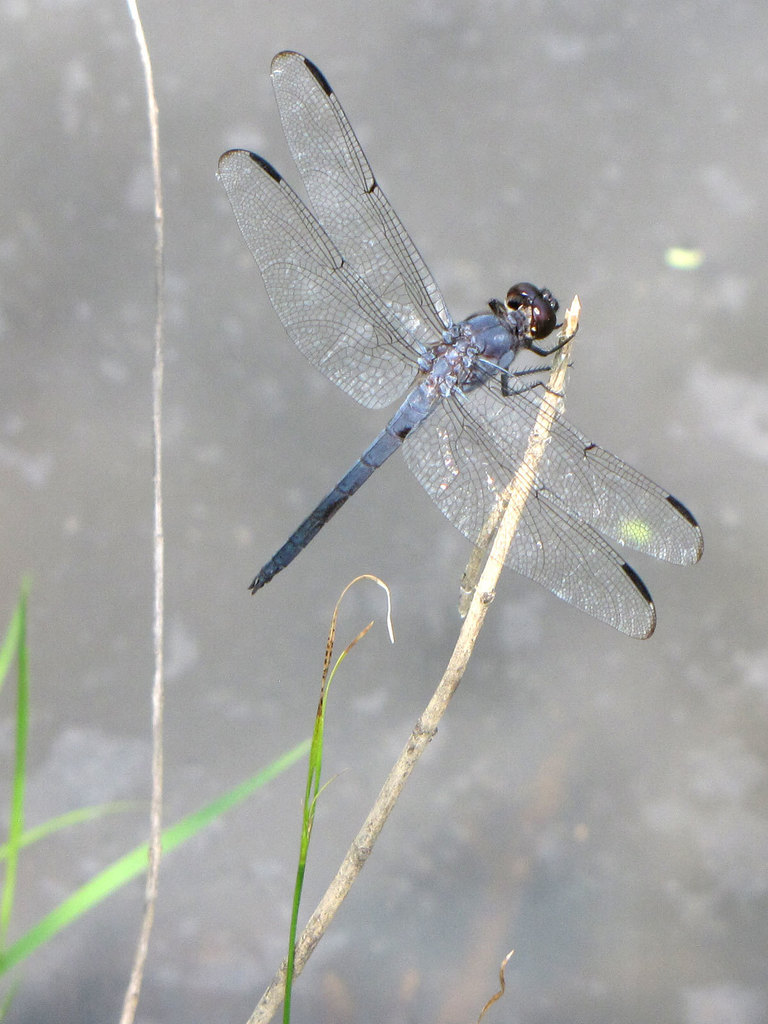
Adult slaty skimmers are about 5.3 cm long and males are dark blue with black heads, while females and juveniles are brown with a darker stripe on the back. The larvae live in the bottom sediments of permanent lakes, and adults are seen flying from June through August in the eastern United States and parts of southern Canada.
Source: Wikipedia
Size
Adults measure roughly 5.28 cm (about 2.08 in) in length.
Source: Wikipedia
Where it lives
Larvae are specialists that live in the benthic zone of permanent lakes.
Source: Wikipedia
When you see it
Adults are on the wing from June to August.
Source: Wikipedia
Where it is found in the US
Recorded in 37 of 51 states and DC. Most records: Ohio, New Jersey, Texas, Virginia, Maryland, North Carolina, Massachusetts, Georgia.
Darker = more records. Counts are museum and citizen-science records, not population size.
Source: GBIF
Status: native in North America; native in Canada; native in United States. Source: iNaturalist
Months it is reported in the US
Source: GBIF
More photos

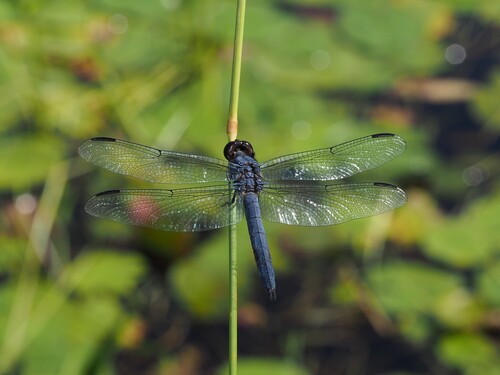
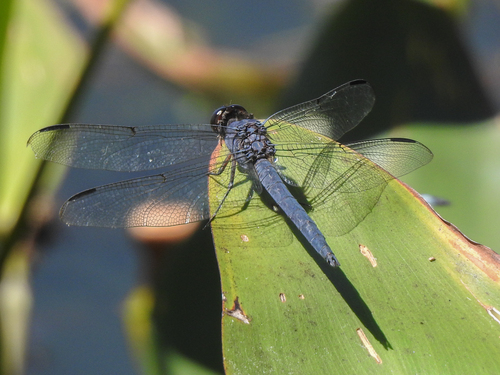

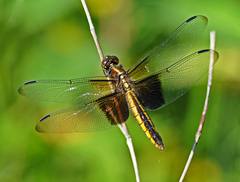
Same family (Libellulidae)





Sources
- Wikipedia: https://en.wikipedia.org/wiki/Libellula_incesta
Look it up elsewhere: GBIF · iNaturalist · BugGuide · ITIS · Wikipedia
Text written 2026-10-22 from the sources above and checked sentence by sentence against them. Data fetched 2026-10-22.