 Bug FAQ
Sitka Bumble Bee
Bombus sitkensis · Order: Hymenoptera · Family: Apidae
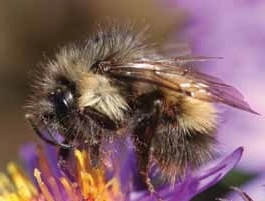
The Sitka bumblebee is a western North American species found from Alaska to California. Queens have a long flight period from late January to early December, with workers appearing in March and males in April. It forages on flowers of families such as Ericaceae, Asteraceae, Saxifragaceae, and Rhamnaceae.
Source: Wikipedia
How to recognize it
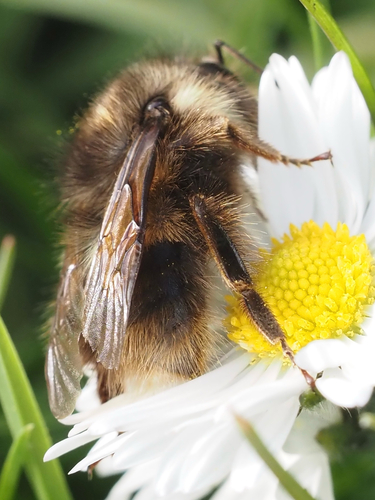
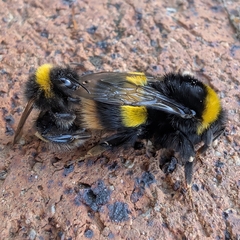
Females show mixed black and yellow hairs on the face and front thorax, a black central thorax patch, and yellowish sides. Abdominal segments 1 and 2 are yellow; segments 3 and 4 are black with a yellow rear edge; the last two segments are brownish-red.
Source: Wikipedia
Size
The bee has an oblong head and a medium-length proboscis.
Source: Wikipedia
Where it lives
In California parks its numbers have dropped slightly because it competes with the yellow-faced bumblebee for nesting sites like rodent holes.
Source: Wikipedia
What it eats
It feeds on flowering plants in the Ericaceae, Asteraceae, Saxifragaceae, and Rhamnaceae families.
Source: Wikipedia
Life cycle
Queens are active almost year-round, from late January to early December. First workers emerge in early March; males appear in early April and both disappear by the end of September.
Source: Wikipedia
When you see it
Queens fly from the end of January through early December; workers start in March and males in April.
Source: Wikipedia
Where it comes from
It is common across western North America, from Alaska down to California.
Source: Wikipedia
Lookalikes
It can be confused with the yellow-faced bumblebee, which competes for nesting sites in California parks.
Source: Wikipedia
Where it is found in the US
Recorded in 9 of 51 states and DC. Most records: Washington, Oregon, Alaska, California, Montana, Idaho, Wyoming, Utah.
Darker = more records. Counts are museum and citizen-science records, not population size.
Source: GBIF
Status: native in North America; native in Canada; native in United States. Source: iNaturalist
Months it is reported in the US
Source: GBIF
More photos
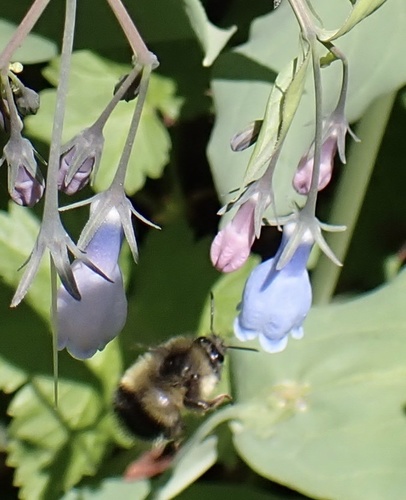
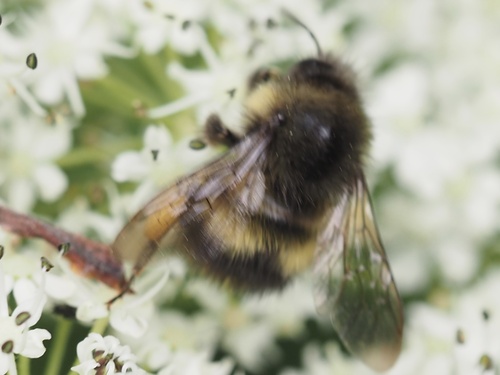
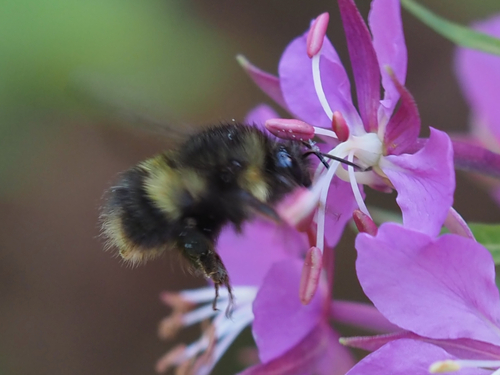
Questions people ask
What does the Sitka bumblebee look like?
Females have black and yellow facial hairs, a black central thorax patch, yellow sides, and a distinctive pattern of yellow and black on the abdomen.
Source: Wikipedia
When are Sitka bumblebees active?
Queens are on the wing from late January to early December, with workers appearing in March and males in April.
Source: Wikipedia
Where can I find Sitka bumblebees?
They are common in western North America, ranging from Alaska to California.
Source: Wikipedia
What plants do they visit?
They forage on flowers from the Ericaceae, Asteraceae, Saxifragaceae, and Rhamnaceae families.
Source: Wikipedia
Same family (Apidae)


Sources
- Wikipedia: https://en.wikipedia.org/wiki/Bombus_sitkensis
Look it up elsewhere: GBIF · iNaturalist · BugGuide · ITIS · Wikipedia
Text written 2026-10-22 from the sources above and checked sentence by sentence against them. Data fetched 2026-10-22.