 Bug FAQ
Silver-studded Leafwing
Hypna clytemnestra · Order: Lepidoptera · Family: Nymphalidae
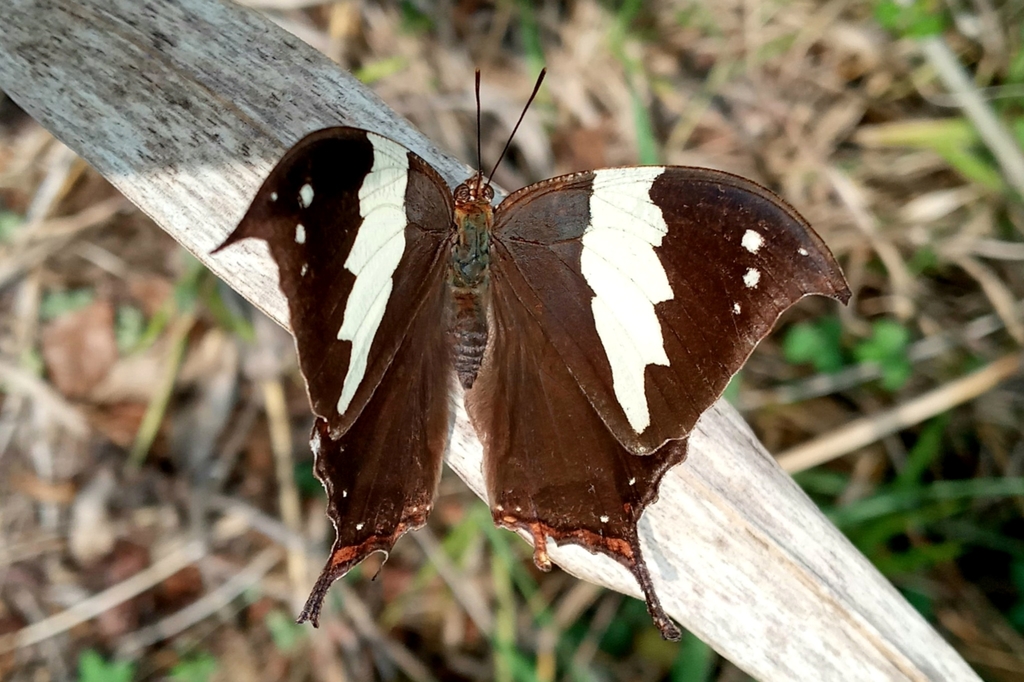
The silver-studded leafwing is the biggest butterfly in its tribe, with black forewings marked by white spots and two wide white bands, and brown hindwings on top. Its underside looks like a dead leaf, ranging from dark brown to almost white, helping it blend into forest floors. It lives from lowland areas up to about 1,200 m elevation across Mexico to the Amazon, where larvae eat Croton floribundus and adults sip rotting fruit.
Source: Wikipedia
How to recognize it
Forewings are black with a few white edge spots and two large white cross-bands. Hindwings are mainly brown on the upper side. The underside mimics dead leaves, from dark brown to whitish.
Source: Wikipedia
Size
It is the largest member of the Anaeini tribe.
Source: Wikipedia
Where it lives
Found in lowlands and foothills between about 100 and 1,200 m elevation.
Source: Wikipedia
What it eats
Caterpillars feed on the plant Croton floribundus. Adults feed on rotting fruit.
Source: Wikipedia
Where it comes from
Its range extends from Mexico down through the Amazon basin.
Source: Wikipedia
Questions people ask
Where can I find this butterfly?
It lives from lowland areas up to about 1,200 m in Mexico through the Amazon region.
Source: Wikipedia
How can I recognize this butterfly?
Look for black forewings with white spots and two wide white bands, brown hindwings on top, and a leaf-like underside.
Source: Wikipedia
Same family (Nymphalidae)






Sources
- Wikipedia: https://en.wikipedia.org/wiki/Hypna
Look it up elsewhere: GBIF · iNaturalist · BugGuide · Wikipedia
Text written 2026-10-23 from the sources above and checked sentence by sentence against them. Data fetched 2026-10-23.