 Bug FAQ
Silk-Button Spangle Gall Wasp
Neuroterus numismalis · Order: Hymenoptera · Family: Cynipidae
Also called: Silk-Button Spangle Gall
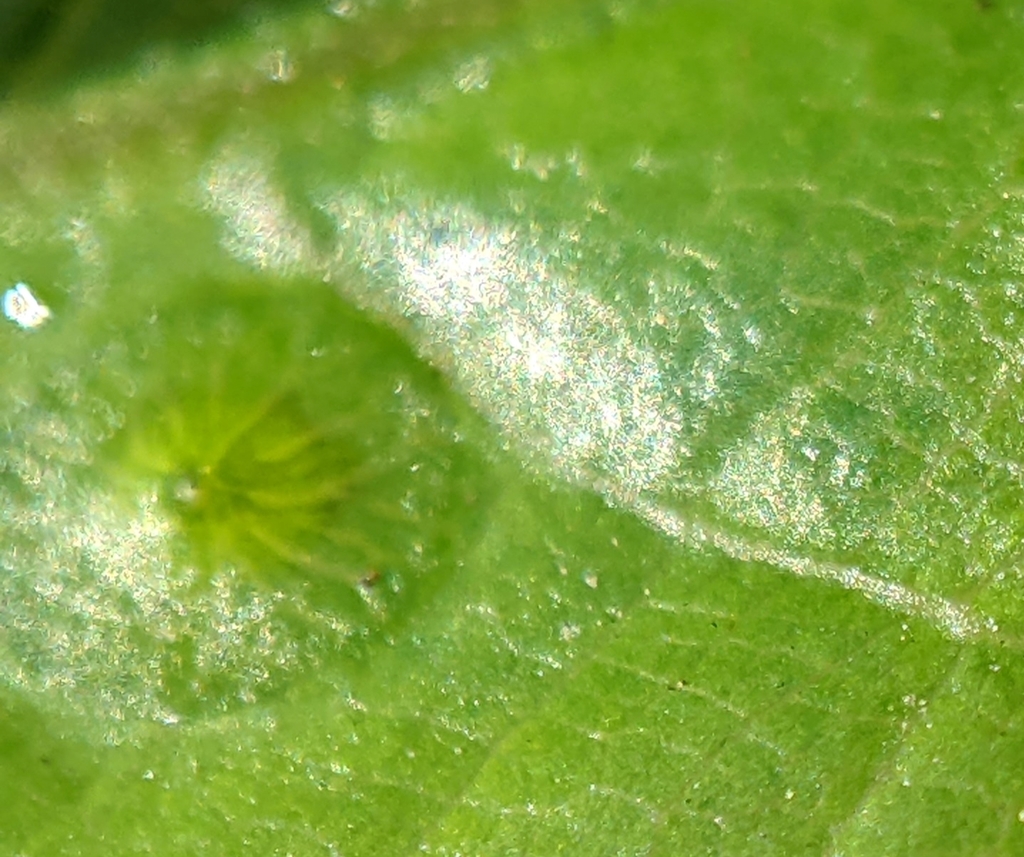
The silk-button spangle gall wasp lives on oak trees and makes many leaf galls. It has two generations to a bisexual one and a parthenogenetic one to each producing a different gall.
Source: Wikipedia
How to recognize it
The bisexual female is small, brown, with clear wings and hairy legs. The parthenogenetic female has a black pointed head, pale brown eyes, clear wings with dark veins and hairs.
Source: Wikipedia
Size
Bisexual females are about 1.8 to 2.4 mm long. Parthenogenetic females are roughly 2.5 mm long.
Source: Wikipedia
Where it lives
They live on oak trees, where they chemically induce leaf galls. A single leaf can hold over a thousand galls.
Source: Wikipedia
Life cycle
The species alternates between a bisexual generation and an agamic (parthenogenetic) generation, each forming a distinct gall type. Females emerge from silk-button galls in early spring, lay unfertilised eggs in oak buds, and cause blister galls.
Source: Wikipedia
When you see it
Females emerge from silk-button galls on the ground in early spring. The bisexual generation appears in midsummer from blister galls.
Source: Wikipedia
More photos


Same family (Cynipidae)


Sources
- Wikipedia: https://en.wikipedia.org/wiki/Neuroterus_numismalis
Look it up elsewhere: GBIF · iNaturalist · BugGuide · ITIS · Wikipedia
Text written 2026-10-22 from the sources above and checked sentence by sentence against them. Data fetched 2026-10-22.