 Bug FAQ
Silent Firefly
Photinus indictus · Order: Coleoptera · Family: Lampyridae
Also called: Small-eyed Firefly
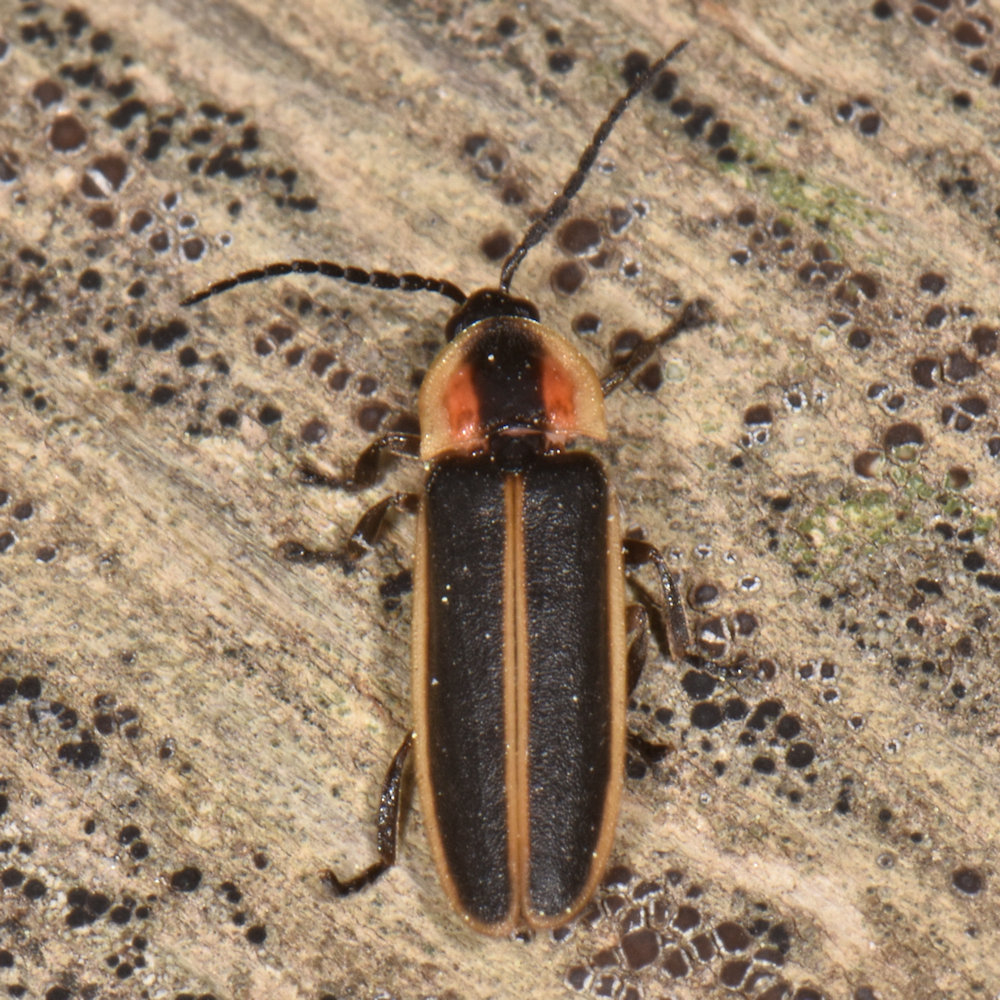
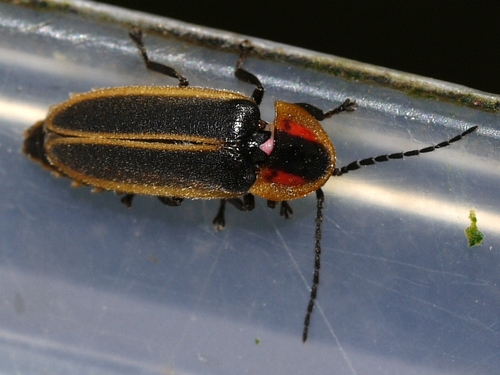
The Silent Firefly is a small to medium beetle about 6 to 10 mm long, with a pale yellow pronotum marked by a thick black rectangle and red or pink sides. Adults have dark elytra with wide light-colored margins and are active during the day in meadows, pastures, and fields of the Great Lakes region. They spend most of their life as bioluminescent larvae in the soil, feeding on snails, worms, and other soft-bodied invertebrates.
Source: Wikipedia
How to recognize it
The wing covers are dark with wide, well-defined light margins.
Source: Wikipedia
Where it lives
They are found in meadows, pastures, and fields.
Source: Wikipedia
What it eats
Larvae live underground and eat snails, worms, and other soft-bodied invertebrates.
Source: Wikipedia
Life cycle
Their life cycle includes egg, larva, pupa, and adult stages. Most of their time is spent as bioluminescent larvae below the soil surface.
Source: Wikipedia
When you see it
They are diurnal, active during daylight hours rather than at night.
Source: Wikipedia
Where it is found in the US
Recorded in 10 of 51 states and DC. Most records: Michigan, Ohio, Illinois, Minnesota, Texas, Louisiana, Maryland, Nebraska.
Darker = more records. Counts are museum and citizen-science records, not population size.
Source: GBIF
Status: native in North America; native in Canada. Source: iNaturalist
Months it is reported in the US
Source: GBIF
More photos
Questions people ask
What does the Silent Firefly look like?
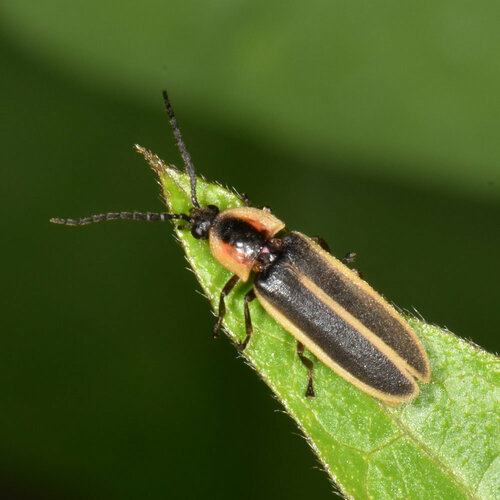
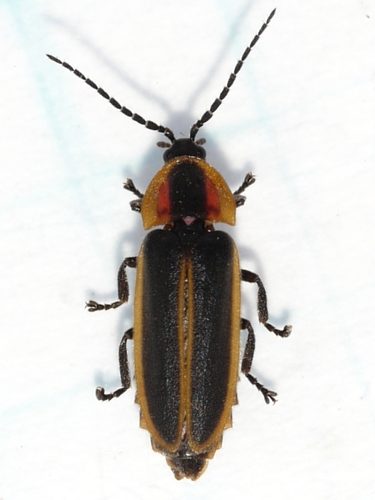
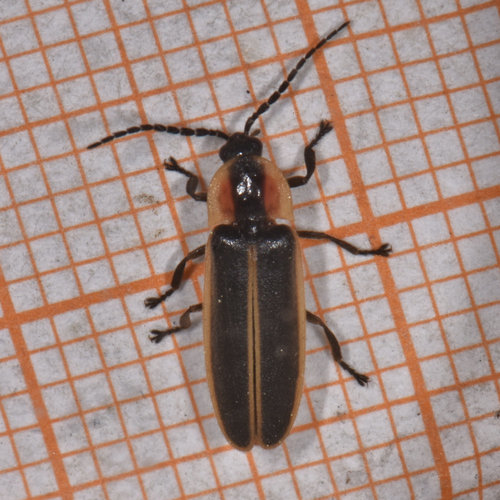
Adults are 6 to 10 mm long, with a pale yellow pronotum marked by a black rectangle and red or pink sides, and dark wing covers edged with light margins.
Source: Wikipedia
When are Silent Fireflies active?
They are active during the day, preferring meadow and field habitats.
Source: Wikipedia
What do the larvae eat?
Larvae feed on snails, worms, and other soft-bodied invertebrates while living underground.
Source: Wikipedia
Where are Silent Fireflies found?
They are native to eastern North America, especially the Great Lakes region of the U.S. and Canada.
Source: Wikipedia
Same family (Lampyridae)


Sources
- Wikipedia: https://en.wikipedia.org/wiki/Photinus_indictus
Look it up elsewhere: GBIF · iNaturalist · BugGuide · ITIS · Wikipedia
Text written 2026-10-29 from the sources above and checked sentence by sentence against them. Data fetched 2026-10-29.