 Bug FAQ
Sheridan's Hairstreak
Callophrys sheridanii (formerly Thecla sheridanii) · Order: Lepidoptera · Family: Lycaenidae
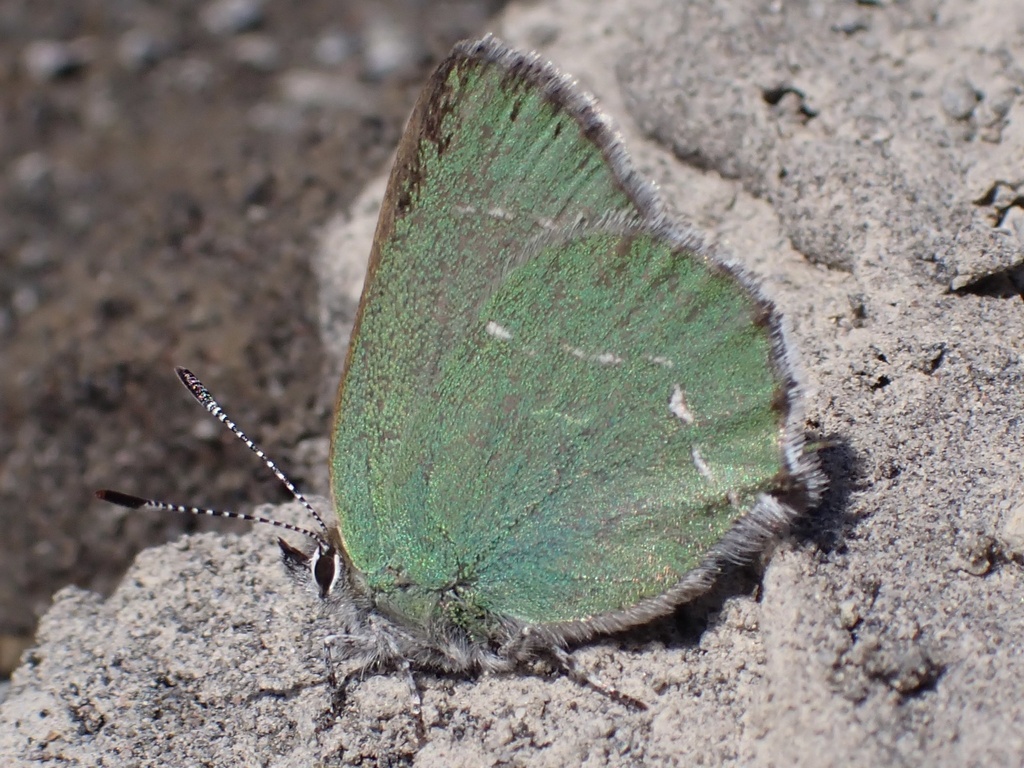
Sheridan's hairstreak is a tiny, tail-less butterfly with a wingspan of about 20 to 24 mm. It lives in western North America, often at elevations of 1,800 to 3,000 m in dry scrub, chaparral, woodlands and sub-alpine slopes. The caterpillars feed on buckwheat or sulphur umbrella plants, while adults sip flower nectar.
Source: Wikipedia
How to recognize it
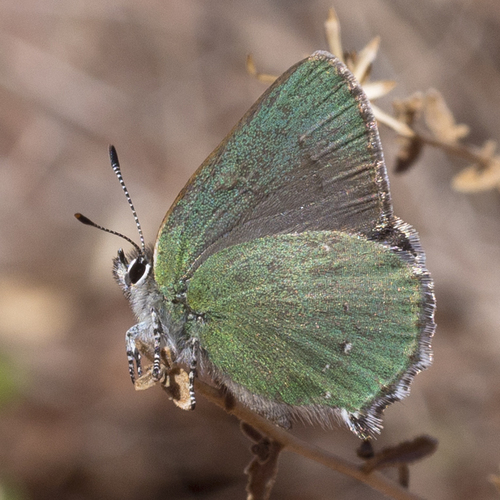
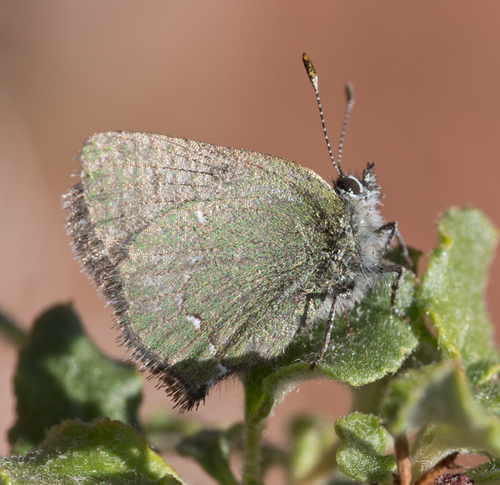
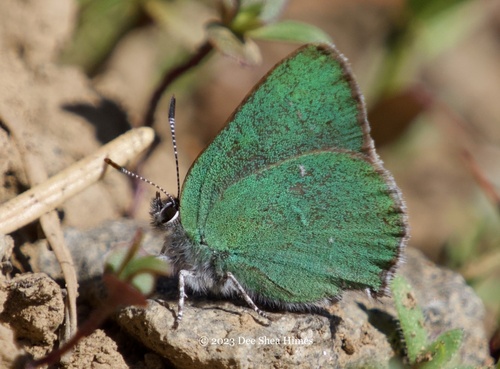
The upper side of the wings is dark gray-brown; the underside ranges from bright to dark green-gray, with a gray lower forewing. A straight white line of dots runs across the underside of both wings, though it may be faint or missing in some southern British Columbia specimens.
Source: Wikipedia
Size
Wingspan measures 20 to 24 mm (0.8 to 0.9 in).
Source: Wikipedia
Where it lives
Found between 6,000 and 10,000 ft, it prefers sagebrush scrub, dry brushy hills, badlands, chaparral, woodlands, sub-alpine scree, open hillsides, canyon slopes and washes.
Source: Wikipedia
What it eats
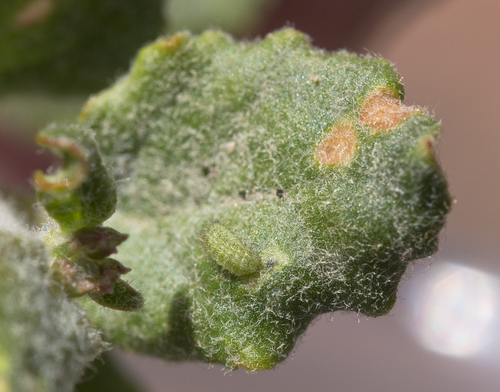
Larvae are green to pink and feed on buckwheat. In Washington state, caterpillars eat sulphur umbrella plants (Eriogonum umbellatum). Adult butterflies drink nectar from flowers.
Source: Wikipedia
Life cycle
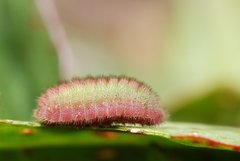
Females lay one brood of pale-green, flattened, hemispherical eggs between April and May. Caterpillars are light green to pink, covered with short stiff hairs, and later form chrysalids that hibernate. Adult males perch in depressions or gulch bottoms while searching for mates.
Source: Wikipedia
When you see it
Adults fly from March to June; in British Columbia they appear mid-April to late May, and in Alberta from mid-May to late June.
Source: Wikipedia
Where it comes from
It is also present, though uncommon, from southern Alberta east to British Columbia in Canada.
Source: Wikipedia
Lookalikes
All green hairstreak butterflies look very similar.
Source: Wikipedia
Where it is found in the US
Recorded in 16 of 51 states and DC. Most records: Colorado, Washington, California, Idaho, Oregon, Utah, Nevada, Wyoming.
Darker = more records. Counts are museum and citizen-science records, not population size.
Source: GBIF
Status: native in North America; native in United States; native in Canada. Source: iNaturalist
Months it is reported in the US
Source: GBIF
More photos
Questions people ask
What do the caterpillars eat?
They feed on buckwheat, and in Washington they also eat sulphur umbrella plants.
Source: Wikipedia
When are these butterflies active?
Adults are on the wing from March through June, with regional variations in timing.
Source: Wikipedia
Where can I find Sheridan's hairstreak?
It lives in western North America, especially in dry scrub, chaparral and sub-alpine habitats at elevations of about 1,800 to 3,000 m.
Source: Wikipedia
Same family (Lycaenidae)





Sources
- Wikipedia: https://en.wikipedia.org/wiki/Callophrys_sheridanii
Look it up elsewhere: GBIF · iNaturalist · BugGuide · ITIS · Wikipedia
Text written 2026-10-24 from the sources above and checked sentence by sentence against them. Data fetched 2026-10-24.