 Bug FAQ
Sharp-Tipped Bell Moth
Epalxiphora axenana · Order: Lepidoptera · Family: Tortricidae
Also called: brindled bell moth
Source: Wikipedia
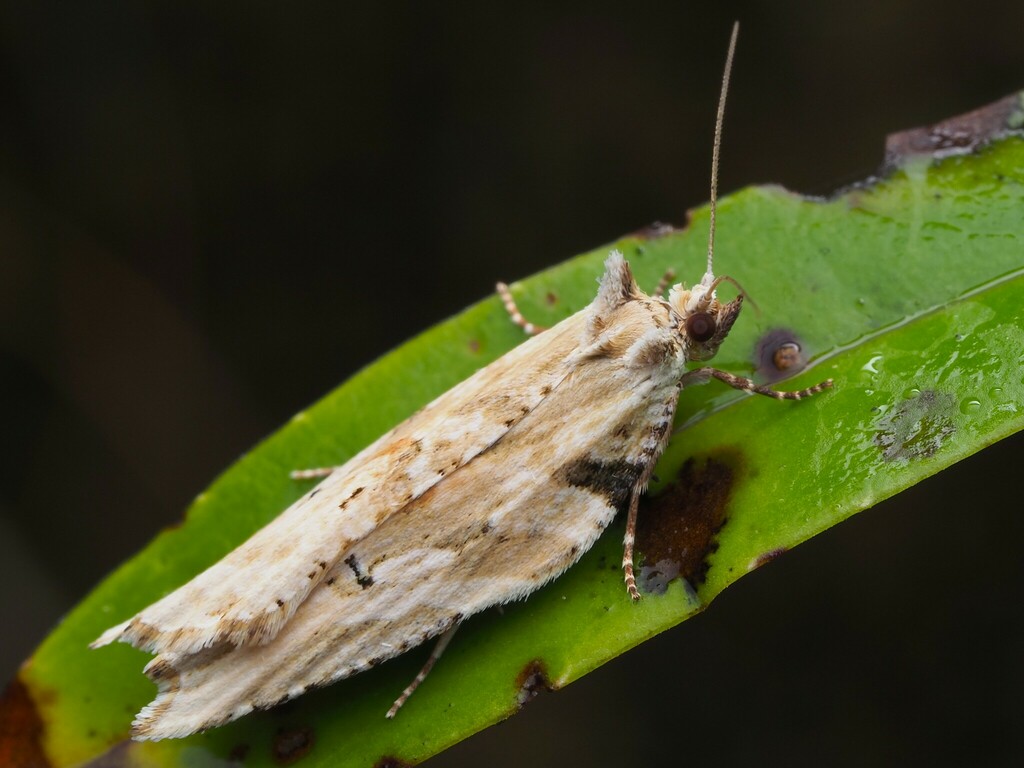
Caterpillars feed on a wide range of native shrubs and on citrus, so they can harm garden plants. Adults are variable in colour and pattern, and the species shows strong sexual dimorphism.
Source: Wikipedia
How to recognize it
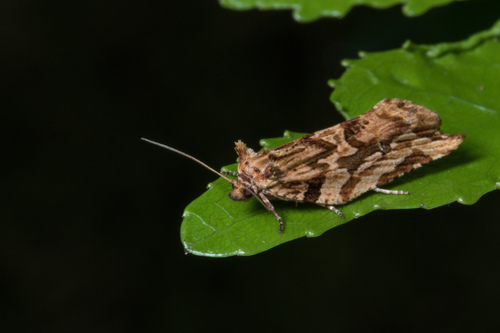
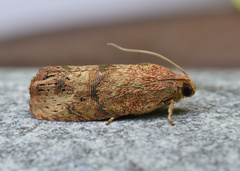
Males have fore-wings with a slightly hooked tip, a strongly bowed outer edge, and a dark brown band along the leading edge that often contains a lighter oval patch; they may also show a reddish patch below the costa and a pale patch at the apex. Females have longer, narrower fore-wings with an elbowed leading edge about one-third from the base, a more strongly hooked tip, and highly variable colours; a dark brown oblong mark near the base of the costa often meets a pale wavy band on the dorsum.
Source: Wikipedia
Size
Male wings span from just over 0.75 inches to about 1.13 inches, while females range from just under 1 inch to roughly 1.25 inches.
Source: Wikipedia
Where it lives
The moth prefers native forest habitats. Larvae live in native forest and feed on various native shrubs as well as citrus species.
Source: Wikipedia
What it eats
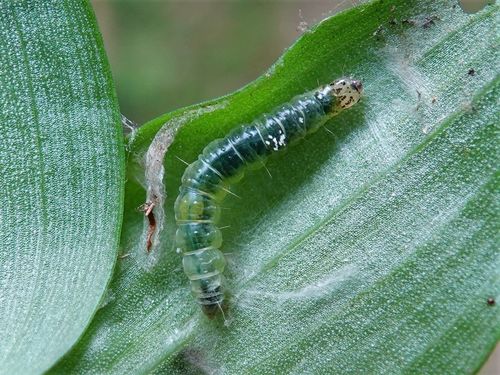
Caterpillars eat many native shrubs such as Griselinia, Myrsine, Piper, and Didymocheton, and they also feed on citrus plants. Newly hatched larvae start feeding on the undersides of host-plant leaves, protected by a few silk strands, rather than eating their egg shells.
Source: Wikipedia
Life cycle
Females lay about 30 oval, slightly convex eggs in a semi-transparent circular mass. Larvae develop for 30 to 32 days, then pupate near their feeding site; pupation lasts 17 to 29 days.
Source: Wikipedia
When you see it
Adults can be seen year-round but are most common in the New Zealand summer months. They are nocturnal and are attracted to lights.
Source: Wikipedia
Where it comes from
It is endemic to New Zealand. Originally known only from the North Island, it has been recorded in the South Island since the mid-1980s, likely arriving on horticultural plants.
Source: Wikipedia
Lookalikes
The species shows strong sexual dimorphism and unusually shaped fore-wings, which help distinguish it from other moths. Adults vary widely in colour and pattern, so appearance alone can be misleading.
Source: Wikipedia
More photos
Questions people ask
What plants do the larvae feed on?
The caterpillars eat a variety of native shrubs, including Griselinia, Myrsine, Piper, and Didymocheton, and also feed on citrus plants.
Source: Wikipedia
When are adult moths active?
Adults are active throughout the year but are most frequently seen during the summer months and are attracted to light at night.
Source: Wikipedia
Where is the Sharp-Tipped Bell Moth found?
It is endemic to New Zealand, originally known from the North Island and now also present in the South Island.
Source: Wikipedia
How can I tell male and female moths apart?
Males have a slightly hooked wing tip and a dark band with a pale oval on the leading edge, while females have longer, narrower wings with an elbowed leading edge and a distinctive dark oblong mark near the base of the costa.
Source: Wikipedia
Same family (Tortricidae)
 Oblique-banded Leafroller MothChoristoneura rosaceanaDamages trees, gardens or crops
 Garden TortrixClepsis peritanaDamages trees, gardens or crops
 Common MarbleSyricoris lacunanaDamages trees, gardens or crops
 Red-banded Leafroller MothArgyrotaenia velutinanaDamages trees, gardens or crops
 Light Brown Apple MothEpiphyas postvittanaDamages trees, gardens or crops
 Filbertworm MothCydia latiferreanaDamages trees, gardens or crops
Sources
- Wikipedia: https://en.wikipedia.org/wiki/Epalxiphora_axenana
Look it up elsewhere: GBIF · iNaturalist · BugGuide · Wikipedia
Text written 2026-10-23 from the sources above and checked sentence by sentence against them. Data fetched 2026-10-23.