 Bug FAQ
Red-banded Leafroller Moth
Argyrotaenia velutinana · Order: Lepidoptera · Family: Tortricidae
Also called: Red-banded Leafroller
Source: Wikipedia

Wingspan is about 13 to 20 mm (½ to ¾ in). It lives across the eastern US and southeastern Canada, from Quebec and Ontario down to Florida, west to Texas and Iowa, and has been reported in British Columbia.
Source: Wikipedia
Size
The adult’s wingspan ranges from 13 to 20 mm.
Source: Wikipedia
Where it comes from
Its range includes the eastern US and southeastern Canada, extending from Quebec and Ontario down to Florida and west to Texas and Iowa, with records in British Columbia.
Source: Wikipedia
Lookalikes
It belongs to the Tortricidae family and is known as the red-banded leafroller moth.
Source: Wikipedia
Where it is found in the US
Recorded in 38 of 51 states and DC. Most records: Maryland, Pennsylvania, Alabama, Ohio, New York, North Carolina, Virginia, Vermont.
Darker = more records. Counts are museum and citizen-science records, not population size.
Source: GBIF
Status: native in North America; native in Canada; native in United States. Source: iNaturalist
Months it is reported in the US
Source: GBIF
More photos

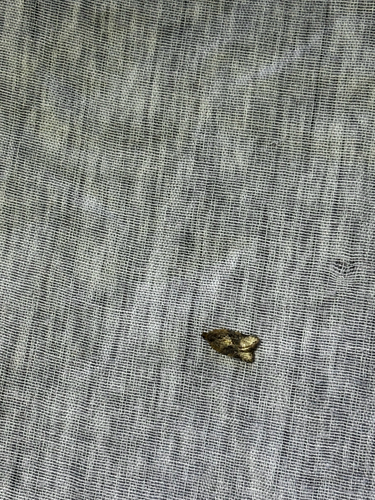
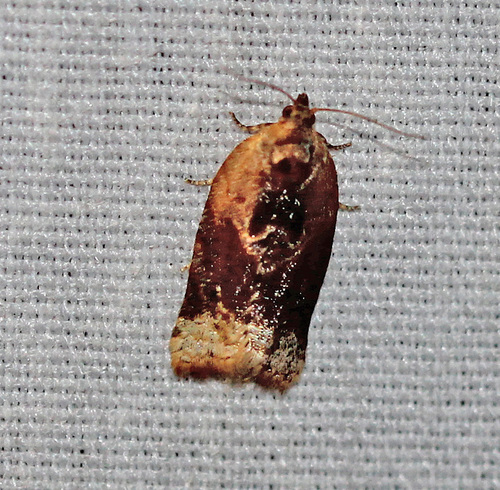
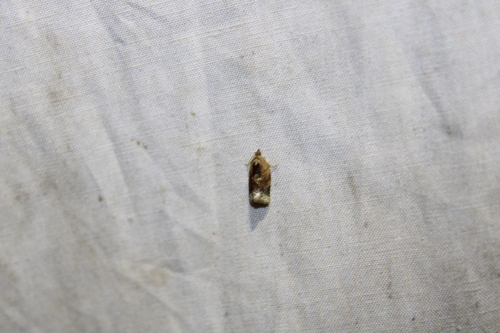
Questions people ask
Does the red-banded leafroller moth damage garden plants?
Yes, its larvae feed on the leaves and fruit of apple trees, other fruit trees, spruce and many garden vegetables.
Source: Wikipedia
How big is the red-banded leafroller moth?
Adults have a wingspan of about 13 to 20 mm.
Source: Wikipedia
Same family (Tortricidae)
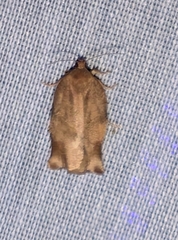 Oblique-banded Leafroller MothChoristoneura rosaceanaDamages trees, gardens or crops
 Garden TortrixClepsis peritanaDamages trees, gardens or crops
 Common MarbleSyricoris lacunanaDamages trees, gardens or crops
 Light Brown Apple MothEpiphyas postvittanaDamages trees, gardens or crops
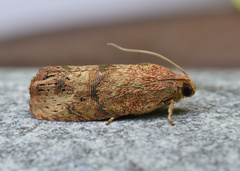 Filbertworm MothCydia latiferreanaDamages trees, gardens or crops
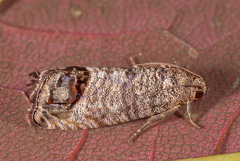 Codling MothCydia pomonellaDamages trees, gardens or crops
Sources
- Wikipedia: https://en.wikipedia.org/wiki/Argyrotaenia_velutinana
Look it up elsewhere: GBIF · iNaturalist · BugGuide · Wikipedia
Text written 2026-10-22 from the sources above and checked sentence by sentence against them. Data fetched 2026-10-22.