 Bug FAQ
Filbertworm Moth
Cydia latiferreana · Order: Lepidoptera · Family: Tortricidae
Source: Wikipedia
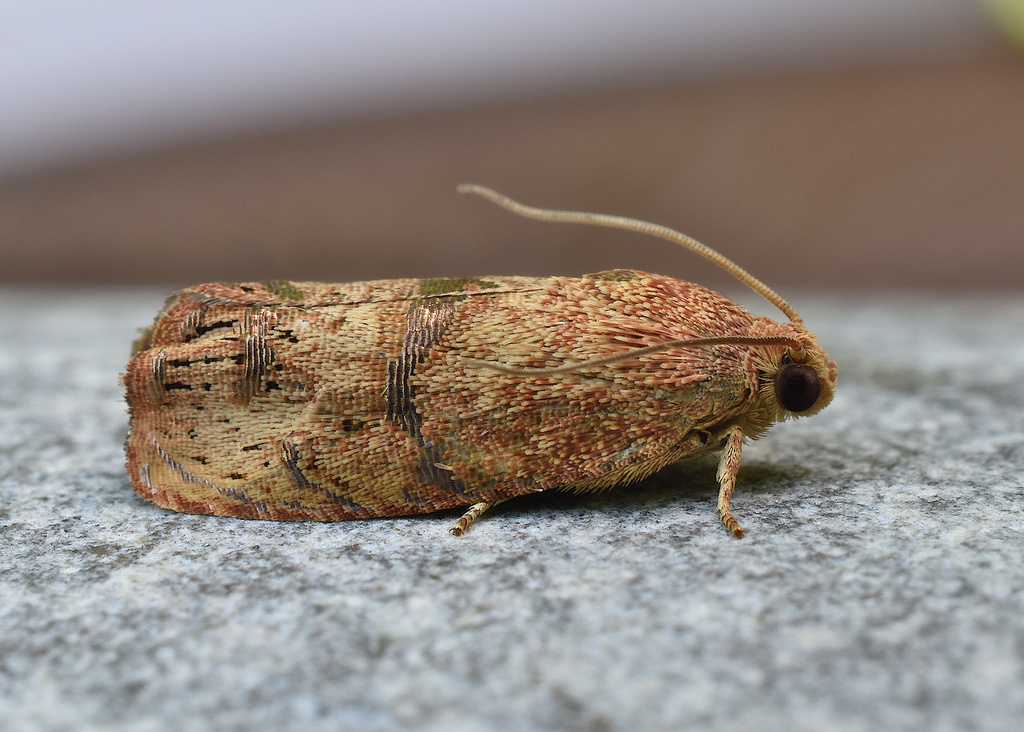
The filbertworm moth (Cydia latiferreana) is a tortricid moth found across most of North America.
Source: Wikipedia
How to recognize it
Cydia latiferreana, known as the filbertworm moth, belongs to the family Tortricidae.
Source: Wikipedia
Size
The adult moth has a wingspan of about 18 mm.
Source: Wikipedia
Where it lives
It occurs throughout most of North America.
Source: Wikipedia
What it eats
Larvae feed on acorns of several oak species and are especially noted for eating hazelnut seeds (Corylus).
Source: Wikipedia
Life cycle
Adults are active from July through October, depending on location.
Source: Wikipedia
When you see it
The flight period runs from July to October, varying by region.
Source: Wikipedia
Where it comes from
Its native range covers most of North America.
Source: Wikipedia
Lookalikes
It was formerly placed in the monotypic genus Melissopus.
Source: Wikipedia
Where it is found in the US
Recorded in 46 of 51 states and DC. Most records: Texas, California, Massachusetts, Alabama, Maryland, Oklahoma, Ohio, Pennsylvania.
Darker = more records. Counts are museum and citizen-science records, not population size.
Source: GBIF
Status: native in North America; native in United States; native in Canada. Source: iNaturalist
Months it is reported in the US
Source: GBIF
More photos


Questions people ask
What crops does it damage?
The larvae damage hazelnut crops and can also feed on acorns of several oak species.
Source: Wikipedia
Same family (Tortricidae)
 Oblique-banded Leafroller MothChoristoneura rosaceanaDamages trees, gardens or crops
 Garden TortrixClepsis peritanaDamages trees, gardens or crops
 Common MarbleSyricoris lacunanaDamages trees, gardens or crops
 Red-banded Leafroller MothArgyrotaenia velutinanaDamages trees, gardens or crops
 Light Brown Apple MothEpiphyas postvittanaDamages trees, gardens or crops
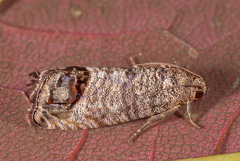 Codling MothCydia pomonellaDamages trees, gardens or crops
Sources
- Wikipedia: https://en.wikipedia.org/wiki/Cydia_latiferreana
Look it up elsewhere: GBIF · iNaturalist · BugGuide · Wikipedia
Text written 2026-10-22 from the sources above and checked sentence by sentence against them. Data fetched 2026-10-22.