 Bug FAQ
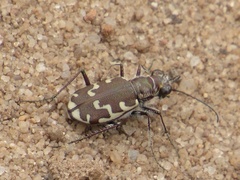
Serrate-shoulder Worm and Slug Hunter
Carabus serratus · Order: Coleoptera · Family: Carabidae
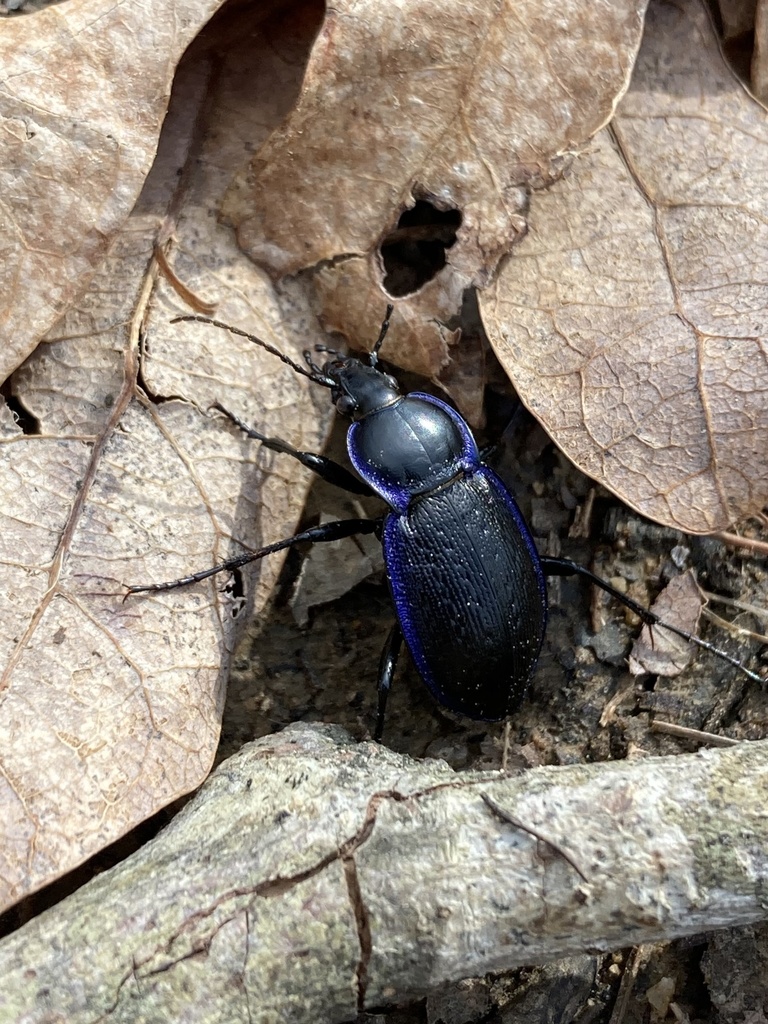
It lives across North America and can be found in open places such as moraines, gravel and sand pits, meadows, pastures, cultivated fields, forest clearings and open forests. Adults are mainly active at night and spend the winter in the upper zones of sand and gravel pits.
Source: Wikipedia
Life cycle
Adults are mostly nocturnal and overwinter in the upper zones of sand and gravel pits.
Source: Wikipedia
Where it comes from
The species is found in North America.
Source: Wikipedia
Where it is found in the US
Recorded in 32 of 51 states and DC. Most records: North Dakota, Massachusetts, Pennsylvania, Virginia, Vermont, Wisconsin, Colorado, North Carolina.
Darker = more records. Counts are museum and citizen-science records, not population size.
Source: GBIF
Status: native in North America; native in Canada; native in United States. Source: iNaturalist
Months it is reported in the US
Source: GBIF
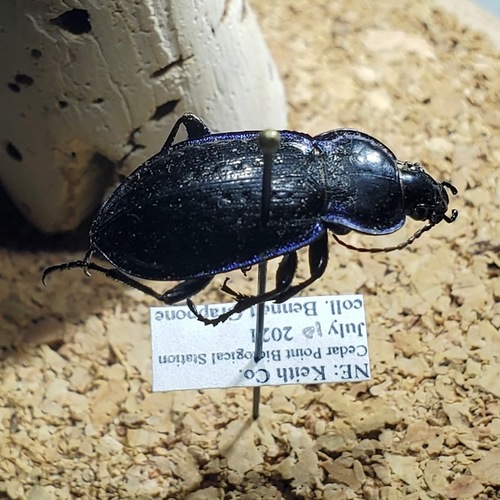
More photos
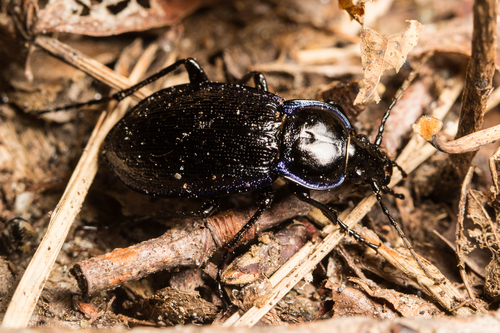
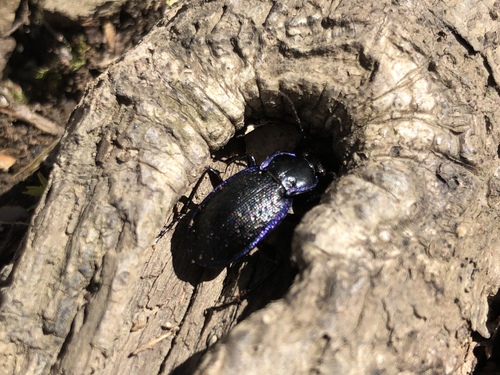
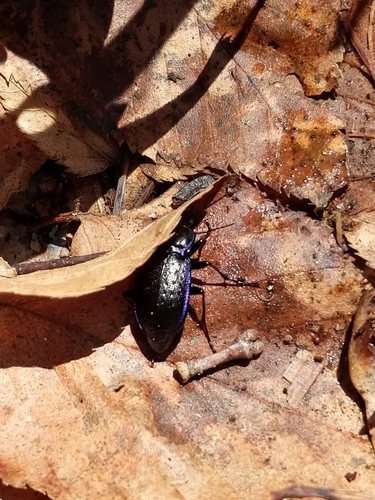
Questions people ask
Where is the serrate-shoulder worm and slug hunter found?
It occurs across North America in habitats such as moraines, sand and gravel pits, meadows, pastures, cultivated fields, and open forest areas.
Source: Wikipedia
When are the adults active?
Adults are mainly active at night and they spend the winter in the upper parts of sand and gravel pits.
Source: Wikipedia
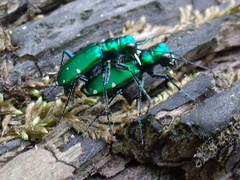
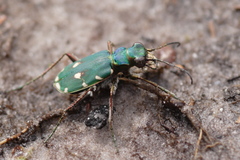
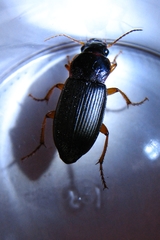
Same family (Carabidae)


Sources
- Wikipedia: https://en.wikipedia.org/wiki/Carabus_serratus
Look it up elsewhere: GBIF · iNaturalist · BugGuide · ITIS · Wikipedia
Text written 2026-10-24 from the sources above and checked sentence by sentence against them. Data fetched 2026-10-24.