 Bug FAQ
Seaside Dragonlet
Erythrodiplax berenice · Order: Odonata · Family: Libellulidae
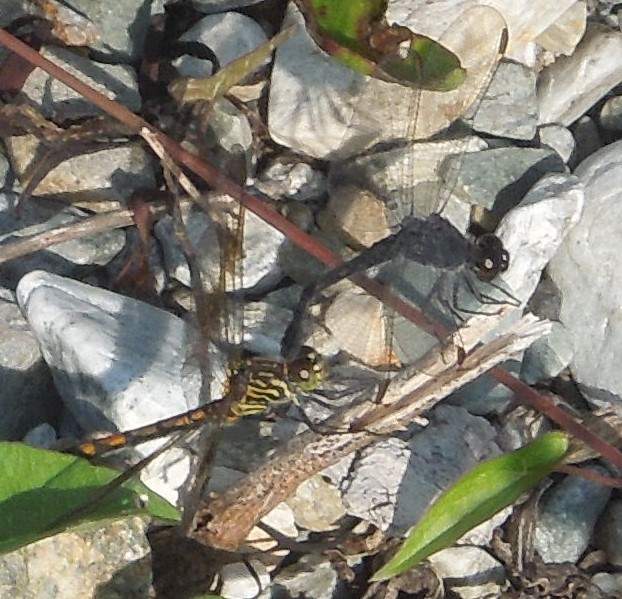
Males turn uniformly black with a waxy coating and have dark-red eyes on top fading to light green below. They are 31 to 35 mm long, much smaller than the 50 to 52 mm slaty skimmer.
Source: Wikipedia
How to recognize it
Males become uniformly black at maturity and develop a waxy pruinosity. Their eyes are dark red on the top half and fade to light green below.
Source: Wikipedia
Size
Adults measure 31 to 35 mm, a size range that does not overlap with the larger slaty skimmer (50 to 52 mm).
Source: Wikipedia
Where it lives
Spends most of its time perched on emergent vegetation or trees, about 99% of observed behavior in a Maine salt marsh.
Source: Wikipedia
What it eats
Feeds on smaller insects such as lacewings and damselflies. Males and females often fly together and lay eggs in tandem on floating algal mats.
Source: Wikipedia
Life cycle
Nymphs develop in brackish water but can also grow in fresh or salty water. Nymphs have been recorded in mangrove waters with salinity up to 48 ppm (higher than average seawater).
Source: Wikipedia
Lookalikes
Looks most like the black meadowhawk and double-ringed pennant, which live in freshwater and would only appear together by accidental dispersal. The blue dasher and slaty skimmer also have a pruinose look, but they have a thicker abdomen and a bluer hue.
Source: Wikipedia
Where it is found in the US
Recorded in 23 of 51 states and DC. Most records: Florida, Texas, Maryland, New Jersey, Delaware, North Carolina, Virginia, New York.
Darker = more records. Counts are museum and citizen-science records, not population size.
Source: GBIF
Status: native in North America; native in Canada. Source: iNaturalist
Months it is reported in the US
Source: GBIF
More photos
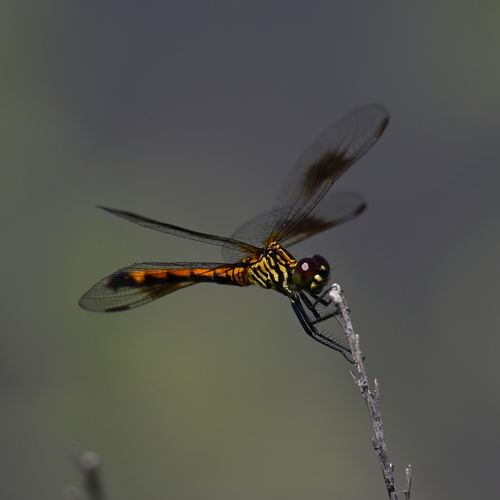
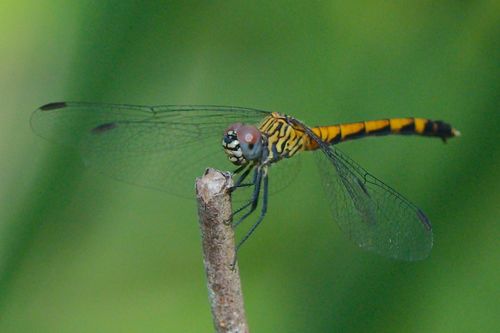
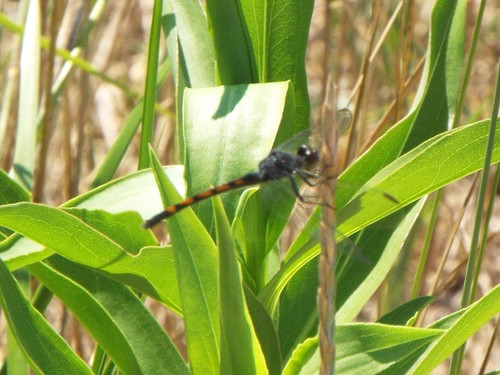
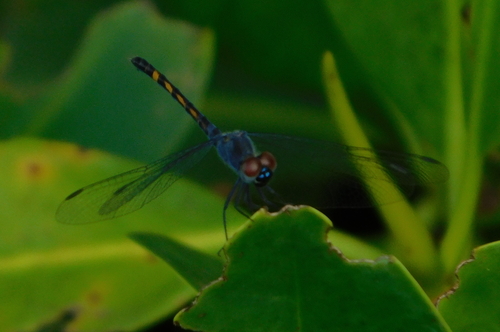
Same family (Libellulidae)
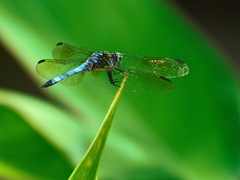
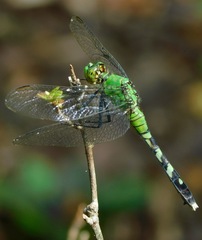
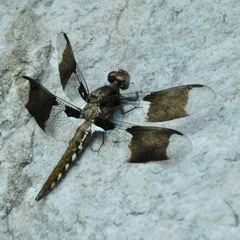

Sources
- Wikipedia: https://en.wikipedia.org/wiki/Erythrodiplax_berenice
Look it up elsewhere: GBIF · iNaturalist · BugGuide · ITIS · Wikipedia
Text written 2026-10-22 from the sources above and checked sentence by sentence against them. Data fetched 2026-10-22.