 Bug FAQ
Scotch Argus
Erebia aethiops · Order: Lepidoptera · Family: Nymphalidae
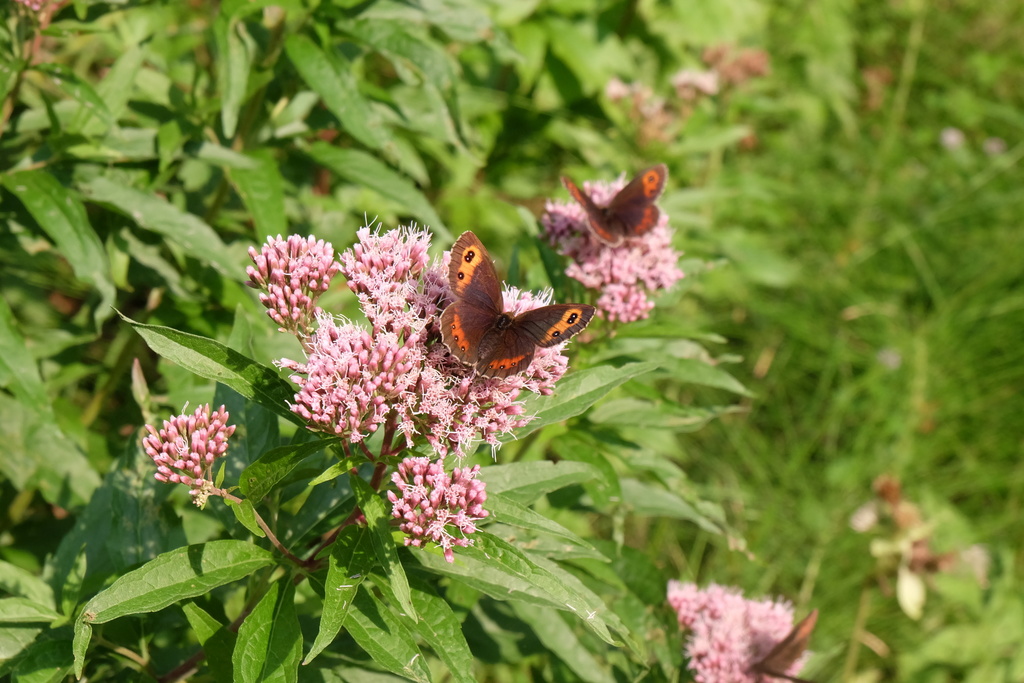
The Scotch Argus butterfly has a wingspan of about 4.2 to 4.6 cm. It lives in northern and western Scotland and across much of Europe and the Palearctic, favouring pine-forest edges and damp grasslands up to 2400 m.
Source: Wikipedia
How to recognize it
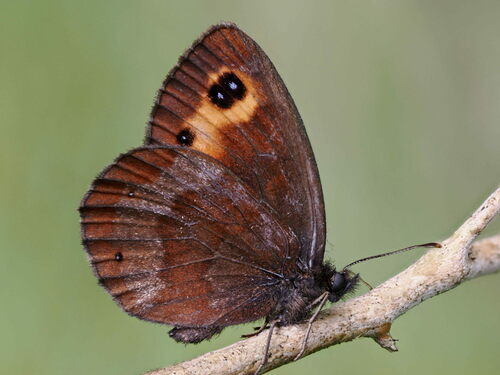
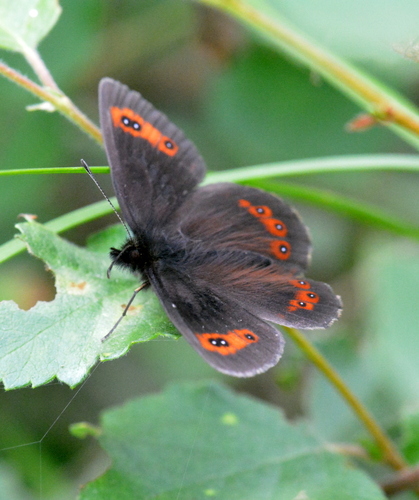
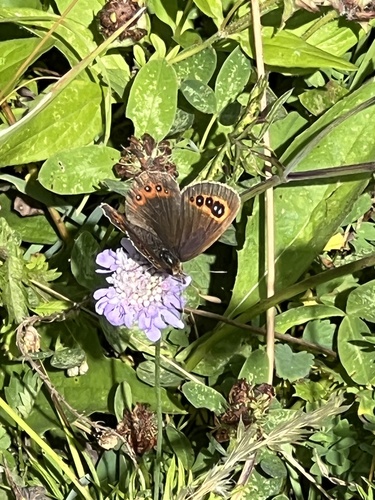
The forewings have three or four eyespots (usually two near the tip and a detached third) and the hindwings have four or five. Wing fringes are light grey, distinguishing it from the similar Erebia ligea which has white fringes.
Source: Wikipedia
Size
Wingspan ranges from 42 to 46 mm. Pupae are short, compact and yellow-brown, measuring about 12.5 to 124.5 mm in length.
Source: Wikipedia
Where it lives
Found throughout most of northern Scotland and western parts of southern Scotland.
Source: Wikipedia
Life cycle
The species has one generation per year (univoltine).
Source: Wikipedia
When you see it
Adults are on the wing from June through August.
Source: Wikipedia
Where it comes from
In England it occurs at Arnside Knott and Smardale Gill in Cumbria.
Source: Wikipedia
Lookalikes
It resembles Erebia ligea, but can be told apart by the lighter grey wing fringes versus the white fringes of E. ligea.
Source: Wikipedia
More photos
Same family (Nymphalidae)





Sources
- Wikipedia: https://en.wikipedia.org/wiki/Scotch_argus
Look it up elsewhere: GBIF · iNaturalist · BugGuide · Wikipedia
Text written 2026-10-22 from the sources above and checked sentence by sentence against them. Data fetched 2026-10-22.