 Bug FAQ
Scolopterus aequus
Scolopterus aequus · Order: Coleoptera · Family: Curculionidae
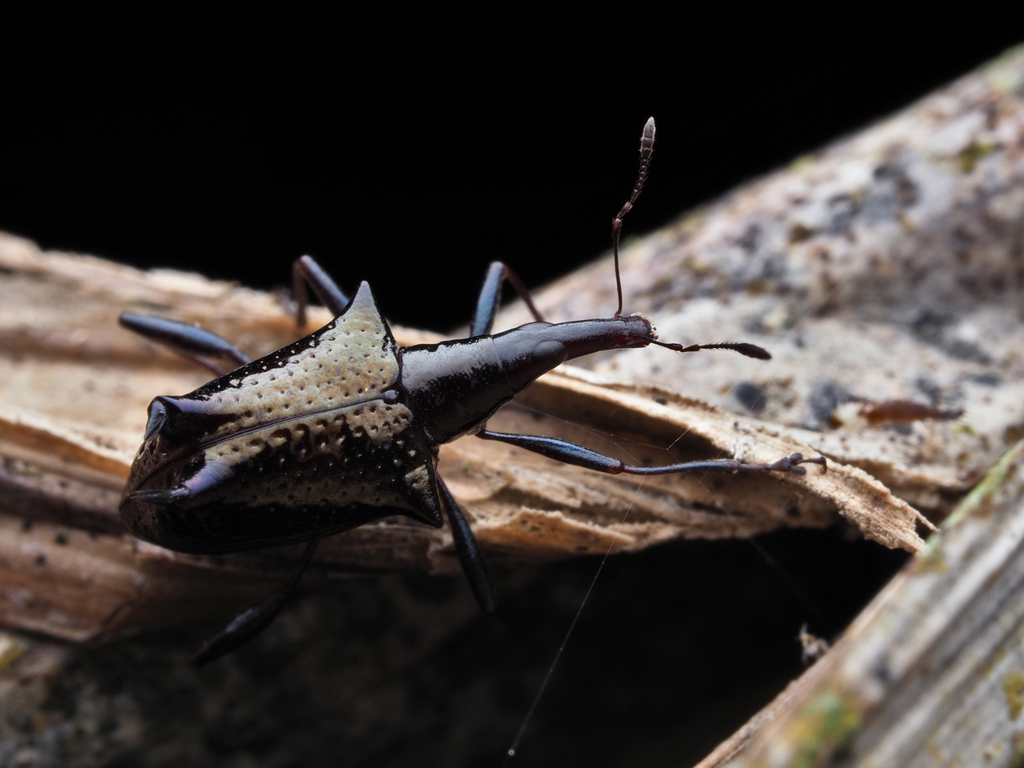
Scolopterus aequus is a flower-feeding weevil that lives on bushes, trees and in forest canopies. It is endemic to New Zealand, most common on the North Island and also recorded on the West Coast. Adults eat pollen from almost any flowering plant, while larvae develop in rotting wood, fern fronds and other decaying plant matter.
Source: Wikipedia
Where it lives
It lives in bushes and the forest canopy. Adults are often seen on flowers during summer and autumn.
Source: Wikipedia
What it eats
Adults feed on pollen from almost every flowering plant. Larvae develop in rotting wood and decaying fern fronds.
Source: Wikipedia
Life cycle
Larvae spend several months inside fern frond stems, especially silver ferns, before pupating briefly. Pupation lasts about two weeks, after which the adult chews its way out of a cocoon made of plant fibres.
Source: Wikipedia
When you see it
Adults are commonly found on flowers in summer and autumn.
Source: Wikipedia
Where it comes from
The beetle is endemic to New Zealand. It was first described from the Coromandel Peninsula and is most abundant on the North Island, with records from the West Coast Region.
Source: Wikipedia
Lookalikes
Two other described Scolopterus species are now considered synonyms of S. aequus.
Source: Wikipedia
More photos
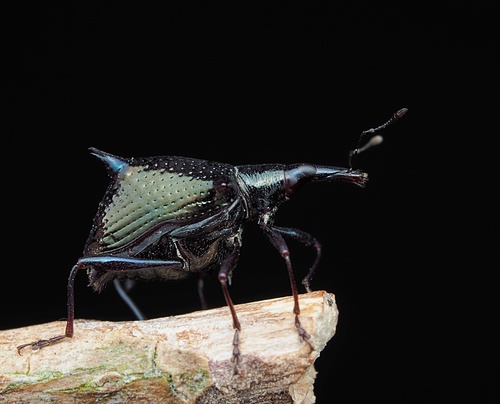
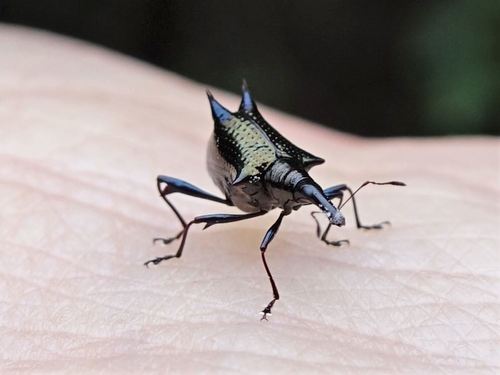
Questions people ask
When am I most likely to see Scolopterus aequus?
You’ll often spot them on flowers during the summer and autumn months.
Source: Wikipedia
What do the larvae of Scolopterus aequus feed on?
The larvae develop in rotting wood and decaying fern fronds, especially the stems of silver ferns.
Source: Wikipedia
Is Scolopterus aequus found outside New Zealand?
No, it is endemic to New Zealand and has only been recorded there.
Source: Wikipedia
Are there any look-alike species I might confuse with Scolopterus aequus?
Two other Scolopterus species have been synonymized with S. aequus, so they are not separate species.
Source: Wikipedia
Same family (Curculionidae)
 Green Immigrant Leaf WeevilPolydrusus formosusDamages trees, gardens or crops
 Black Vine WeevilOtiorhynchus sulcatusDamages trees, gardens or crops
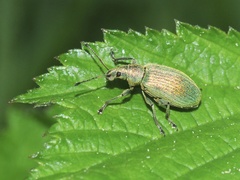 Nettle weevilPhyllobius pomaceusDamages trees, gardens or crops
 Asian Oak WeevilCyrtepistomus castaneusDamages trees, gardens or crops
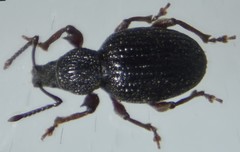 Strawberry Root WeevilOtiorhynchus ovatusDamages trees, gardens or crops
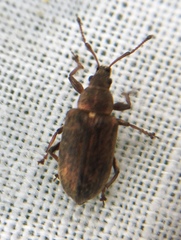 Common Leaf WeevilPhyllobius pyriDamages trees, gardens or crops
Sources
- Wikipedia: https://en.wikipedia.org/wiki/Scolopterus_aequus
Look it up elsewhere: GBIF · iNaturalist · BugGuide · Wikipedia
Text written 2026-10-23 from the sources above and checked sentence by sentence against them. Data fetched 2026-10-23.