 Bug FAQ
Scarlet Basker
Urothemis signata · Order: Odonata · Family: Libellulidae
Also called: Greater Crimson Glider
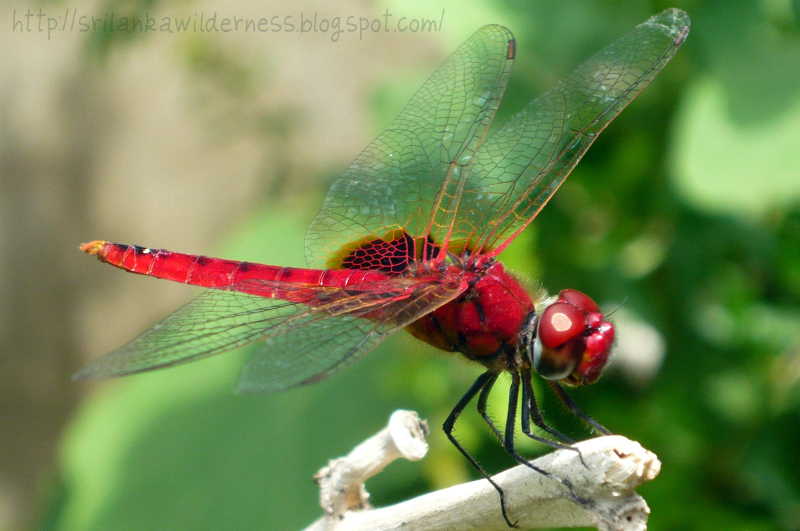
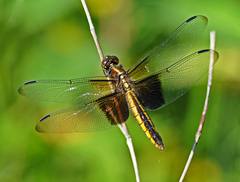
Males have transparent wings with an amber spot edged by dark brown at the base of the hind-wings; females look similar but are yellowish and have additional black spots on several abdominal segments.
Source: Wikipedia
How to recognize it
Wings are clear with an amber spot surrounded by a dark-brown patch at the base of the hind-wings; the abdomen is bright red with black markings on segments 8 and 9. Females are yellowish and show black dorsal spots on abdominal segments 3 to 7 as well as the pattern seen in males.
Source: Wikipedia
Where it lives
It breeds in ponds and slow-flowing rivers, usually in lowland areas. Males often perch on exposed twigs and the species can be found in urban water bodies and park ponds.
Source: Wikipedia
Where it comes from
The species is widespread across many Asian countries.
Source: Wikipedia
Lookalikes
Several subspecies are recognized for this dragonfly.
Source: Wikipedia
Same family (Libellulidae)

Sources
- Wikipedia: https://en.wikipedia.org/wiki/Urothemis_signata
Look it up elsewhere: GBIF · iNaturalist · BugGuide · Wikipedia
Text written 2026-10-22 from the sources above and checked sentence by sentence against them. Data fetched 2026-10-22.