 Bug FAQ
Scarce Tortoiseshell
Nymphalis xanthomelas · Order: Lepidoptera · Family: Nymphalidae
Also called: Yellow-legged Tortoiseshell
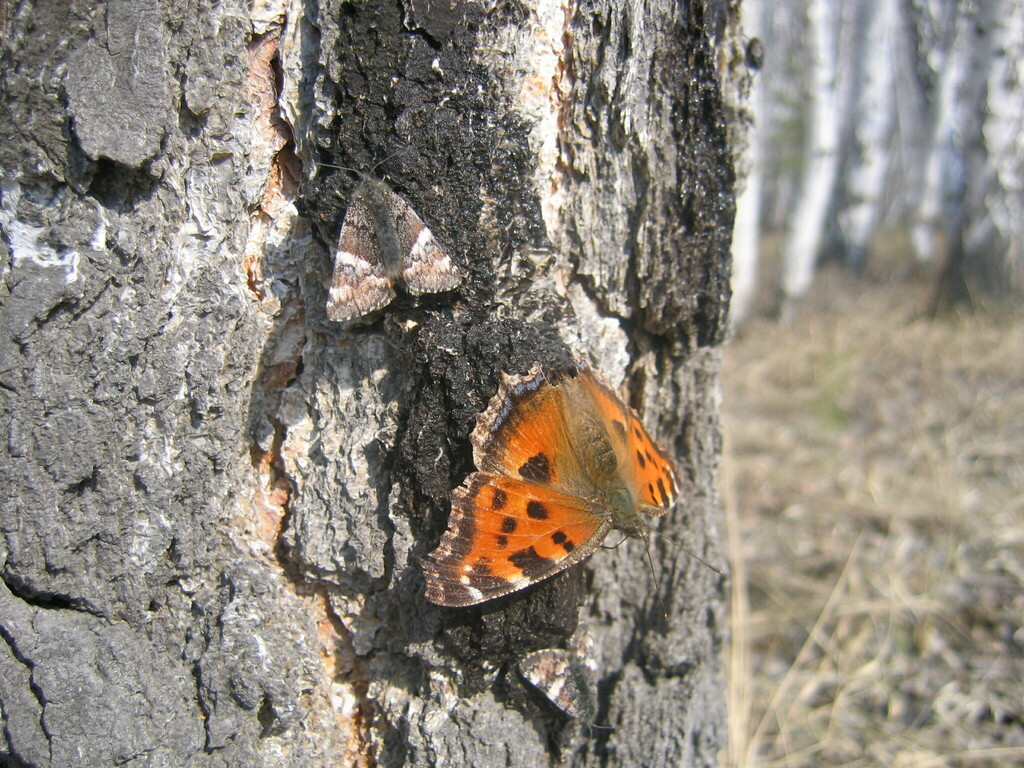
The scarce tortoiseshell has a wingspan of about 63 to 68 mm. It lives in eastern Europe and parts of Asia, including the Himalayas, China and Japan.
Source: Wikipedia
How to recognize it
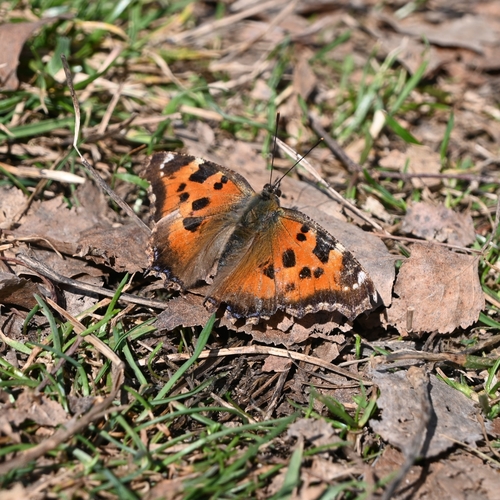
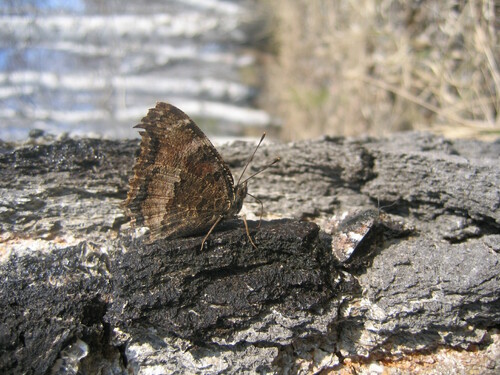
The upper side is bright orange-yellow with distinct black spots and patches on the forewing and a uniform hindwing with a black patch and blue-bordered subterminal band.
Source: Wikipedia
Size
Wingspan ranges from 63 to 68 mm.
Source: Wikipedia
Where it lives
Found in eastern Europe and Asia.
Source: Wikipedia
What it eats
Larvae feed on willow.
Source: Wikipedia
Life cycle
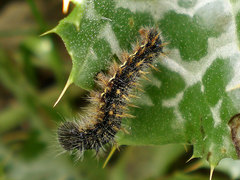
The caterpillar is cylindrical, slightly hairy, with black spines and yellowish lines; it pupates in a dark brown cocoon.
Source: Wikipedia
Lookalikes
Also called the yellow-legged tortoiseshell or large tortoiseshell, though the latter name usually refers to Nymphalis polychloros in Europe.
Source: Wikipedia
Where it is found in the US
Recorded in 1 of 51 states and DC. Most records: Alabama.
Darker = more records. Counts are museum and citizen-science records, not population size.
Source: GBIF
More photos
Questions people ask
What do the caterpillars of the scarce tortoiseshell look like?
They are cylindrical, slightly hairy, with black spines and yellowish longitudinal lines, and they feed on willow.
Source: Wikipedia
Where can I find the scarce tortoiseshell?
It occurs in eastern Europe and across parts of Asia, including the Himalayas, China and Japan.
Source: Wikipedia
What other butterflies look similar to the scarce tortoiseshell?
It is sometimes called the yellow-legged tortoiseshell or large tortoiseshell, though the latter name is usually used for Nymphalis polychloros in Europe.
Source: Wikipedia
Same family (Nymphalidae)





Sources
- Wikipedia: https://en.wikipedia.org/wiki/Nymphalis_xanthomelas
Look it up elsewhere: GBIF · iNaturalist · BugGuide · Wikipedia
Text written 2026-10-22 from the sources above and checked sentence by sentence against them. Data fetched 2026-10-22.