 Bug FAQ
Scarce Copper
Lycaena virgaureae · Order: Lepidoptera · Family: Lycaenidae
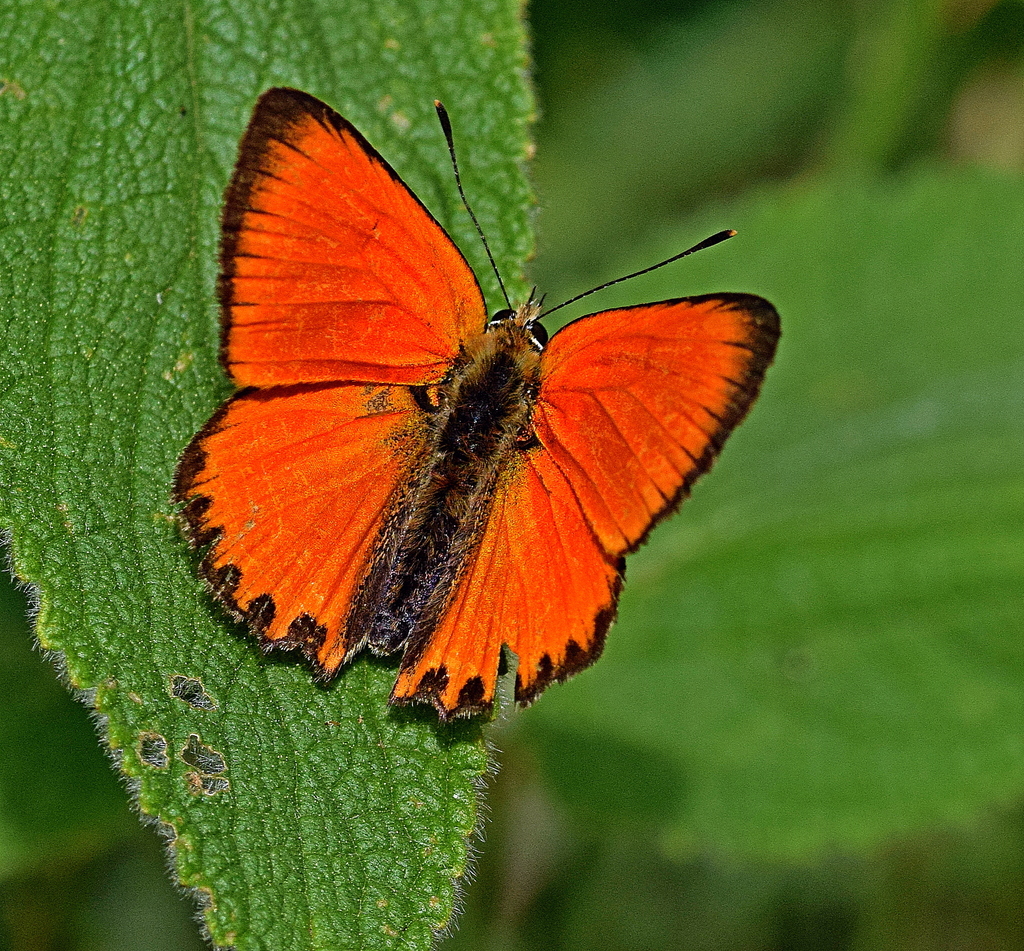
Scarce Copper butterflies live on flower-rich meadows and clearings from the Atlantic coast across Europe to East Siberia, avoiding Great Britain and Japan. Males are red-golden above with a narrow black edge; females are cinnabar-red with black spots, and the underside is leather-yellow with sparse black dots. Caterpillars eat sorrel at night, while adults feed on flowers such as ground-elder, Eupatorium, Valeriana and burnet saxifrage.
Source: Wikipedia
How to recognize it
Males have a red-golden upper side with a thin black border and dark hindwing dots; females are cinnabar-red with black spots and some black dusting on the hindwing. The underside is leather-yellow, lightly spotted with black, and the outer third of the hindwing may show pale dots that can form a white chain.
Source: Wikipedia
Where it lives
They prefer dry and damp, flower-rich meadows in Central Europe. Adults fly from late June to August on meadows, forest clearings, mountain sides and flowery slopes, even up to 10,000 ft.
Source: Wikipedia
What it eats
Caterpillars are green, nocturnal, and feed on sorrel. Adult butterflies sip nectar from plants such as ground-elder, Eupatorium, Valeriana and burnet saxifrage.
Source: Wikipedia
Life cycle
Their eggs overwinter, which is unique in the genus.
Source: Wikipedia
When you see it
A single generation flies from mid-July to mid-September.
Source: Wikipedia
Where it comes from
Their range stretches from the Atlantic coasts across Europe to East Siberia and from the North Sea coast to the Mediterranean, but they are absent from Great Britain and Japan.
Source: Wikipedia
Lookalikes
In Lapland a small form called oranula Frr. looks very similar to the typical Scarce Copper. Females from some regions have a paler ground colour and less dark dusting on the underside compared with many Central European specimens.
Source: Wikipedia
Same family (Lycaenidae)

Sources
- Wikipedia: https://en.wikipedia.org/wiki/Scarce_copper
Look it up elsewhere: GBIF · iNaturalist · BugGuide · Wikipedia
Text written 2026-10-22 from the sources above and checked sentence by sentence against them. Data fetched 2026-10-22.