 Bug FAQ
Scarce Chaser
Libellula fulva · Order: Odonata · Family: Libellulidae
Also called: Blue Chaser, Scarce Libellula
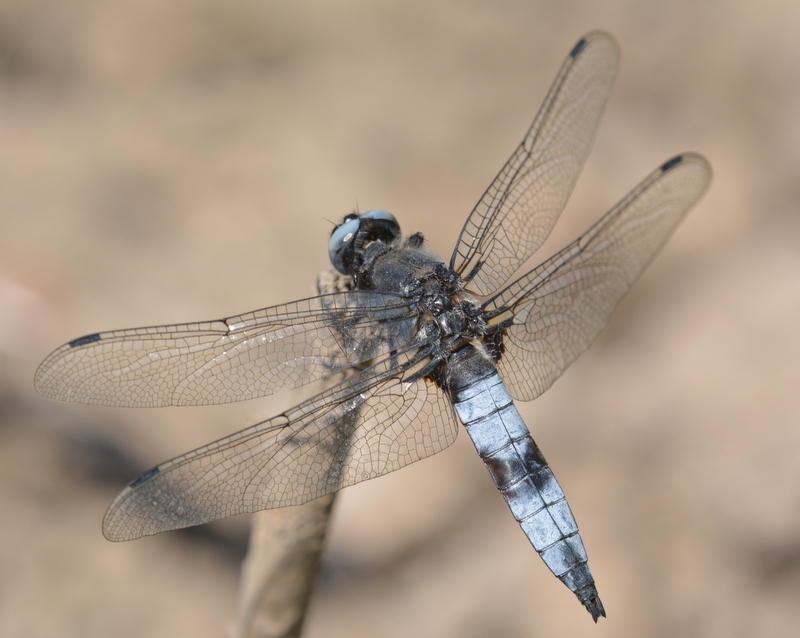
The scarce chaser is a dragonfly about 45 mm long with a wingspan near 74 mm. Males have a bright blue abdomen with black patches, while females and juvenile males show a bright orange abdomen. It lives on floodplains and marshes with dense vegetation, laying eggs in slow-current streams; eggs hatch in river-bed mud and larvae develop underwater for about two years, with adults flying from May to August.
Source: Wikipedia
How to recognize it
Adult males have a bright blue abdomen with black patches; adult females and juvenile males have a bright orange abdomen.
Source: Wikipedia
Size
The insect measures roughly 45 mm in length and its wings span about 74 mm.
Source: Wikipedia
Where it lives
It inhabits floodplains and marshes with dense vegetation, and females lay eggs in slow-current streams.
Source: Wikipedia
Life cycle
Eggs are deposited in river-bed mud, larvae develop underwater for about two years, and adults appear from May to August to mate and lay eggs.
Source: Wikipedia
When you see it
Adults are present from May through August.
Source: Wikipedia
Where it comes from
Its distribution covers Europe.
Source: Wikipedia
Lookalikes
The scarce chaser is a species of dragonfly.
Source: Wikipedia
More photos

Same family (Libellulidae)
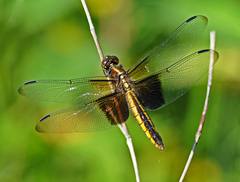
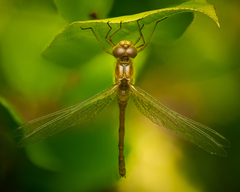

Sources
- Wikipedia: https://en.wikipedia.org/wiki/Scarce_chaser
Look it up elsewhere: GBIF · iNaturalist · BugGuide · Wikipedia
Text written 2026-10-22 from the sources above and checked sentence by sentence against them. Data fetched 2026-10-22.