 Bug FAQ
Sanderson's Bumble Bee
Bombus sandersoni · Order: Hymenoptera · Family: Apidae
Also called: Sanderson Bumble Bee
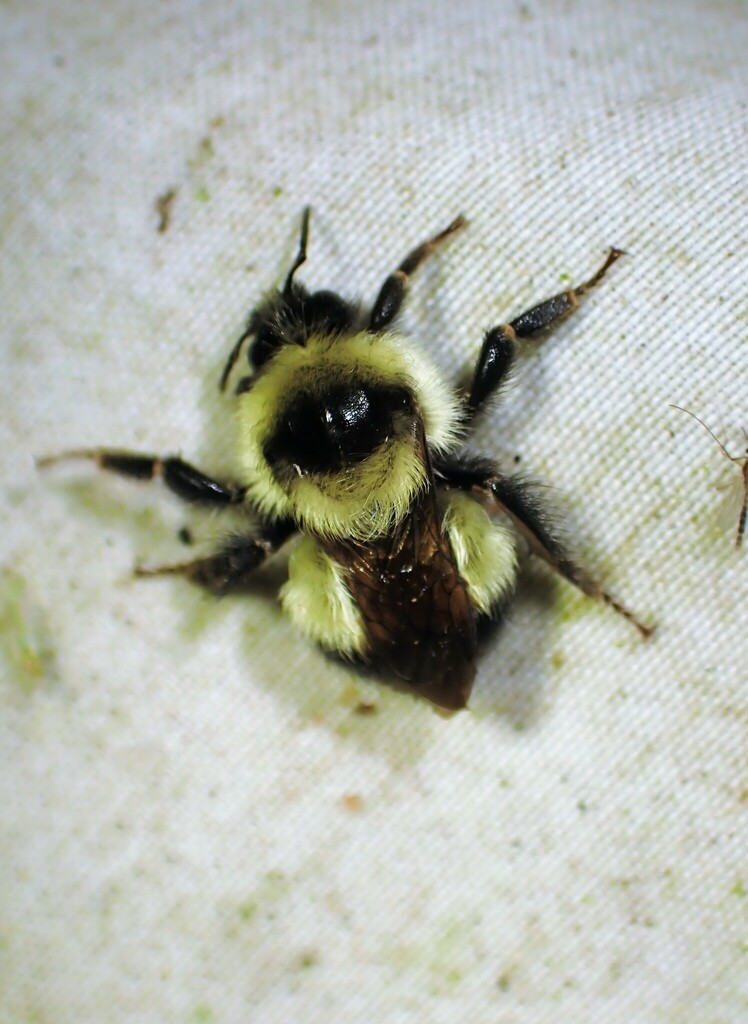
The queen of Sanderson's bumble bee is about 15-16 mm long and 6 mm wide, while workers reach up to 13 mm in length and 5 mm wide. This species lives in wooded areas across Canada and the eastern United States, inhabiting maritime, forest, prairie, tundra and taiga habitats.
Source: Wikipedia
How to recognize it
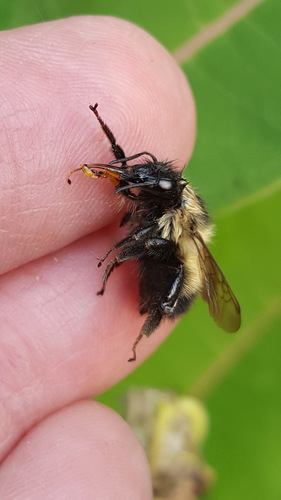
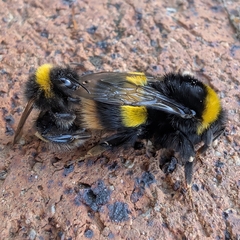
Sanderson's bumble bee is black with pale hairs on its head and a yellow abdomen. The queen’s abdomen tip is black, unlike the worker.
Source: Wikipedia
Size
Queens measure 15 to 16 mm long and 6 mm wide at the abdomen. Workers grow up to 13 mm long and 5 mm wide.
Source: Wikipedia
Where it lives
It lives in and around wooded areas.
Source: Wikipedia
What it eats
They nest underground.
Source: Wikipedia
Life cycle
The species has not experienced significant declines.
Source: Wikipedia
When you see it
Individuals can carry the bee parasite Nosema bombi.
Source: Wikipedia
Where it is found in the US
Recorded in 20 of 51 states and DC. Most records: West Virginia, Minnesota, North Carolina, New York, Michigan, Vermont, Virginia, Pennsylvania.
Darker = more records. Counts are museum and citizen-science records, not population size.
Source: GBIF
Status: native in North America; native in Canada. Source: iNaturalist
Months it is reported in the US
Source: GBIF
More photos
Same family (Apidae)


Sources
- Wikipedia: https://en.wikipedia.org/wiki/Bombus_sandersoni
Look it up elsewhere: GBIF · iNaturalist · BugGuide · ITIS · Wikipedia
Text written 2026-10-23 from the sources above and checked sentence by sentence against them. Data fetched 2026-10-23.