 Bug FAQ
Saffron-winged Meadowhawk
Sympetrum costiferum · Order: Odonata · Family: Libellulidae
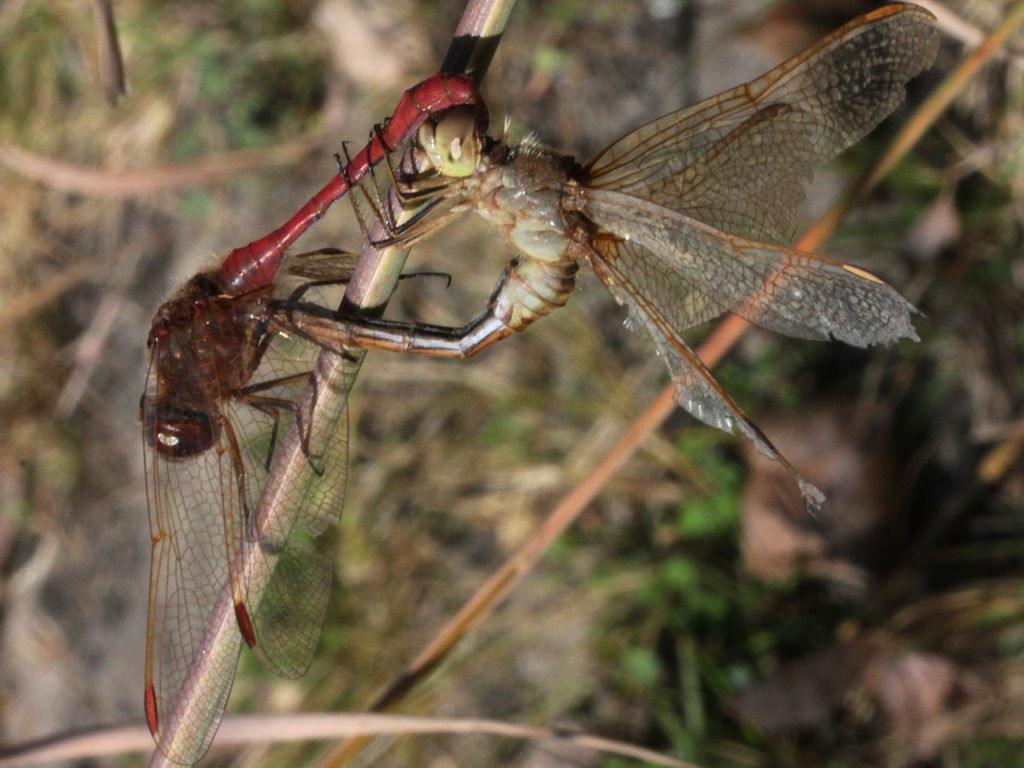
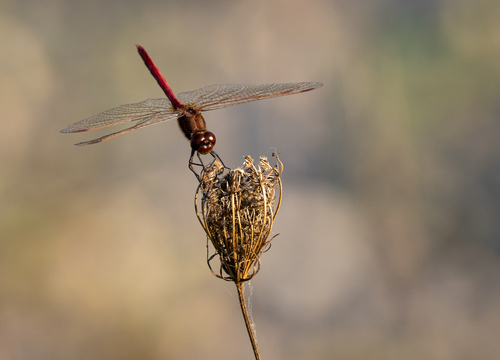
The saffron-winged meadowhawk is about 35 mm long (1.4 in). Its abdomen is yellow-brown, turning pale red when mature, with black triangular side markings; wings show gold (saffron) stripes in juveniles and females, and the veins are reddish-orange.
Source: Wikipedia
How to recognize it
Juveniles and females have gold-coloured wing stripes; some females show amber at the wing bases. Wing veins are reddish or orange in both sexes. Sides of the abdomen have black triangular markings. Legs are striped black and yellow or red.
Source: Wikipedia
Size
Length is about 35 mm (1.4 in).
Source: Wikipedia
Lookalikes
It overlaps with and is hard to separate from ruby, white-faced, and cherry-faced meadowhawks.
Source: Wikipedia
Where it is found in the US
Recorded in 35 of 51 states and DC. Most records: Michigan, Minnesota, Montana, Washington, California, Oregon, Massachusetts, Iowa.
Darker = more records. Counts are museum and citizen-science records, not population size.
Source: GBIF
Status: native in North America; native in United States; native in Canada. Source: iNaturalist
Months it is reported in the US
Source: GBIF
More photos
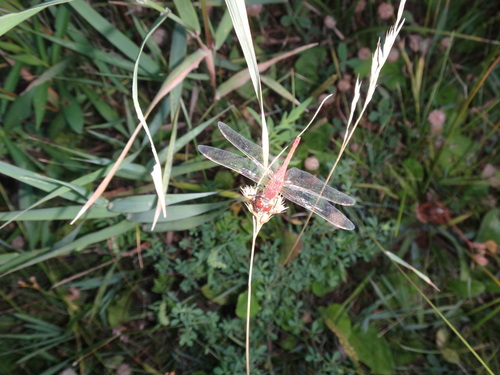
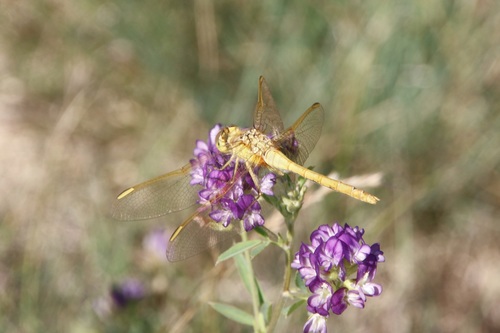
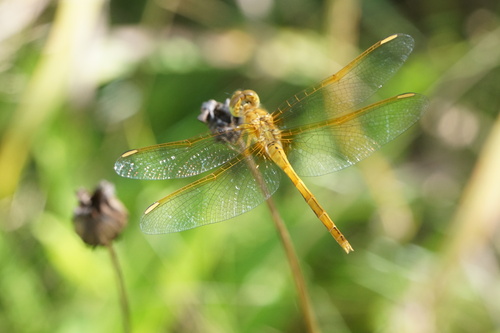
Questions people ask
How can I tell a saffron-winged meadowhawk apart from similar meadowhawks?
Look for gold-coloured wing stripes in juveniles and females, reddish-orange wing veins, and black triangular markings on the abdomen sides; these features differ from the ruby, white-faced, and cherry-faced species.
Source: Wikipedia
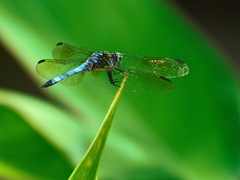
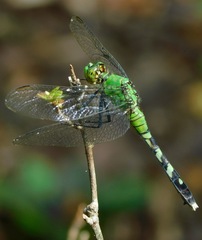
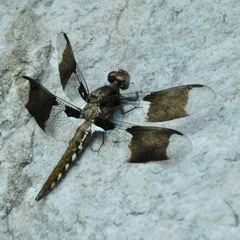
Same family (Libellulidae)

Sources
- Wikipedia: https://en.wikipedia.org/wiki/Sympetrum_costiferum
Look it up elsewhere: GBIF · iNaturalist · BugGuide · ITIS · Wikipedia
Text written 2026-10-22 from the sources above and checked sentence by sentence against them. Data fetched 2026-10-22.