 Bug FAQ
Russet Percher
Neurothemis fulvia · Order: Odonata · Family: Libellulidae
Also called: Fulvous Forest Skimmer
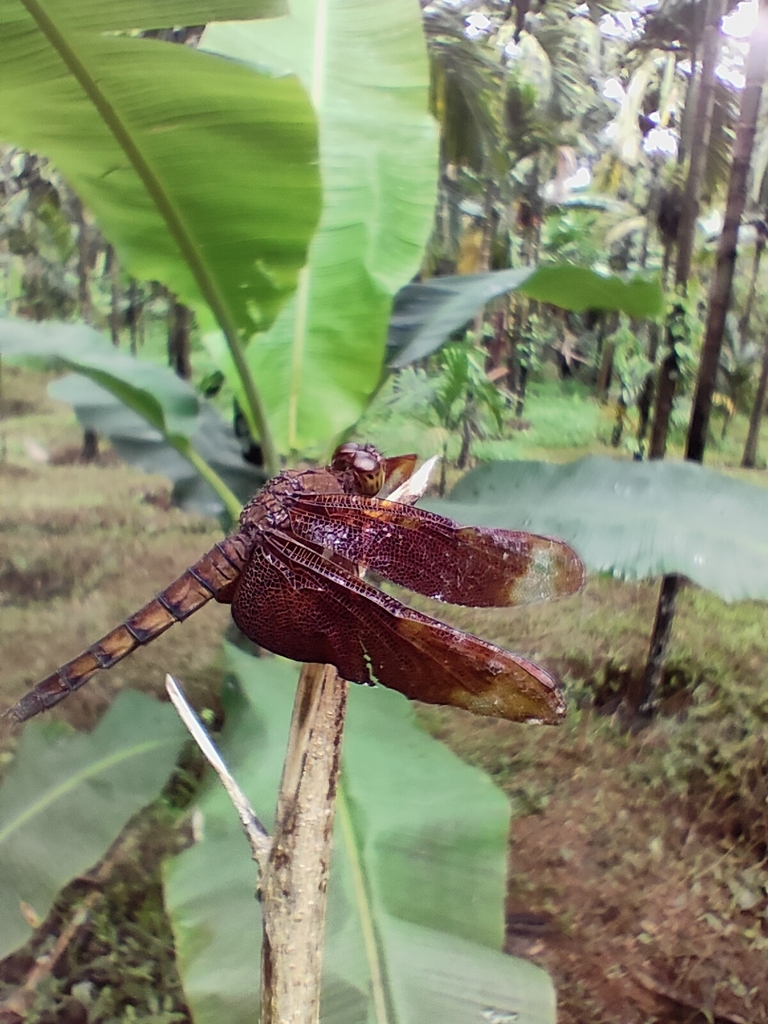
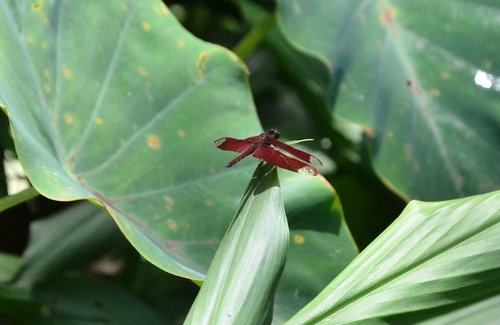
The Russet Percher is a medium-sized dragonfly with a rusty colour and transparent wing tips. Males have a reddish-brown face and body with dark reddish-brown wings that have a triangular clear area at the tip, while females are paler and have amber-yellow wings with a dark ray. It lives in wet forests, often perching on fallen logs and shrubs, and can also be found in parks and gardens.
Source: Wikipedia
How to recognize it
Males show a reddish-brown face, dark reddish-brown eyes above and golden brown below, and wings with dark reddish-brown colour and a triangular transparent tip. Females are paler overall, with clear amber-yellow wings that have a dark ray extending to the tip and often a triangular transparent area.
Source: Wikipedia
Size
It is a medium-sized dragonfly.
Source: Wikipedia
Where it lives
It inhabits wet forests, perching on fallen logs and shrubs. It is also common in local parks and gardens.
Source: Wikipedia
Where it comes from
The species is found in Asia.
Source: Wikipedia
Lookalikes
The clear, uncoloured wing tips help tell it apart from other red Asian dragonflies.
Source: Wikipedia
More photos
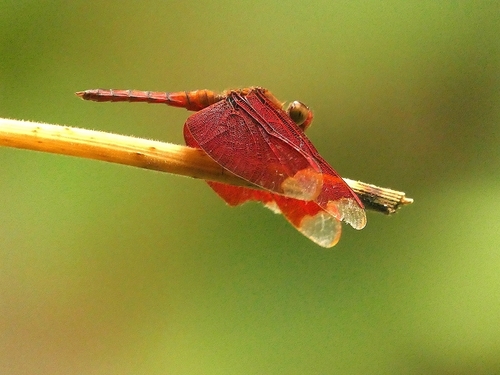
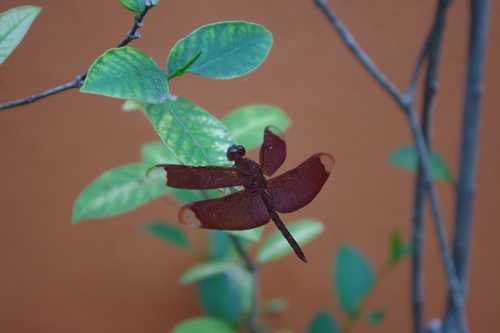
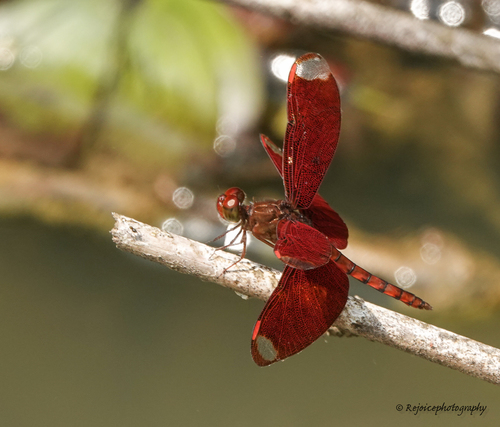
Same family (Libellulidae)

Sources
- Wikipedia: https://en.wikipedia.org/wiki/Neurothemis_fulvia
Look it up elsewhere: GBIF · iNaturalist · BugGuide · Wikipedia
Text written 2026-10-22 from the sources above and checked sentence by sentence against them. Data fetched 2026-10-22.