 Bug FAQ
Ruddy Darter
Sympetrum sanguineum · Order: Odonata · Family: Libellulidae
Also called: Ruddy Sympetrum

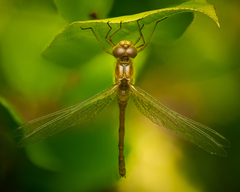
The ruddy darter is a small dragonfly about 34 to 36 mm long with a wingspan up to 6 cm and all-black legs. It lives near quiet waters with rushes or reeds, is found from June to November, and its larvae develop underwater before emerging as adults.
Source: Wikipedia
How to recognize it
Two distinct black spots appear on abdominal segments 8 and 9.
Source: Wikipedia
Size
Body length is 34 to 36 mm and wingspan can reach about 6 cm. It is smaller than the common darter.
Source: Wikipedia
Where it lives
Prefers quiet ponds or lakes with semi-aquatic plants such as rushes and reeds.
Source: Wikipedia
What it eats
Mating occurs in flight, with the pair dipping over the water.
Source: Wikipedia
Life cycle
Adults appear from June to November; larvae spend a year underwater before becoming adults.
Source: Wikipedia
When you see it
Adults are present from June through November.
Source: Wikipedia
Lookalikes
All-black legs set it apart from the common and vagrant darters, which have yellow leg stripes; the spotted darter also has black legs but a more clubbed abdomen and brighter pterostigmata.
Source: Wikipedia
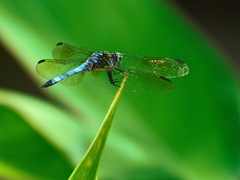
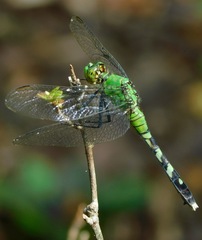
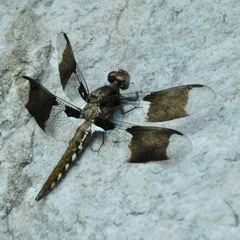
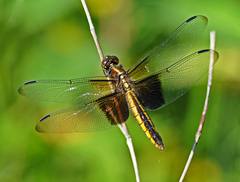
Same family (Libellulidae)

Sources
- Wikipedia: https://en.wikipedia.org/wiki/Ruddy_darter
Look it up elsewhere: GBIF · iNaturalist · BugGuide · Wikipedia
Text written 2026-10-22 from the sources above and checked sentence by sentence against them. Data fetched 2026-10-22.