 Bug FAQ
Ruby Meadowhawk
Sympetrum rubicundulum · Order: Odonata · Family: Libellulidae
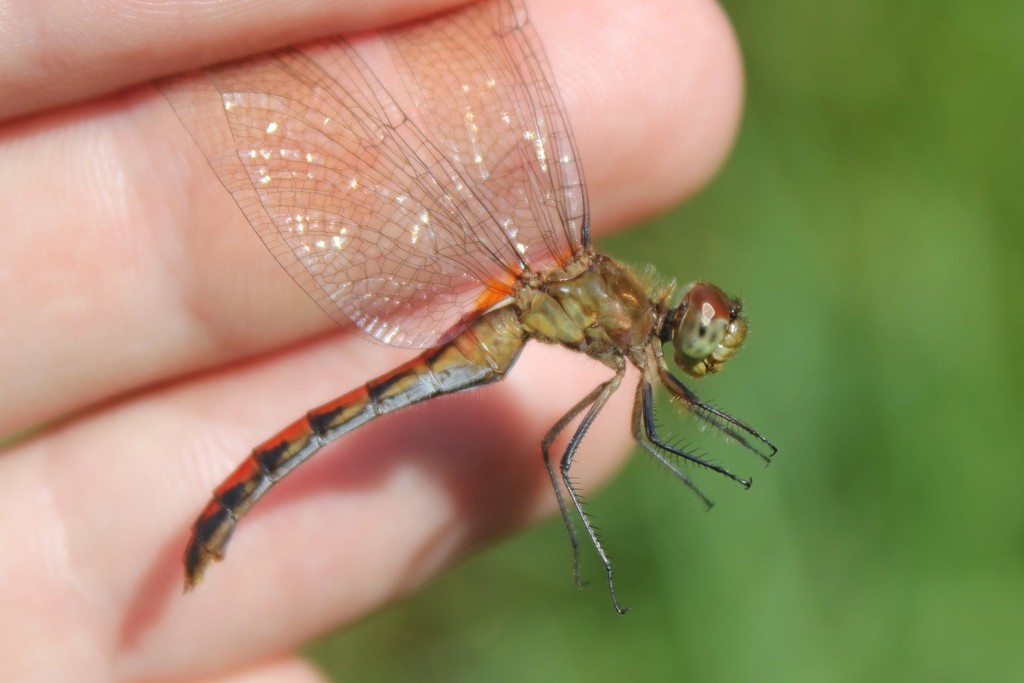
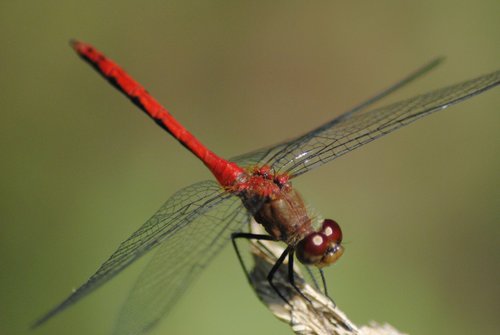
Male ruby meadowhawks have an orange-brown face and a red body, while females share the face colors but have brown to dark-red bodies. They live in the northern United States and southern Ontario, Canada. Similar species include the cherry-faced meadowhawk, white-faced meadowhawk, and saffron-winged meadowhawk.
Source: Wikipedia
How to recognize it
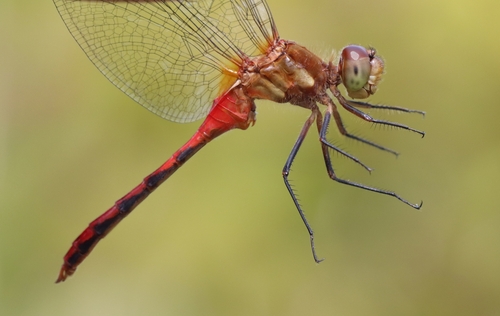
Males show an orange-brown face with a red body. Females have the same face colors but a brown to dark-red body.
Source: Wikipedia
Where it lives
Found in the northern United States and southern Ontario, Canada.
Source: Wikipedia
Where it comes from
Native to the northern United States and southern Ontario, Canada.
Source: Wikipedia
Lookalikes
Looks similar to Sympetrum internum (cherry-faced meadowhawk). Looks similar to Sympetrum obtrusum (white-faced meadowhawk). Looks similar to Sympetrum costiferum (saffron-winged meadowhawk).
Source: Wikipedia
Where it is found in the US
Recorded in 39 of 51 states and DC. Most records: Michigan, Ohio, Indiana, New York, Illinois, Minnesota, Wisconsin, Nebraska.
Darker = more records. Counts are museum and citizen-science records, not population size.
Source: GBIF
Status: native in North America; native in Canada; native in United States. Source: iNaturalist
Months it is reported in the US
Source: GBIF
More photos
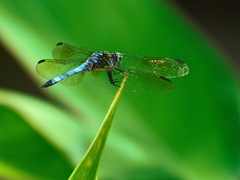
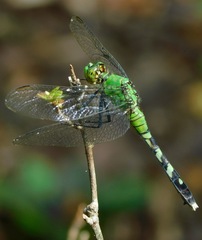
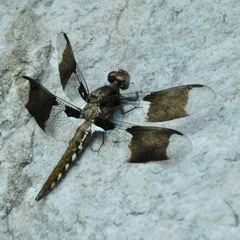
Same family (Libellulidae)

Sources
- Wikipedia: https://en.wikipedia.org/wiki/Sympetrum_rubicundulum
Look it up elsewhere: GBIF · iNaturalist · BugGuide · ITIS · Wikipedia
Text written 2026-10-23 from the sources above and checked sentence by sentence against them. Data fetched 2026-10-23.