 Bug FAQ
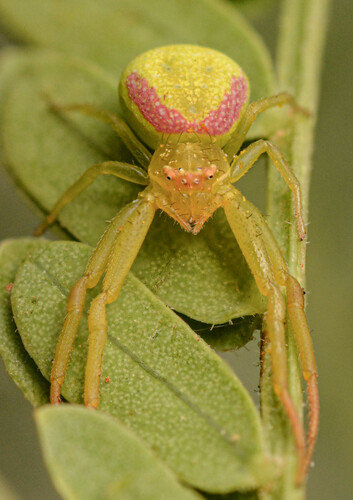
Rosy-banded crab spider
Misumenops rubrodecoratus · Order: Araneae · Family: Thomisidae
Source: Wikipedia
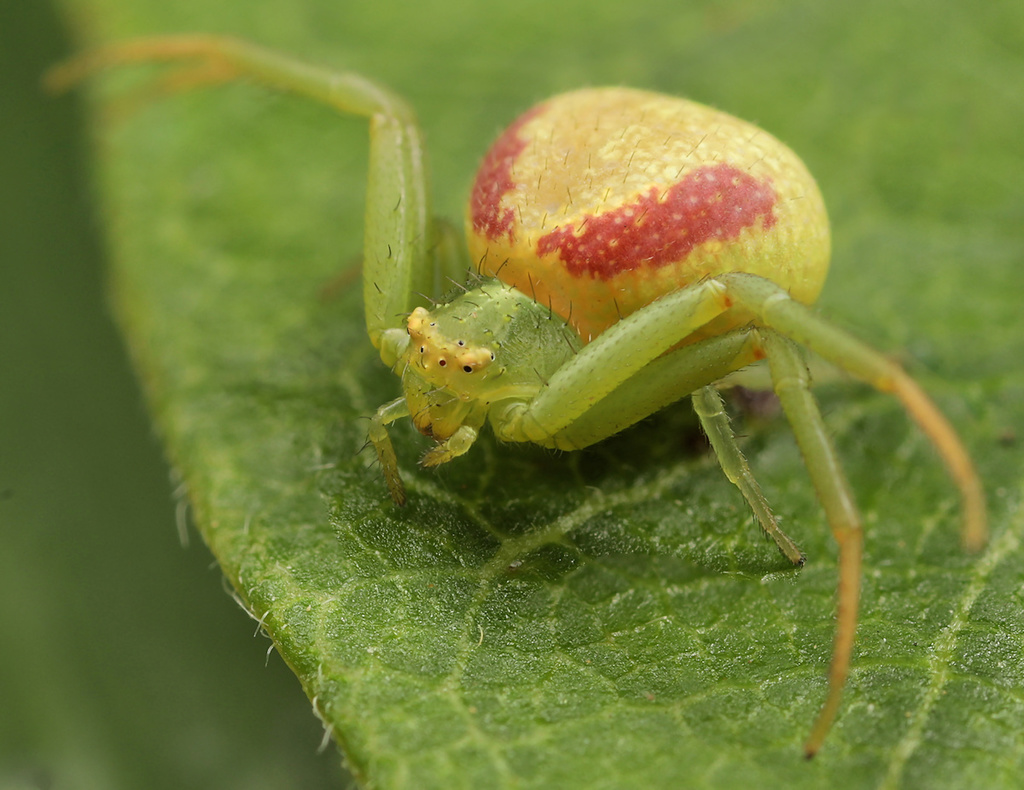
The rosy-banded crab spider lives on grasses, shrubs, flowers and trees from lowlands up to about 2,000 m altitude. It is found throughout Sub-Saharan Africa and occurs in all nine provinces of South Africa. Adults are collected all year except in the winter months.
Source: Wikipedia
Where it lives
It inhabits grass, shrubs, flowers and trees across forest, savanna, grassland and other biomes. It occurs from about 6 m to 2,020 m above sea level.
Source: Wikipedia
Where it comes from
The species is native to Sub-Saharan Africa. In South Africa it is present in every province.
Source: Wikipedia
More photos
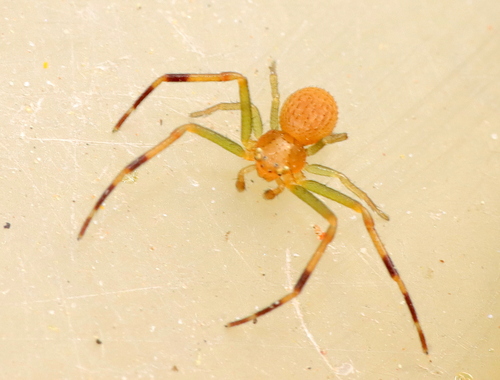
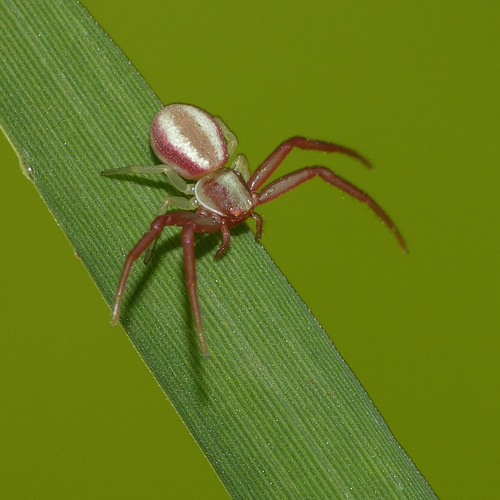
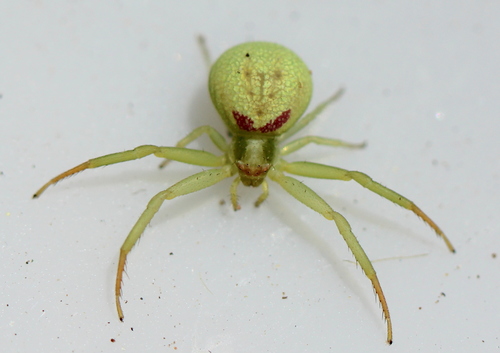
Questions people ask
What crops does the rosy-banded crab spider affect?
It is commonly encountered on avocado, citrus, cotton, maize, strawberries and many other cultivated plants.
Source: Wikipedia
When are adult spiders most likely to be seen?
Adults are collected all year long, except in the winter months.
Source: Wikipedia
Where is this spider found?
It occurs throughout Sub-Saharan Africa and in all nine provinces of South Africa.
Source: Wikipedia
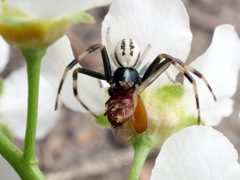
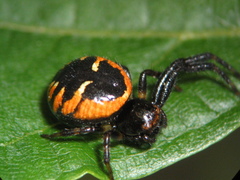
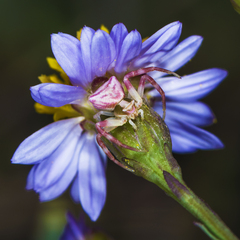
Same family (Thomisidae)

Sources
- Wikipedia: https://en.wikipedia.org/wiki/Misumenops_rubrodecoratus
Look it up elsewhere: GBIF · iNaturalist · BugGuide · ITIS · Wikipedia
Text written 2026-10-23 from the sources above and checked sentence by sentence against them. Data fetched 2026-10-23.