 Bug FAQ
Rose Plume Moth
Cnaemidophorus rhododactyla · Order: Lepidoptera · Family: Pterophoridae
Also called: Rose Plume
Source: Wikipedia
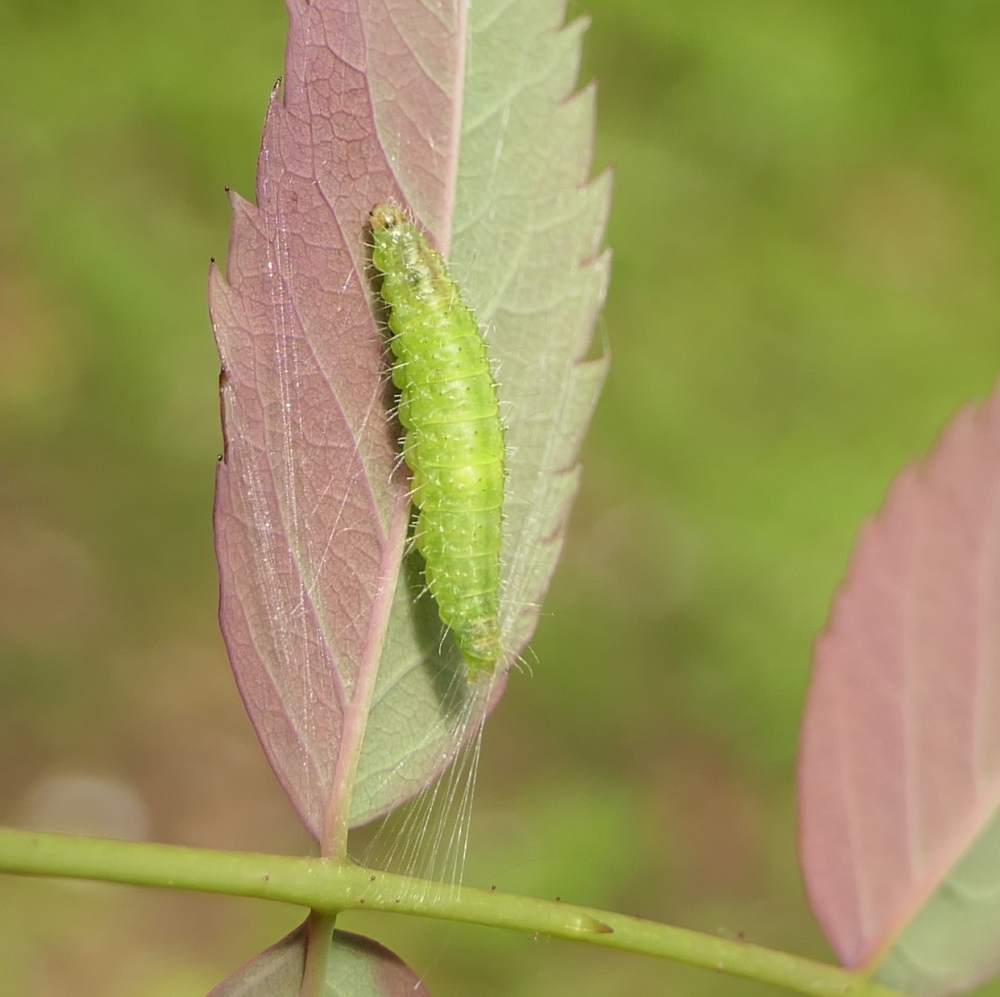
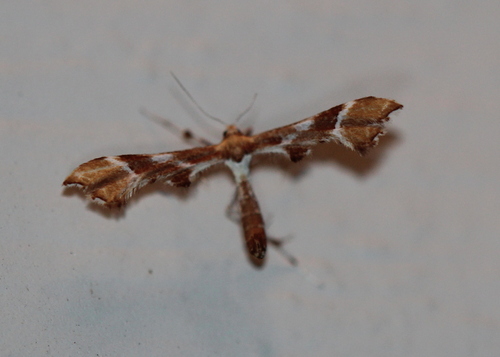
Adults have a wingspan of roughly 18 to 26 mm. They fly in July and August and are drawn to lights. Their markings are among the most distinctive of plume moths.
Source: Wikipedia
How to recognize it
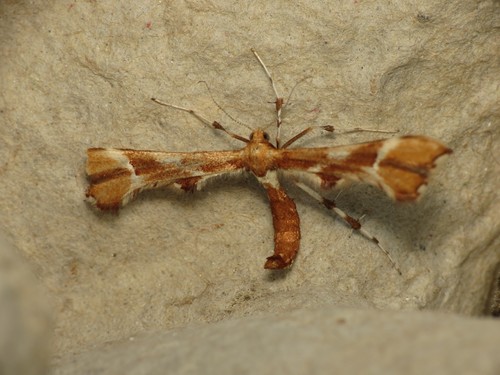
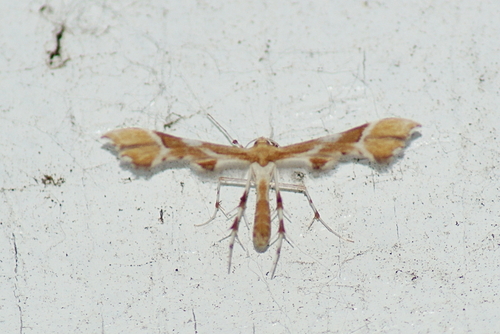
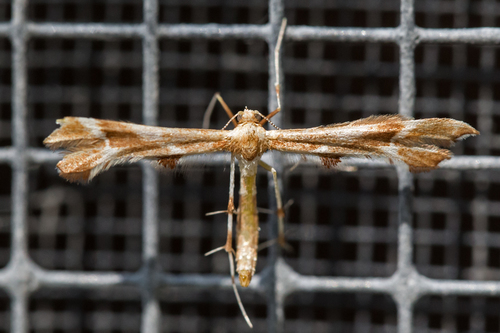
They have very distinctive plume-moth markings.
Source: Wikipedia
Size
The adult’s wingspan ranges from about 18 to 26 mm.
Source: Wikipedia
What it eats
Caterpillars feed on several rose species such as Japanese rose, dog-rose and burnet rose. In May the young larvae resume eating leaves, buds and flowers.
Source: Wikipedia
Life cycle
Eggs hatch in autumn and the small larvae feed on rose leaves, then overwinter, likely inside stems. Adults are on the wing in July and August and are attracted to light.
Source: Wikipedia
When you see it
The moths are active in July and August and are drawn to lights.
Source: Wikipedia
Where it is found in the US
Recorded in 13 of 51 states and DC. Most records: Michigan, Illinois, New York, Vermont, Wisconsin, New Hampshire, Ohio, Minnesota.
Darker = more records. Counts are museum and citizen-science records, not population size.
Source: GBIF
Status: introduced in United States. Source: iNaturalist
Months it is reported in the US
Source: GBIF
More photos
Questions people ask
When are adult Rose Plume Moths active?
Adults fly during July and August and are attracted to light.
Source: Wikipedia
What do the caterpillars eat?
The larvae feed on leaves, buds and flowers of various rose species.
Source: Wikipedia
Same family (Pterophoridae)
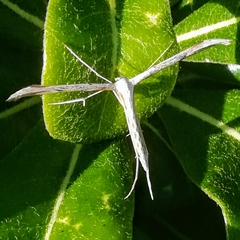 Morning-glory Plume MothEmmelina monodactyla
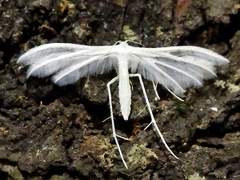 White Plume MothPterophorus pentadactylaDamages trees, gardens or crops
 Brown Silver-linePetrophora chlorosata
 Yarrow Plume MothGillmeria pallidactylaDamages trees, gardens or crops
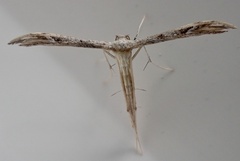 Belfrage's Plume MothPselnophorus belfragei
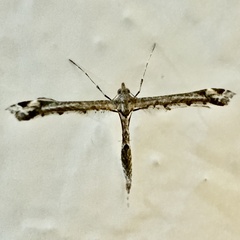 Sage Plume MothAnstenoptilia marmarodactyla
Sources
- Wikipedia: https://en.wikipedia.org/wiki/Cnaemidophorus_rhododactyla
Look it up elsewhere: GBIF · iNaturalist · BugGuide · Wikipedia
Text written 2026-10-25 from the sources above and checked sentence by sentence against them. Data fetched 2026-10-25.