 Bug FAQ
Rock Hooktail
Paragomphus cognatus · Order: Odonata · Family: Gomphidae
Also called: Boulder Hooktail, Riffle Hooktail

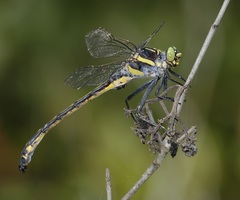
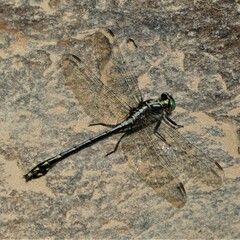
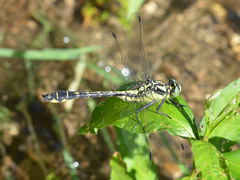
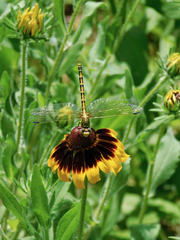
Male Rock Hooktails have thick, truncate cerci that spread apart and a distinctive thorax pattern. They live along streams and rivers, often perched on rocks in many vegetation types across southern Africa.
Source: Wikipedia
How to recognize it
Males are identified by thick, truncate cerci that diverge at the ends and by the thorax markings.
Source: Wikipedia
Where it lives
They prefer streams and rivers in fynbos, grassland, savanna and forest, often perching on mid-stream rocks.
Source: Wikipedia
More photos


Questions people ask
Where does the Rock Hooktail live?
It lives along streams and rivers, often on rocks, in a variety of habitats such as fynbos, grassland, savanna and forest across southern Africa.
Source: Wikipedia
How can I tell a male Rock Hooktail apart from other dragonflies?
Look for thick, truncate cerci that spread apart and the specific thorax pattern; these features are unique to the males.
Source: Wikipedia
Same family (Gomphidae)




Sources
- Wikipedia: https://en.wikipedia.org/wiki/Paragomphus_cognatus
Look it up elsewhere: GBIF · iNaturalist · BugGuide · Wikipedia
Text written 2026-10-23 from the sources above and checked sentence by sentence against them. Data fetched 2026-10-23.