 Bug FAQ
Ringed Harp Ground Beetle
Lebia analis · Order: Coleoptera · Family: Carabidae
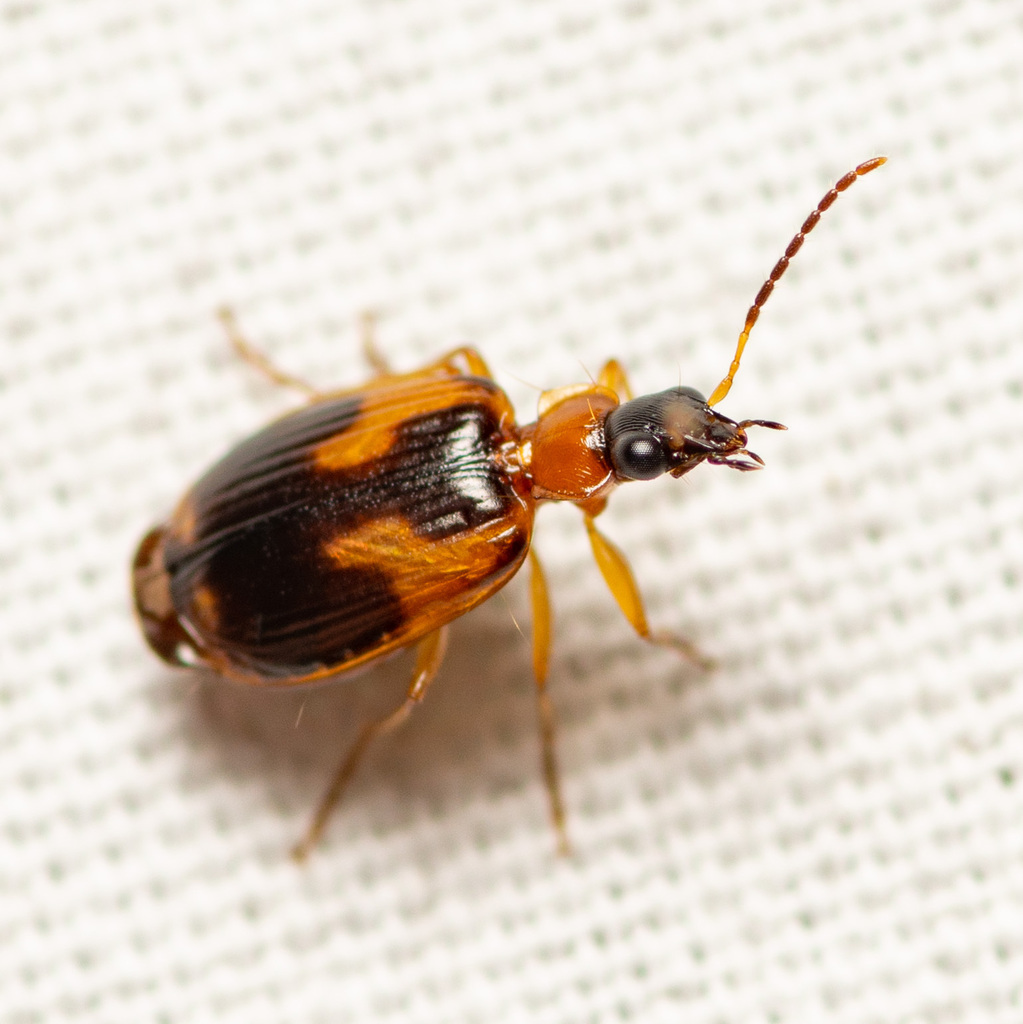
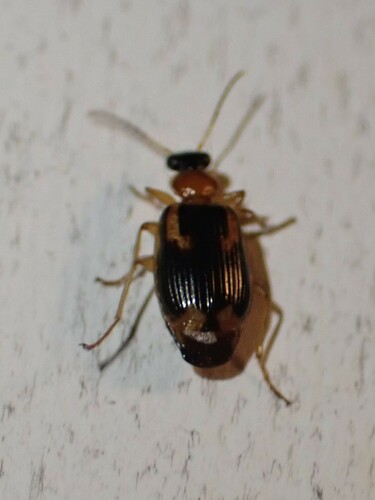
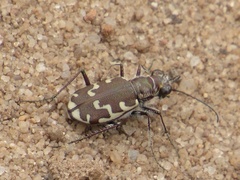
Adult Ringed Harp Ground Beetles are about 4.5 to 5 mm long (roughly one-third of an inch). Their wing covers have a pale tip with a thin black border along the middle line, and the upper sides of the pronotum show fine striations. They are brown and black, sometimes appearing orange-dark purple, and they feed on the leaves and flowers of many plants.
Source: Wikipedia
How to recognize it
The elytra end in a pale spot that is cut off by a thin black line along the suture. The upper side of the pronotum has fine striations. Color is generally brown and black, but some individuals look orange-dark purple.
Source: Wikipedia
Size
Adults measure about 4.5 to 5 mm (0.18 to 0.20 in), roughly a third of an inch.
Source: Wikipedia
What it eats
It eats the foliage and flowers of a variety of plants.
Source: Wikipedia
Where it comes from
This species is native to Canada.
Source: Wikipedia
Where it is found in the US
Recorded in 35 of 51 states and DC. Most records: Texas, Ohio, Kansas, Arizona, Kentucky, Pennsylvania, Illinois, Arkansas.
Darker = more records. Counts are museum and citizen-science records, not population size.
Source: GBIF
Status: endemic in North America; endemic in Canada. Source: iNaturalist
Months it is reported in the US
Source: GBIF
More photos
Questions people ask
How can I recognize a Ringed Harp Ground Beetle?
Look for a small beetle about 4.5 to 5 mm long with brown-black coloration, a pale tip on each wing cover edged by a thin black line, and fine striations on the upper side of the pronotum.
Source: Wikipedia
What does this beetle eat?
It feeds on the leaves and flowers of many different plants.
Source: Wikipedia
Same family (Carabidae)


Sources
- Wikipedia: https://en.wikipedia.org/wiki/Lebia_analis
Look it up elsewhere: GBIF · iNaturalist · BugGuide · ITIS · Wikipedia
Text written 2026-10-23 from the sources above and checked sentence by sentence against them. Data fetched 2026-10-23.