 Bug FAQ
Elephant Weevil
Rhynchodes ursus · Order: Coleoptera · Family: Curculionidae
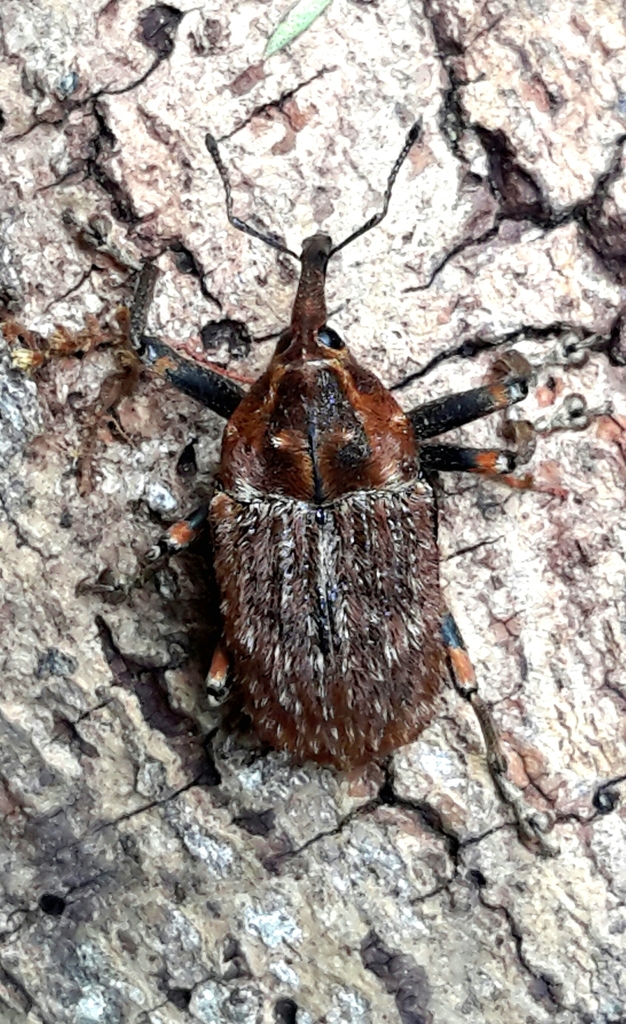
The elephant weevil is a wood-boring beetle about one and a half lines long and varies a lot in size, colour and hair-like scales. It is native to New Zealand and is active at night, capable of flight.
Source: Wikipedia
How to recognize it
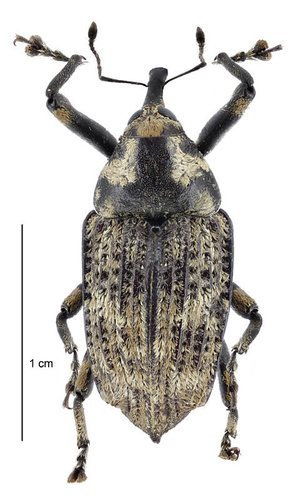
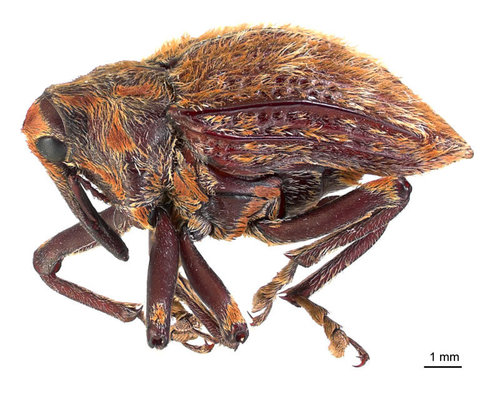
The beetle is deep brown with two lighter longitudinal bands on the thorax, five rows of hairs on each elytron and dark brown bands across the elytra; legs are black with yellow-brown hairs on the femora, and the abdomen ends with two hair tufts.
Source: Wikipedia
Size
Its length is about one and a half lines. Individuals differ widely in overall size, colour and the amount and type of hair-like scales.
Source: Wikipedia
What it eats
Adult weevils feed on tree sap.
Source: Wikipedia
Life cycle
The larvae are large with broad rounded ends on their pre-medial plates, distinguishing them from other weevil larvae.
Source: Wikipedia
When you see it
The beetle is nocturnal and can fly.
Source: Wikipedia
Where it comes from
The species is endemic to New Zealand.
Source: Wikipedia
More photos
Questions people ask
Where can I find elephant weevils?
They are found throughout New Zealand on trees and in dead wood.
Source: Wikipedia
Do they damage living trees?
Larvae tunnel only in dead trunks and branches, not in living wood.
Source: Wikipedia
Same family (Curculionidae)
 Green Immigrant Leaf WeevilPolydrusus formosusDamages trees, gardens or crops
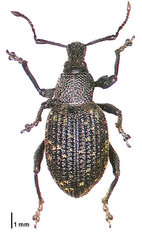 Black Vine WeevilOtiorhynchus sulcatusDamages trees, gardens or crops
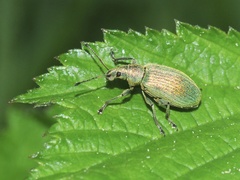 Nettle weevilPhyllobius pomaceusDamages trees, gardens or crops
 Asian Oak WeevilCyrtepistomus castaneusDamages trees, gardens or crops
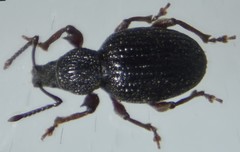 Strawberry Root WeevilOtiorhynchus ovatusDamages trees, gardens or crops
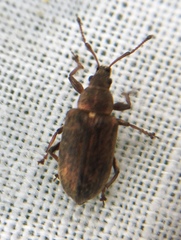 Common Leaf WeevilPhyllobius pyriDamages trees, gardens or crops
Sources
- Wikipedia: https://en.wikipedia.org/wiki/Rhynchodes_ursus
Look it up elsewhere: GBIF · iNaturalist · BugGuide · Wikipedia
Text written 2026-10-23 from the sources above and checked sentence by sentence against them. Data fetched 2026-10-23.