 Bug FAQ
Rhubarb Weevil
Lixus concavus · Order: Coleoptera · Family: Curculionidae
Also called: rhubarb curculio
Source: Wikipedia
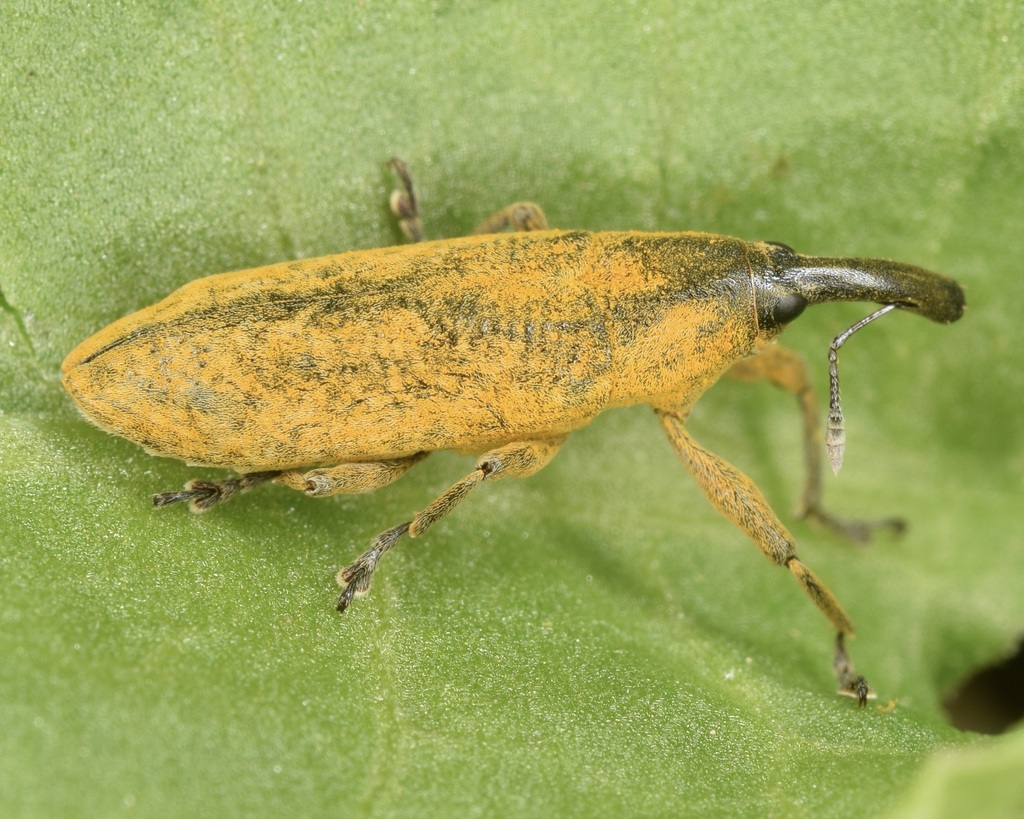
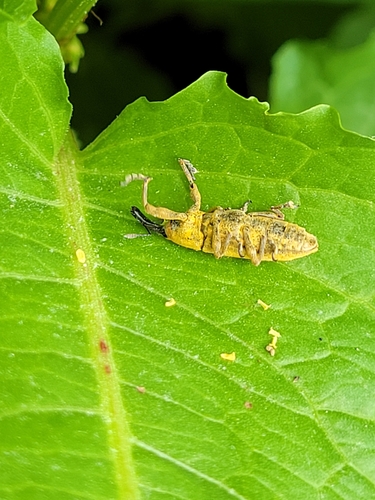
The adult rhubarb curculio is a half-inch black beetle with a long snout, yellow dust and geniculate antennae ending in small clubs. It completes one generation each year, with larvae developing inside the stalks of curly dock, sunflowers or thistles and emerging as adults in mid-May. Adults feed on leaf margins and puncture stalks, causing distinct notches, while a single grub per plant burrows down to the ground to pupate.
Source: Wikipedia
How to recognize it
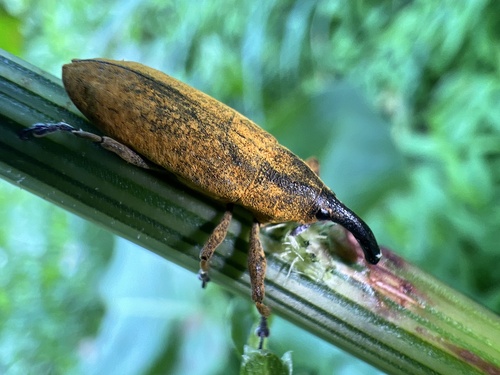
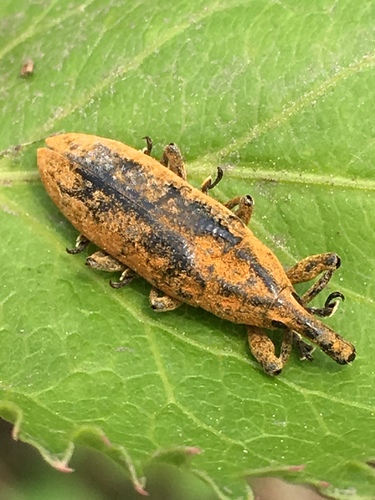
The beetle has a long snout and elbowed antennae with tiny clubs. It is black, covered with yellow dust, and about half an inch long.
Source: Wikipedia
Size
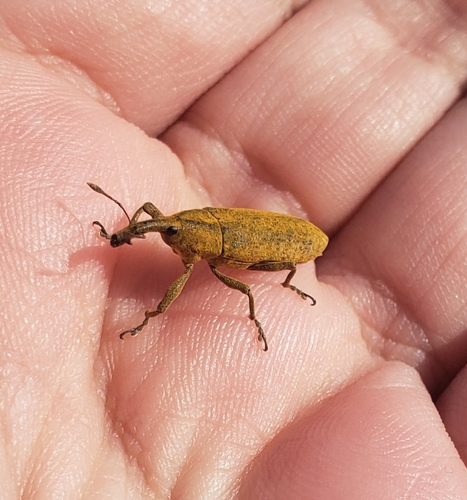
Adults measure roughly half an inch in length. The legless larva is a grub about three-quarters of an inch long.
Source: Wikipedia
Is it a pest in the house?
Feeding creates distinct notches on leaf margins and punctures stalks, which is noticeable damage.
Source: Wikipedia
How to get rid of it
Because numbers are usually low, you can handpick the beetles and destroy them.
Source: Wikipedia
Where it lives
Adults overwinter in leaf litter or similar ground debris.
Source: Wikipedia
What it eats
Adults feed on leaf edges and also puncture plant stalks. Larvae develop for a few weeks, then the new adults feed for a short period before seeking overwintering sites.
Source: Wikipedia
Life cycle
There is one generation per year. Typically one grub develops per host plant, burrowing down to ground level where it pupates after about nine weeks.
Source: Wikipedia
When you see it
Adults emerge from overwintering sites in mid-May.
Source: Wikipedia
Where it comes from
It occurs across the eastern United States and extends west to Idaho, Utah and Texas. In Canada it is known from Ontario.
Source: Wikipedia
Lookalikes
The larva has a brown head often marked with an inverted Y shape. Adults can be told apart by their long snout and elbowed antennae with small clubs.
Source: Wikipedia
Where it is found in the US
Recorded in 38 of 51 states and DC. Most records: Pennsylvania, Kentucky, Utah, Illinois, New York, Ohio, Texas, Massachusetts.
Darker = more records. Counts are museum and citizen-science records, not population size.
Source: GBIF
Months it is reported in the US
Source: GBIF
More photos
Questions people ask
How can I get rid of Lixus concavus?
Pick the beetles by hand and destroy them, and cut away host plants like curly dock and sunflowers in midsummer while larvae are still inside.
Source: Wikipedia
When will I see adult rhubarb curculio?
Adults appear in mid-May after overwintering in leaf litter.
Source: Wikipedia
What plants does this weevil damage?
It attacks curly dock, sunflowers and thistles, feeding on leaf margins and puncturing stalks, which leaves distinct notches.
Source: Wikipedia
How can I recognize the larva?
The grub is legless, about three-quarters of an inch long, with a brown head that often bears an inverted Y-shaped mark.
Source: Wikipedia
Same family (Curculionidae)
 Green Immigrant Leaf WeevilPolydrusus formosusDamages trees, gardens or crops
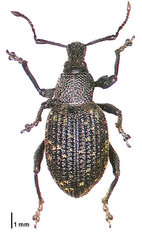 Black Vine WeevilOtiorhynchus sulcatusDamages trees, gardens or crops
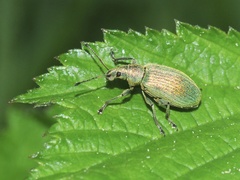 Nettle weevilPhyllobius pomaceusDamages trees, gardens or crops
 Asian Oak WeevilCyrtepistomus castaneusDamages trees, gardens or crops
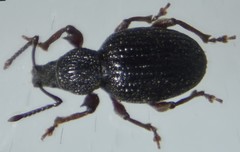 Strawberry Root WeevilOtiorhynchus ovatusDamages trees, gardens or crops
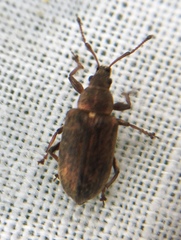 Common Leaf WeevilPhyllobius pyriDamages trees, gardens or crops
Sources
- Wikipedia: https://en.wikipedia.org/wiki/Lixus_concavus
Look it up elsewhere: GBIF · iNaturalist · BugGuide · ITIS · Wikipedia
Text written 2026-10-24 from the sources above and checked sentence by sentence against them. Data fetched 2026-10-24.