 Bug FAQ
Red-winged tritoma
Tritoma sanguinipennis · Order: Coleoptera · Family: Erotylidae
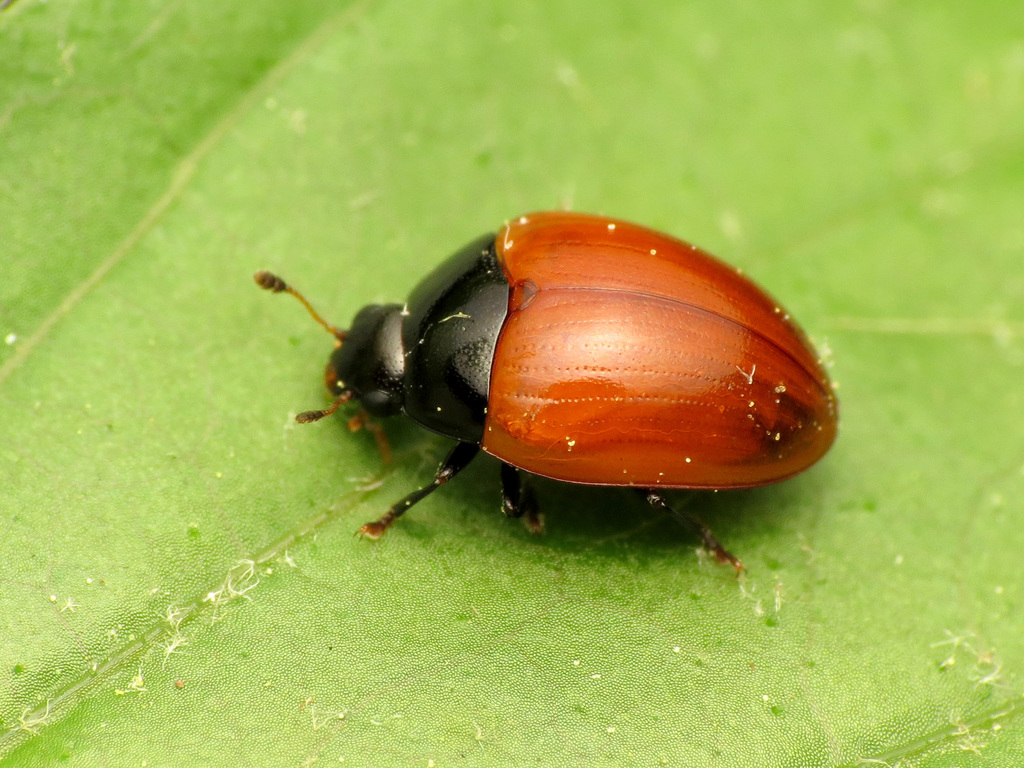
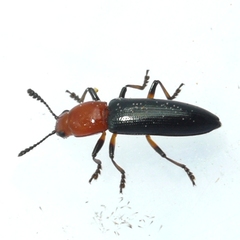
Its elytra, scutellum, most of the abdomen and antenna stems are yellow-red, while the antenna clubs are dark chestnut brown and the first two abdominal segments often have a blackish tint. It is native to eastern North America, east of the Rocky Mountains, and appears earlier in the year than most relatives, becoming most abundant from late May through early August.
Source: Wikipedia
How to recognize it
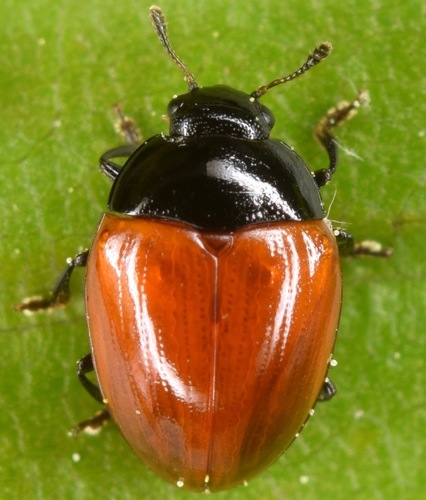
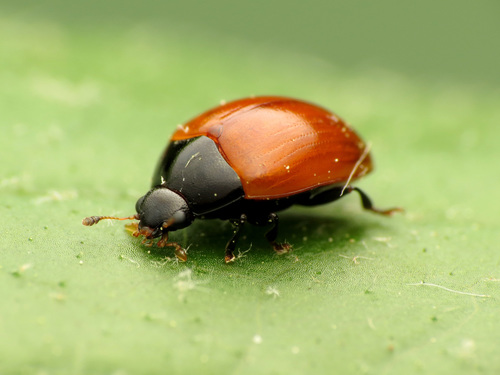
The elytra, scutellum, most of the abdomen and the antenna stems are yellowish-red. The antenna clubs are dark chestnut brown and the first two abdominal segments often show a blackish wash.
Source: Wikipedia
Size
Adults measure about 3.1 to 5.1 mm in length and 2 to 3.2 mm in width.
Source: Wikipedia
Where it lives
These beetles tend to be active earlier in the season than most of their relatives. They are often found together with Tritoma humeralis and, less frequently, with T. mimetica.
Source: Wikipedia
What it eats
The larvae and pupae have been described in detail. Adults are readily collected in summer using Malaise traps.
Source: Wikipedia
Life cycle
The larvae and pupae have been described in detail.
Source: Wikipedia
When you see it
Populations increase noticeably in late May and peak from midsummer to early August. They are active earlier in the year than most related species.
Source: Wikipedia
Lookalikes
It resembles Tritoma mimetica, but that species has a black fringe on the elytra.
Source: Wikipedia
Where it is found in the US
Recorded in 7 of 51 states and DC. Most records: Kansas, Kentucky, Pennsylvania, New York, Georgia, Tennessee, Virginia.
Darker = more records. Counts are museum and citizen-science records, not population size.
Source: GBIF
Status: native in North America; native in United States; native in Canada. Source: iNaturalist
Months it is reported in the US
Source: GBIF
More photos

Questions people ask
What do red-winged tritomas look like?
Their elytra, scutellum, most of the abdomen and antenna stems are yellow-red, while the antenna clubs are dark chestnut brown and the first two abdominal segments often have a blackish tint.
Source: Wikipedia
Where are red-winged tritomas found?
They are native to eastern North America, east of the Rocky Mountains.
Source: Wikipedia
Which beetles are easily confused with red-winged tritoma?
Tritoma mimetica looks similar, but it has a black fringe on its elytra.
Source: Wikipedia
Same family (Erotylidae)
 Blue Fungus BeetleGibbifer californicus
 Pleasing Fungus BeetleMegalodacne heros
 Red-banded Fungus BeetleMegalodacne fasciata
 Four-spotted Fungus BeetleIschyrus quadripunctatus
 Clover Stem BorerLanguria mozardiDamages trees, gardens or crops
 Slender Lizard BeetleAcropteroxys gracilisDamages trees, gardens or crops
Sources
- Wikipedia: https://en.wikipedia.org/wiki/Rotitma_sanguinipennis
Look it up elsewhere: GBIF · iNaturalist · BugGuide · Wikipedia
Text written 2026-10-28 from the sources above and checked sentence by sentence against them. Data fetched 2026-10-28.