 Bug FAQ
Clover Stem Borer
Languria mozardi · Order: Coleoptera · Family: Erotylidae
Also called: Clover Stem Borer Beetle
Source: Wikipedia
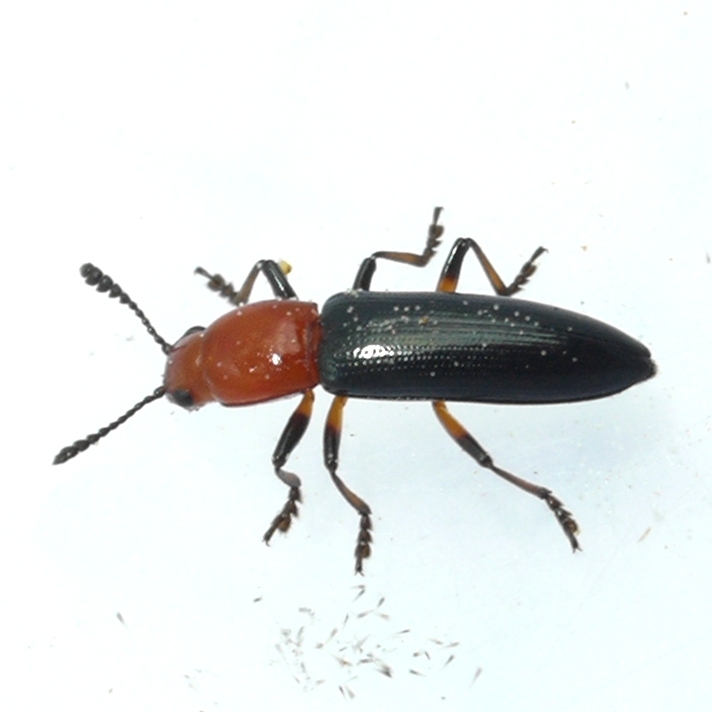
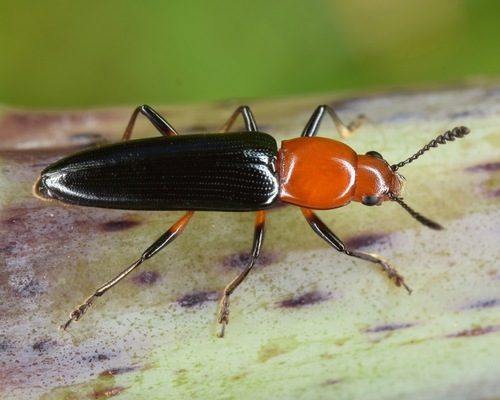
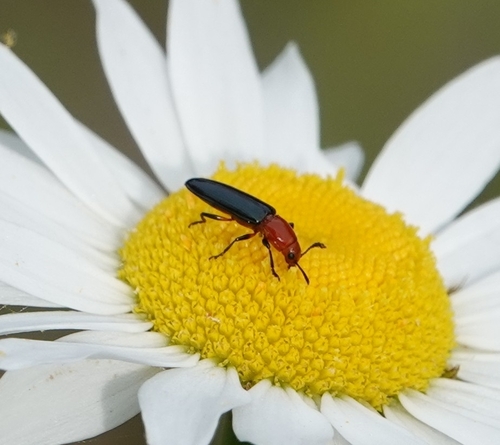
Adults are small beetles, 4 to 9 mm long, mostly red with black elytra and blackish antenna tips. They occur across North America and are most often seen from February through November.
Source: Wikipedia
How to recognize it
Its antenna ends in a narrow club of five segments that gradually widen, the first club segment being less than twice as wide as the stem segments.
Source: Wikipedia
Size
Adults measure between 4 and 9 mm in length.
Source: Wikipedia
Where it lives
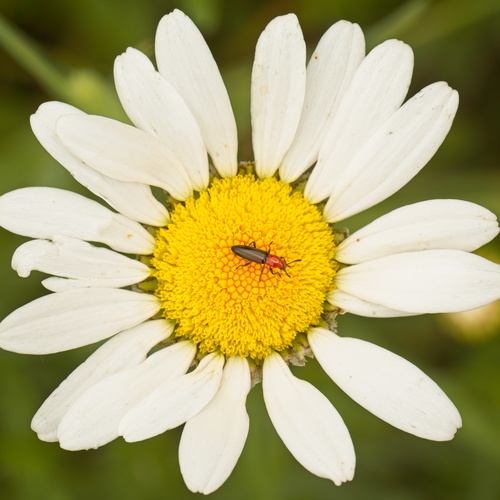
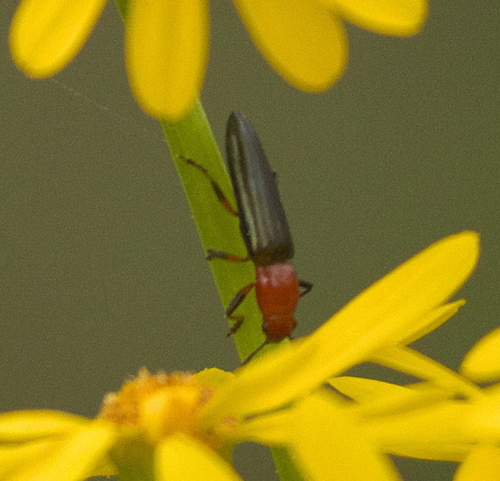
It can be found on many plants, especially those in the sunflower family but also on members of the carrot, mustard, bellflower, legume, mallow, grass and nettle families.
Source: Wikipedia
What it eats
Larvae bore into stems of economically important crops such as alfalfa, canola and red clover.
Source: Wikipedia
When you see it
Adults are usually encountered from February through November.
Source: Wikipedia
Where it comes from
The species is native to North America.
Source: Wikipedia
Lookalikes
It may be confused with the similar Languria laeta, which is more common on the Great Plains and prefers pricklypoppy, a plant L. mozardi rarely visits.
Source: Wikipedia
Where it is found in the US
Recorded in 33 of 51 states and DC. Most records: Kentucky, Texas, Louisiana, Pennsylvania, New York, Ohio, Virginia, Georgia.
Darker = more records. Counts are museum and citizen-science records, not population size.
Source: GBIF
Status: native in North America; native in Canada. Source: iNaturalist
Months it is reported in the US
Source: GBIF
More photos
Questions people ask
What crops does the clover stem borer damage?
Its larvae bore into the stems of alfalfa, canola and red clover, harming those crops.
Source: Wikipedia
When are clover stem borers most likely to be seen?
Adults are typically active from February through November.
Source: Wikipedia
How can I tell the clover stem borer apart from similar beetles?
Look for its mostly red body with black elytra and a narrow five-segment antenna club; the related Languria laeta is usually found on pricklypoppy instead.
Source: Wikipedia
Same family (Erotylidae)


Sources
- Wikipedia: https://en.wikipedia.org/wiki/Languria_mozardi
Look it up elsewhere: GBIF · iNaturalist · BugGuide · ITIS · Wikipedia
Text written 2026-10-25 from the sources above and checked sentence by sentence against them. Data fetched 2026-10-25.