 Bug FAQ
Red Turpentine Beetle
Dendroctonus valens · Order: Coleoptera · Family: Curculionidae
Source: Wikipedia
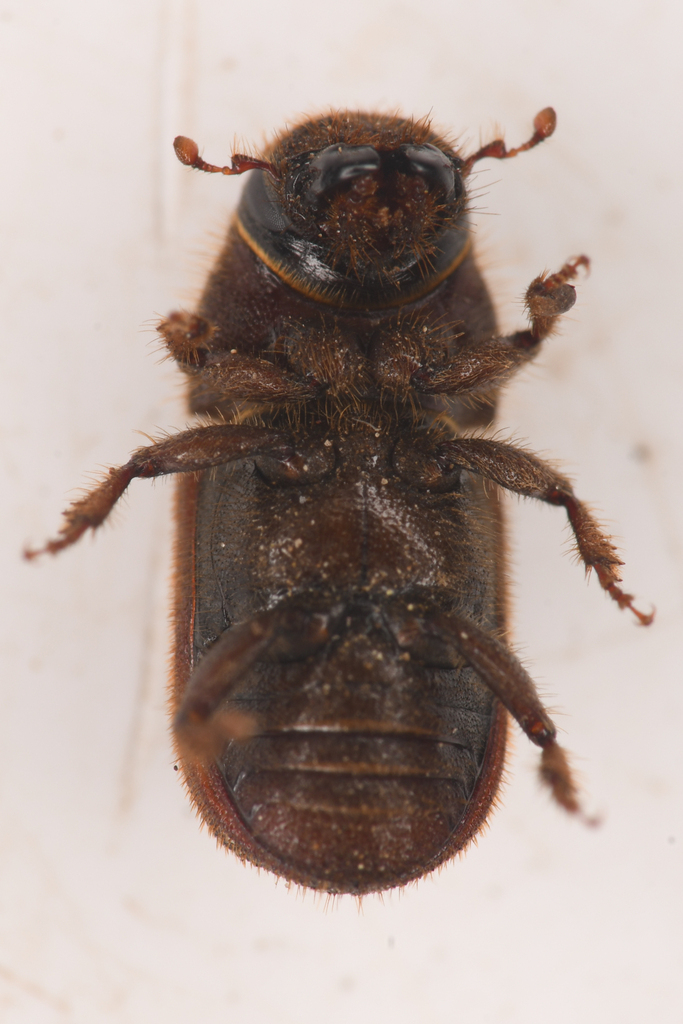
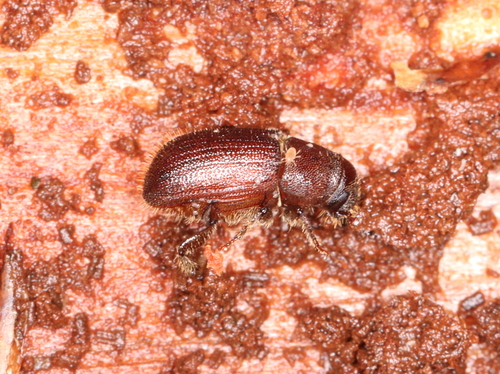
Adults are 6 to 10 mm long and about twice as long as they are wide. They are dark-reddish brown, turning that color soon after emerging as tan beetles. Native to forests of North and Central America, they have become a destructive pest of pine forests in China, killing millions of trees.
Source: Wikipedia
How to recognize it
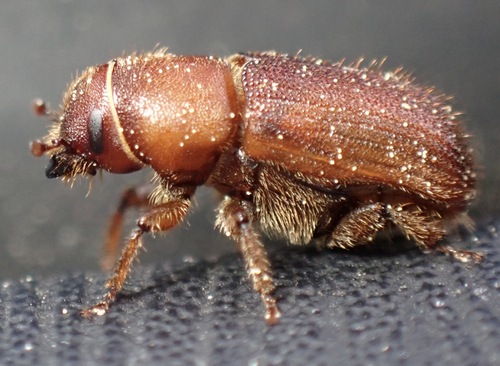
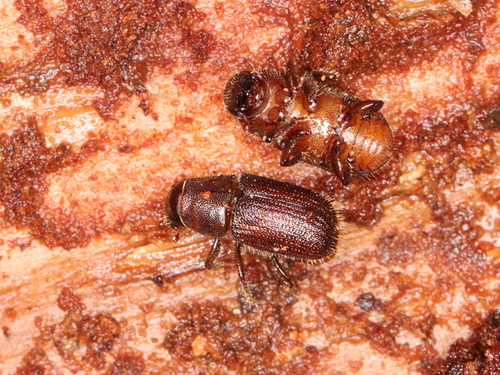
The beetle is dark-reddish brown, changing from a tan color when it first emerges.
Source: Wikipedia
Size
Adults measure 6 to 10 mm in length and are roughly twice as long as they are wide.
Source: Wikipedia
Is it a pest in the house?
While harmless in its native range, it is a very destructive pest in China.
Source: Wikipedia
How to get rid of it
Lindgren funnel traps are being tested as a way to catch the beetles. Preventative insecticides and regular tree maintenance can help protect trees.
Source: Wikipedia
Where it lives
It lives in forested areas across North and Central America.
Source: Wikipedia
What it eats
In North America it attacks white fir, spruce and pine species.
Source: Wikipedia
Life cycle
In the southern part of its range it can be active year-round with several generations at once. Further north it is active May to October, has one generation per year, and larvae may take more than a year to mature.
Source: Wikipedia
When you see it
Adults disperse from mid-April to mid-May looking for new host trees. In China the beetles mainly develop into adults over the winter.
Source: Wikipedia
Where it comes from
Its native range includes Canada, the northern and western United States, Mexico, Guatemala and Honduras.
Source: Wikipedia
Lookalikes
Research in China shows that the predatory beetle Rhizophagus grandis will also attack this species.
Source: Wikipedia
Where it is found in the US
Recorded in 32 of 51 states and DC. Most records: Colorado, Michigan, Vermont, California, Arizona, New Mexico, Idaho, Minnesota.
Darker = more records. Counts are museum and citizen-science records, not population size.
Source: GBIF
Status: native in North America; native in Canada. Source: iNaturalist
Months it is reported in the US
Source: GBIF
More photos
Questions people ask
How can I control red turpentine beetle infestations?
Lindgren funnel traps and preventative insecticide applications, together with regular tree care, are used to reduce beetle numbers.
Source: Wikipedia
What trees does the red turpentine beetle damage?
It attacks pine species, including Manchurian red pine and Chinese white pine in China, and various pines, spruce and white fir in North America.
Source: Wikipedia
Same family (Curculionidae)
 Green Immigrant Leaf WeevilPolydrusus formosusDamages trees, gardens or crops
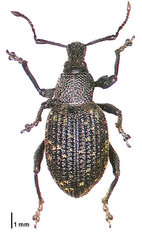 Black Vine WeevilOtiorhynchus sulcatusDamages trees, gardens or crops
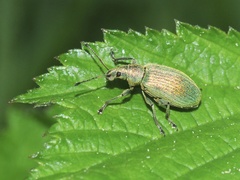 Nettle weevilPhyllobius pomaceusDamages trees, gardens or crops
 Asian Oak WeevilCyrtepistomus castaneusDamages trees, gardens or crops
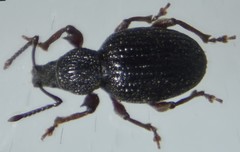 Strawberry Root WeevilOtiorhynchus ovatusDamages trees, gardens or crops
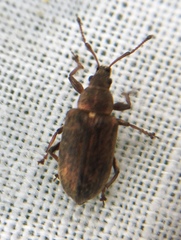 Common Leaf WeevilPhyllobius pyriDamages trees, gardens or crops
Sources
- Wikipedia: https://en.wikipedia.org/wiki/Dendroctonus_valens
Look it up elsewhere: GBIF · iNaturalist · BugGuide · ITIS · Wikipedia
Text written 2026-10-23 from the sources above and checked sentence by sentence against them. Data fetched 2026-10-23.