 Bug FAQ
Red-tailed Bumble Bee
Bombus lapidarius · Order: Hymenoptera · Family: Apidae
Also called: Large Red Tailed Bumble Bee, Large Red-tailed Humble-bee, Stone Humble-bee
Source: Wikipedia
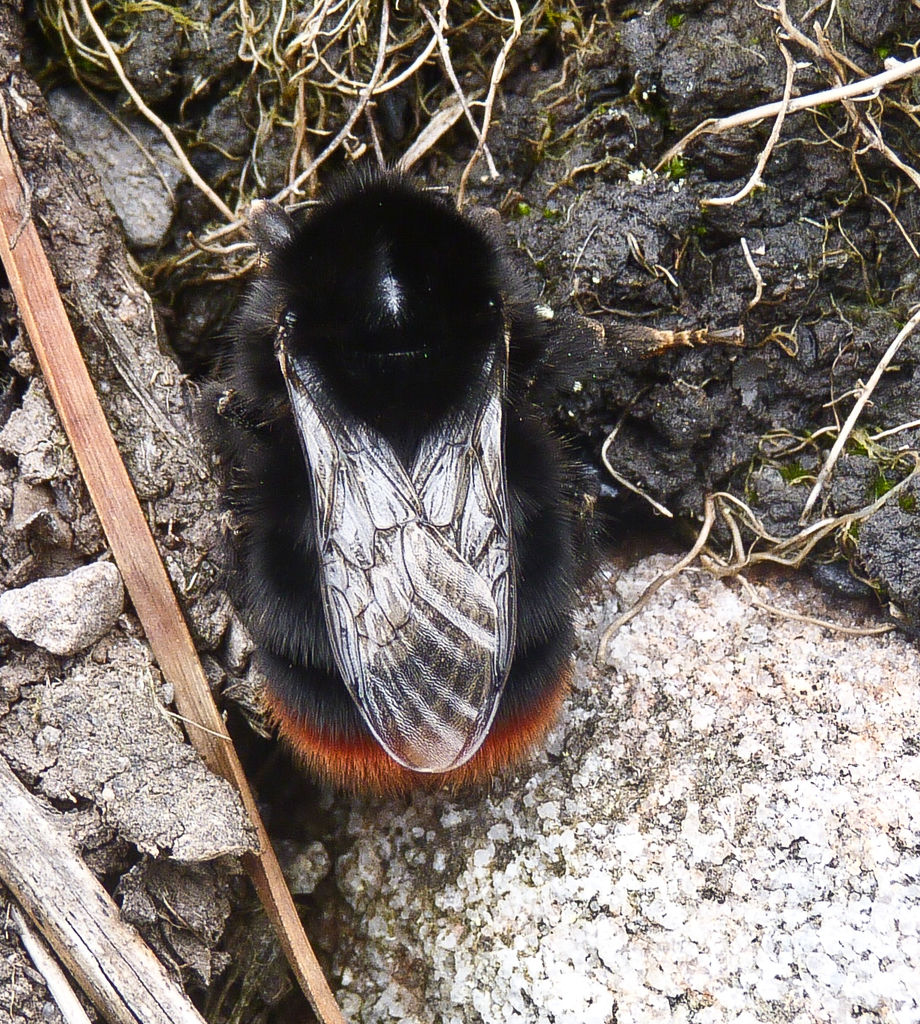
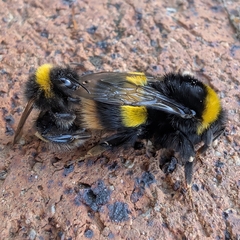
Red-tailed bumblebees have a black body with red markings on the abdomen and males show a yellow band and facial spots. They are active in the summer months of June through August and fly above treetops where they are exposed to wind and sun.
Source: Wikipedia
Size
Queens are much larger than worker females, while males have the typical red-black coloration with yellow accents.
Source: Wikipedia
Does it bite or sting?
As a bumblebee, they can sting if threatened.
Source: Wikipedia
Where it lives
They nest in many habitats but prefer open terrain rather than dense forest. Foragers can travel over 1500 m from the nest to collect food.
Source: Wikipedia
What it eats
Adults feed on pollen and nectar. Workers may also eat eggs laid by the queen.
Source: Wikipedia
Life cycle
Colonies start when a queen establishes a nest; workers and males then take on their respective roles. Adults appear in June, July and August.
Source: Wikipedia
When you see it
They are most visible during the summer months of June to August. They typically fly above treetops, where wind and sun are stronger.
Source: Wikipedia
Where it comes from
Found throughout Europe, including Britain, Ireland, Greece, Germany, Sweden and Finland. Their distribution is mainly in temperate regions.
Source: Wikipedia
Where it is found in the US
Recorded in 2 of 51 states and DC. Most records: Utah, Virginia.
Darker = more records. Counts are museum and citizen-science records, not population size.
Source: GBIF
Questions people ask
What do they eat?
They feed on pollen and nectar, and workers may also eat queen-laid eggs.
Source: Wikipedia
Where are they found?
They occur across Europe in temperate areas, including Britain, Ireland, Greece, Germany, Sweden and Finland.
Source: Wikipedia
Same family (Apidae)


Sources
- Wikipedia: https://en.wikipedia.org/wiki/Bombus_lapidarius
Look it up elsewhere: GBIF · iNaturalist · BugGuide · ITIS · Wikipedia
Text written 2026-10-22 from the sources above and checked sentence by sentence against them. Data fetched 2026-10-22.