 Bug FAQ
Red Saddlebags
Tramea onusta · Order: Odonata · Family: Libellulidae
Also called: Red Saddlebag
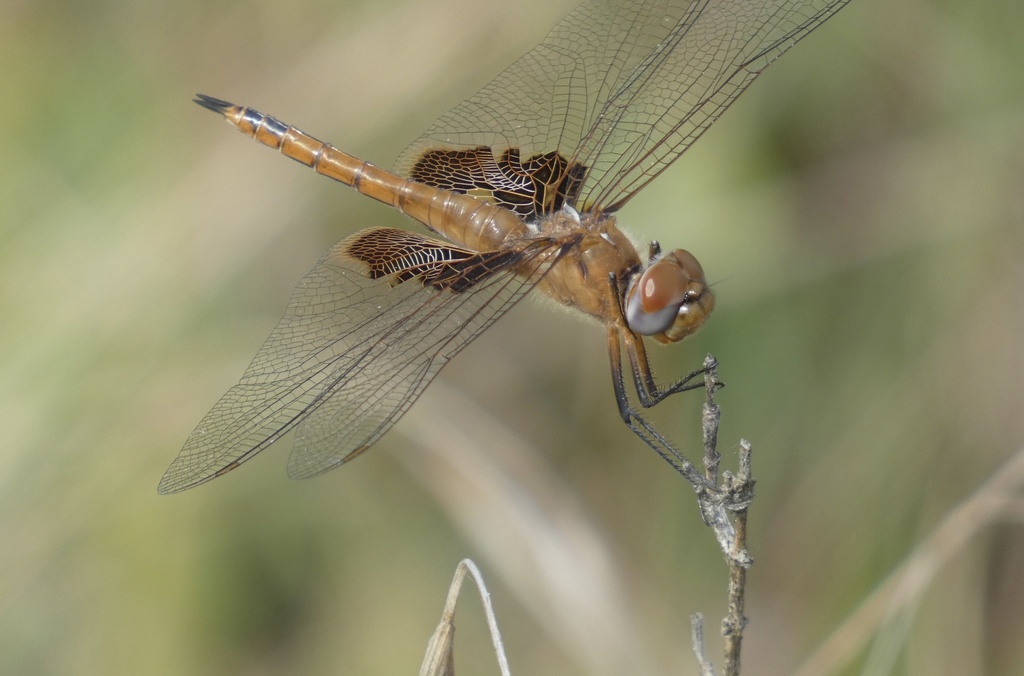
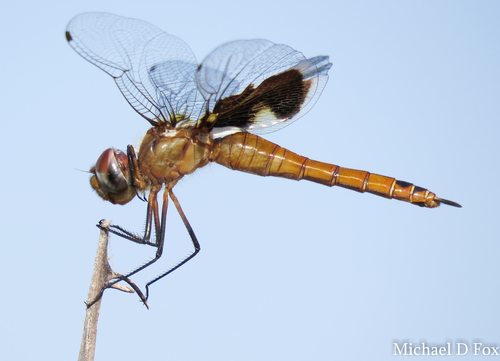
Red saddlebags have clear wings with red veins and dark red spots near the base that look like saddlebags, and their last two abdominal bands and cerci are black. They are strong, active daytime fliers seen gliding over lawns, parks and gardens. The species lives across North America, from the western coast south of San Francisco and the eastern Great Lakes region down to Central America, the Caribbean, Nicaragua and Puerto Rico.
Source: Wikipedia
How to recognize it
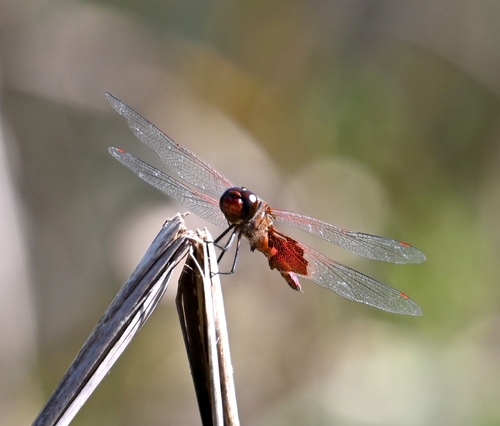
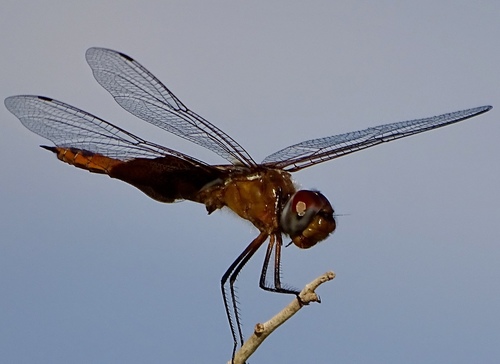
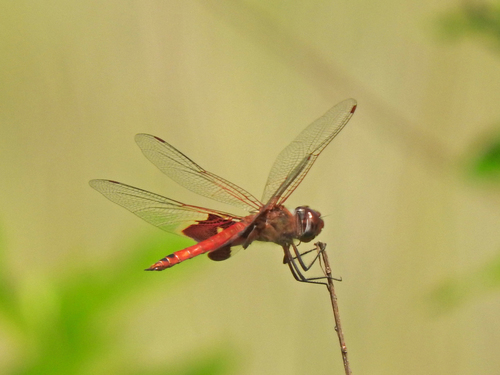
Clear wings with red veins and dark red blotches at the base give the appearance of saddlebags. The final two abdominal bands and the cerci are black.
Source: Wikipedia
Where it lives
They fly actively during the day and can be seen gliding over open grassy areas such as lawns, parks and gardens.
Source: Wikipedia
What it eats
They mainly eat other flying insects.
Source: Wikipedia
Where it comes from
Red saddlebags are found throughout North America, extending southward into Central America and the Caribbean.
Source: Wikipedia
Where it is found in the US
Recorded in 40 of 51 states and DC. Most records: Texas, California, Arizona, Florida, Oklahoma, New Mexico, Ohio, Kansas.
Darker = more records. Counts are museum and citizen-science records, not population size.
Source: GBIF
Status: native in North America; native in United States; native in Canada. Source: iNaturalist
Months it is reported in the US
Source: GBIF
More photos
Same family (Libellulidae)

Sources
- Wikipedia: https://en.wikipedia.org/wiki/Red-mantled_saddlebags
Look it up elsewhere: GBIF · iNaturalist · BugGuide · ITIS · Wikipedia
Text written 2026-10-22 from the sources above and checked sentence by sentence against them. Data fetched 2026-10-22.